



| HEADLINE |

|

Green Steel: Can Sustainable Construction Transform Real Estate?
Published : Friday, 27 November, 2026 at 12:00 AM
Walid Khan


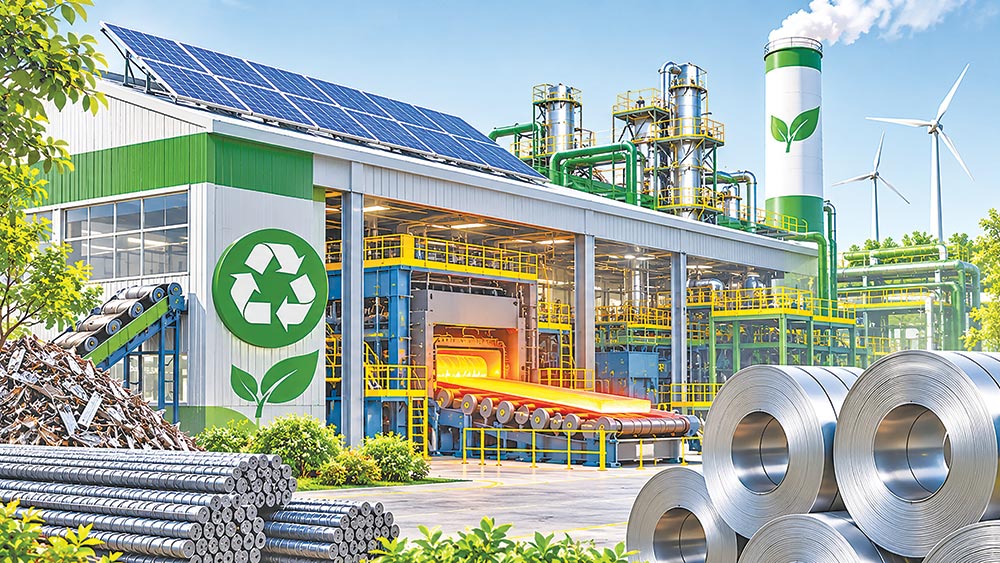 Bangladesh's steel industry is entering a period when environmental performance could become as important as production capacity. Green iron, produced using low-carbon technologies instead of conventional coal-intensive methods, is gaining attention globally. Its wider adoption could help transform the country's steel manufacturing and support more sustainable real estate development.
Steel is used in reinforced concrete, structural frames, columns, beams and commercial buildings. However, conventional steel production relies heavily on coal and consumes large amounts of energy, releasing significant carbon dioxide into the atmosphere.
Green steel offers an alternative through production methods that generate fewer carbon emissions.
Green steel generally refers to steel produced with substantially lower greenhouse gas emissions than conventional steel. Its environmental performance depends on production technology, energy sources and the use of recycled materials.
One method uses electric arc furnaces to melt recycled steel scrap. When powered by renewable electricity, this technology can reduce emissions. Another emerging method uses hydrogen instead of coal to extract iron from iron ore. If produced using renewable energy, hydrogen can significantly reduce steelmaking emissions.
Recycling also helps reduce demand for raw materials and energy. Steel can be recycled repeatedly without losing its essential properties.
Buildings generate emissions long before people move into them. The carbon released during the production and transportation of construction materials is known as embodied carbon.
Steel and cement are major contributors to this environmental impact. Using lower-emission steel can help developers reduce the carbon footprint of construction and improve the environmental performance of their projects.
However, green steel alone cannot make a building sustainable. Energy-efficient design, natural ventilation, insulation, water management and proper maintenance are also important.
Bangladesh's growing housing and infrastructure sectors create significant demand for steel. Improving energy efficiency, using cleaner electricity and adopting advanced production technologies could reduce the industry's environmental footprint.
In December 2024, the International Finance Corporation announced support for a climate-smart steel plant project with Meghna Re-Rolling & Steel Mills. The planned facility would use recycled scrap and electric arc furnace technology, with an annual production capacity of 1.5 million tonnes.
However, wider adoption of green steel will require substantial investment, reliable energy supplies, quality scrap materials and transparent emissions reporting.
Higher production costs could also discourage developers, particularly in Bangladesh's price-sensitive housing market. Clear environmental standards and independent verification will be necessary to ensure that manufacturers' green claims are credible.
Green steel cannot solve every environmental challenge facing construction. But investment in cleaner technologies and cooperation among steel manufacturers, developers and policymakers could make it an important part of sustainable real estate.
The future of construction will depend not only on building design and cost, but also on the environmental impact of the materials used.

Loading...
Loading...
Also read






Editor : Iqbal Sobhan Chowdhury
Published by the Editor on behalf of the Observer Ltd. from Globe Printers, 24/A, New Eskaton Road, Ramna, Dhaka.
Editorial, News and Commercial Offices : Aziz Bhaban (2nd floor), 93, Motijheel C/A, Dhaka-1000.
Phone: PABX- 41053001-06; Advertisement: 41053012; 01793317829, 01550707291, 01550707296
E-mail: [email protected], [email protected]. [email protected], [email protected], [email protected], [email protected], Online-email: [email protected]


