



| HEADLINE |

|

Suicide Prevention: Needs Care, Not Criminalisation
Published : Saturday, 24 October, 2026 at 12:00 AM
Irin Jahan Mim


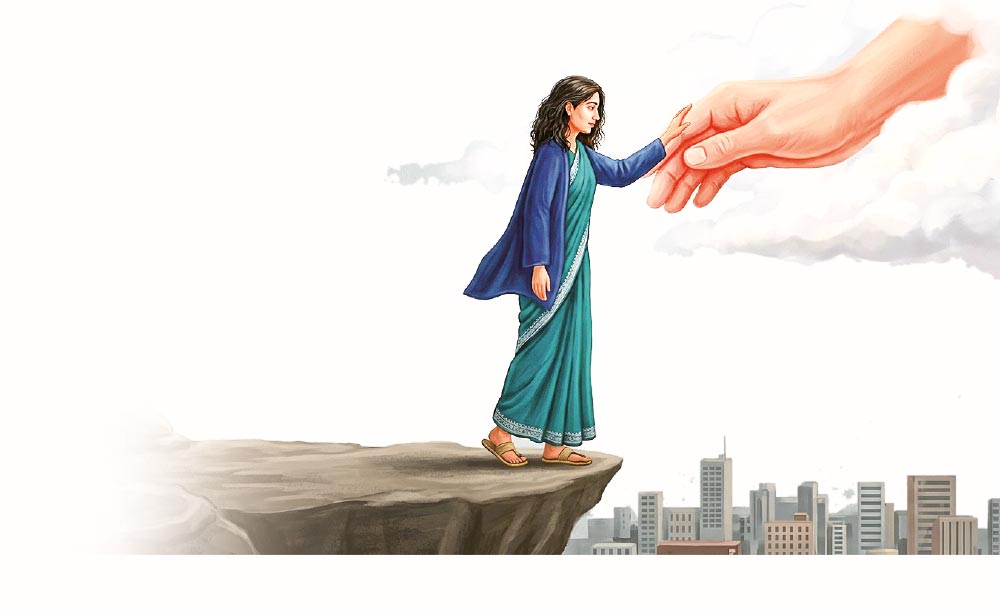 Suicide is a serious public health and humanitarian concern, influenced by psychological, social, economic and environmental factors, including depression, abuse, financial insecurity and social isolation. It calls for compassion, evidence-based action and access to proper mental health care, rather than blame or stigma. In Bangladesh, laws addressing attempted suicide and abetment of suicide raise questions about criminal liability, human rights and the State’s responsibility to protect vulnerable people. Suicide also leaves families and communities grappling with grief and emotional distress. Preventing it therefore requires a collective response that recognises it not as personal failure, but as a public health and social welfare concern.
The Penal Code, 1860 addresses suicide-related offences in Bangladesh under Sections 305, 306 and 309. Section 305 of the Penal Code, 1860 provides that whoever abets the suicide of a person under 18, an insane or delirious person, an “idiot”, or an intoxicated person faces the death penalty, life imprisonment, or imprisonment for up to 10 years, and a fine.
For abetting another person’s suicide, Section 306 provides for imprisonment of either description for up to 10 years and a fine. Abetment must be established through applicable legal requirements and evidence; it does not include ordinary criticism or interpersonal conflict. Under Section 309, anyone who attempts suicide and performs an act towards its commission faces simple imprisonment for up to one year, a fine, or both. Section 309 has drawn criticism for criminalising attempted suicide. Critics argue that people experiencing suicidal crises need medical treatment, psychological counselling and social support rather than prosecution. Criminalisation may discourage disclosure and delay professional help.
Rooted in the colonial-era Penal Code, Section 309 has prompted calls for reform from legal, human rights and mental health advocates. A review should consider constitutional and international human rights principles, public health evidence and access to mental health services, prioritising treatment, rehabilitation, dignity and the protection of vulnerable people.
Suicide prevention requires collaboration among families, educational institutions, healthcare providers, public institutions and civil society. People in distress must be treated with dignity and without judgment or blame. Key measures include early identification of psychological distress, accessible mental health services, counselling, public education and protection for those facing abuse, violence or coercion. Imminent risks require urgent professional intervention and a safe environment. Public awareness campaigns should reduce stigma and encourage people to seek help without fear of discrimination or punishment.
Suicide is a serious public health concern. Sections 305, 306 and 309 of Bangladesh’s Penal Code, 1860 address criminal liability related to suicide. Effective prevention requires legal reform, accessible mental health care, public awareness and a compassionate, rights-based approach that protects human dignity and reduces stigma.
The writer is an advocate.

Loading...
Loading...



Editor : Iqbal Sobhan Chowdhury
Published by the Editor on behalf of the Observer Ltd. from Globe Printers, 24/A, New Eskaton Road, Ramna, Dhaka.
Editorial, News and Commercial Offices : Aziz Bhaban (2nd floor), 93, Motijheel C/A, Dhaka-1000.
Phone: PABX- 41053001-06; Advertisement: 41053012; 01793317829, 01550707291, E-mail: [email protected], [email protected] Online: email: [email protected] 41053014; 01550707297 Advertisement: 01550707296


