



| HEADLINE |

|

BOU aims to turn into a world-class tech-driven institution
Published : Wednesday, 28 October, 2026 at 12:00 AM
Tanvir Raihan


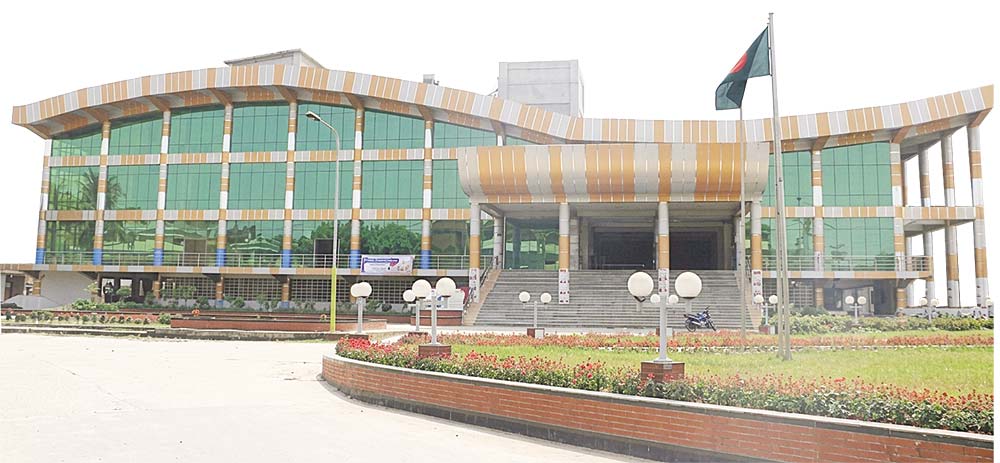
In an interview with Tanvir Raihan of The Daily Observer, Professor Dr Mohammad Siddiqur Rahman Khan, Vice-Chancellor of Bangladesh Open University (BOU) on the occasion of its 34th founding anniversary highlighted BOU’s digital transformation, research and future plans. Dr Siddiqur Rahman, an educationist and historian with 30 years of teaching experience at the University of Dhaka, assumed office as Vice-Chancellor of BOU on March 17. His academic and research interests include the political history of Bangladesh and the political development of the modern Muslim world. He has published more than 35 research articles and authored or edited 15 books. Excerpts of the interview are as follows:

Daily Observer: Bangladesh Open University has completed 34 years. How successful has it been in achieving its founding objectives?
Vice Chancellor: The primary objective behind establishing BOU was to ensure access to quality education for everyone, regardless of age, occupation, socioeconomic status or geographical location. Although the university began its journey in 1992 with just one programme, it now offers 55 programmes under seven schools and has more than 300,000 students.
By expanding educational opportunities from secondary education to higher studies, including MPhil and PhD programmes, as well as professional courses and research, BOU is contributing to educational development and human resource development.
The university has created new opportunities, particularly for working people, students who have dropped out of formal education and people in remote areas who cannot easily access conventional educational institutions.
DO: How is BOU putting the principles of ‘education for all’ and ‘lifelong learning’ into practice?
VC: Our fundamental philosophy is that education should be open to everyone and should not be confined to any particular stage of life. Through open and distance learning, as well as blended learning methods, students can study from different locations according to their convenience.
This approach is particularly important for working people, women, students who have dropped out, marginalised communities and those who remain outside the conventional education system. We want to make education more accessible and flexible by expanding digital learning materials, using modern technologies and automating academic activities.
We believe that a learner’s identity, location or financial circumstances should not stand in the way of education.
DO: What plans does the university have to expand technical and vocational education in response to changing labour market demands?
VC: Technical and vocational education is becoming increasingly important for developing a skilled workforce, creating employment and accelerating economic growth. Against this backdrop, BOU has taken an initiative to establish the Institute of Technical and Vocational Education and Training (ITVET).
The proposed institute could help expand technical education, technological skills, employment and self-employment opportunities. Developing skills suited to the Fourth Industrial Revolution, improving technological knowledge and strengthening entrepreneurship are also important priorities.
In addition, an initiative has been taken under the ‘Niche-3’ programme to introduce secondary school certificate (SSC) and higher secondary certificate (HSC) programmes for Qawmi madrasa students, helping them access mainstream education. Curricula and syllabuses have been developed with support from relevant students and education experts. If the programme can begin in January 2027 as planned, it will create new educational opportunities for these learners.
DO: What are BOU’s plans for digital transformation to address the challenges posed by artificial intelligence and the Fourth Industrial Revolution?
Dr Rahman: Digital transformation is one of our major priorities. We have taken initiatives to strengthen automation in academic and administrative activities through an integrated digital system, including online admission and registration, digital learning materials, examinations and results management.
We are also focusing on the effective use of artificial intelligence in teaching and student services, as well as improving teachers’ skills in digital instruction. At the same time, we want to create opportunities for students to acquire technology-related knowledge and practical skills.
Steps are being taken to transform BOU’s Media Centre into a campus television facility. We are also planning to introduce short-term training and micro-credential programmes and modernise curricula in line with industry and labour market demands.
Our objective is not simply to increase the use of technology. We want to use it to make education more accessible, flexible, high-quality and employment-oriented.
DO: What initiatives have been taken to advance research and innovation at the university?
VC: One of a university’s principal responsibilities is to create new knowledge through research and enrich existing knowledge. At BOU, we are working to expand research in different fields, including agriculture, science and technology, while strengthening collaboration with national and international universities and research institutions.
The recent signing of a memorandum of understanding with the Institute of Biotechnology is an important step in this direction. Initiatives are also being taken to publish a central journal and separate journals for the university’s seven schools to disseminate research findings. We are also placing importance on expanding research on the Liberation War and Bangladesh.
Our goal is to improve research quality, generate new knowledge and apply that knowledge to education and social development.
DO: How will BOU expand educational opportunities for women, people with disabilities, marginalised communities and working students?
VC: Education is a right for everyone. Ensuring this right requires equal opportunities and an environment free from discrimination. We are focusing on expanding flexible, learner-centred education, accessible digital learning materials and improved e-learning services.
Initiatives include developing accessible learning materials and needs-based support for students with disabilities, ensuring safe and flexible learning opportunities for women, and improving arrangements that allow working people to study at convenient times. We are also planning to make regional and sub-regional centres more effective through technology.
We want every learner to be able to continue studying, complete their courses successfully and acquire the knowledge and skills needed to improve their employment prospects and quality of life.
DO: Where do you see BOU in the coming years? What will be its main priorities?
VC: Our ambition is to transform Bangladesh Open University into a world-class, modern, inclusive and technology-driven institution recognised as a model of open education in South Asia and beyond.
To achieve this, we will prioritise digital transformation, the effective use of artificial intelligence, curriculum modernisation, the expansion of technical and employment-oriented education, and research and innovation. We will also focus on developing the skills of teachers and staff, strengthening international cooperation, improving governance and enhancing the quality of student-centred services.
I believe technology will be the means of our progress, while student success will be the ultimate measure of that progress. BOU does not want to remain merely an institution that awards certificates. We aspire to become a driving force in developing skilled human resources, promoting social inclusion and building a knowledge-based Bangladesh.

Loading...
Loading...
Also read



Editor : Iqbal Sobhan Chowdhury
Published by the Editor on behalf of the Observer Ltd. from Globe Printers, 24/A, New Eskaton Road, Ramna, Dhaka.
Editorial, News and Commercial Offices : Aziz Bhaban (2nd floor), 93, Motijheel C/A, Dhaka-1000.
Phone: PABX- 41053001-06; Advertisement: 41053012; 01793317829, 01550707291, 01550707296
E-mail: [email protected], [email protected]. [email protected], [email protected], [email protected], [email protected], Online-email: [email protected]


