



| HEADLINE |

|

The Environmental Cost of Bangladesh’s Real Estate Boom
Published : Friday, 30 October, 2026 at 12:00 AM
Sanjida Khondaker Ripa


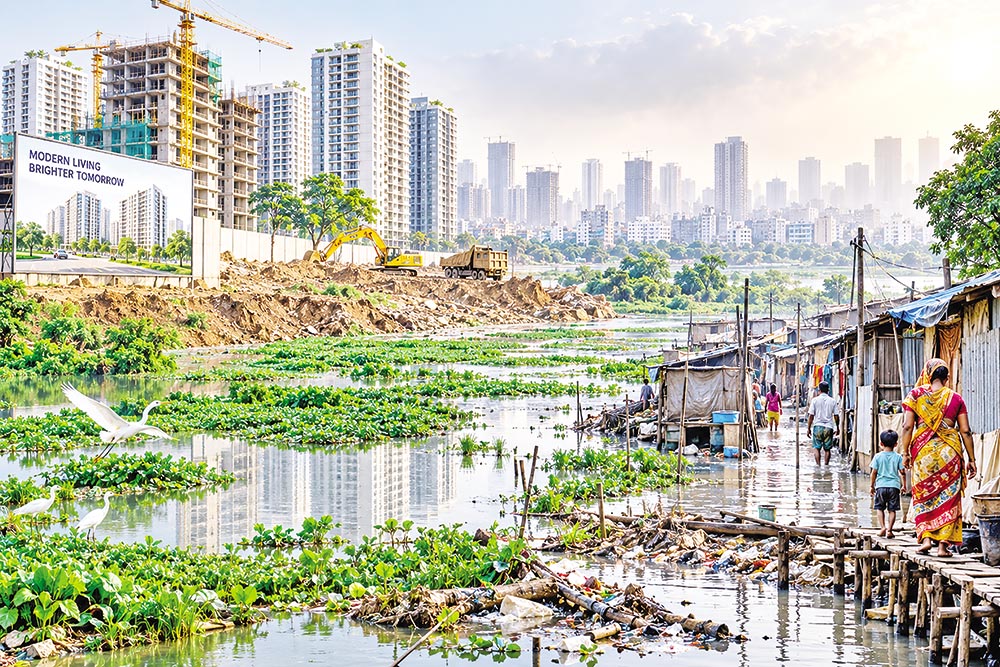 Bangladesh's growing real estate sector is changing the country's urban landscape, but the destruction of wetlands, loss of green spaces and unplanned construction are raising serious questions about the environmental cost of development.
Development loses its purpose when it damages the environment and threatens public safety. The filling of wetlands, cutting of hills and unplanned construction raise serious concerns about the future of cities, particularly Dhaka.
Wetlands, floodplains and natural drainage channels absorb rainwater, support biodiversity and help maintain natural drainage systems. When these areas are filled or blocked for construction, rainwater loses its natural pathways, increasing the risk of waterlogging and urban flooding. The resulting problems disrupt transport, public health and economic activities.
The destruction of trees and green spaces reduces natural cooling, raises local temperatures and affects air quality. Construction activities generate dust, noise, waste and emissions, while poorly managed materials can pollute land and water. Hill cutting can also increase the risk of landslides and soil erosion.
Earthquake safety is another concern. Real estate construction does not normally cause tectonic earthquakes, but poor construction practices, unsuitable site selection and failure to follow earthquake-resistant building standards can increase the damage. Buildings constructed without proper attention to soil conditions and structural safety can put residents at risk.
Bangladesh has laws and regulations to control development and protect the environment. The Bangladesh Environment Conservation Act, 1995 provides a legal framework for environmental protection and pollution control, while the Environment Conservation Rules, 2023 set requirements for environmental clearance and assessment. The Bangladesh National Building Code, 2020 addresses building safety, and the Real Estate Development and Management Act, 2010 regulates real estate development.
Planning authorities, including the Rajdhani Unnayan Kartripakkha (RAJUK), also have responsibilities for land use and urban planning. However, weak monitoring, poor coordination and violations of approved plans can undermine these safeguards. The key challenge is ensuring that existing laws are properly enforced.
Developers must obtain the necessary approvals, follow approved designs and meet environmental requirements. Planning and environmental authorities must monitor projects, while local government bodies should address drainage, waste management and the protection of public spaces. Violations should face appropriate legal consequences through transparent and lawful procedures.
Several steps could make real estate development more sustainable. Authorities should strictly enforce environmental and building regulations, particularly in ecologically sensitive areas. Environmental impact assessments should be meaningful and completed before project approval. Regular inspections, digital monitoring and public access to approval information could help identify unauthorised construction early.
Developers should preserve trees, manage construction waste, use energy-efficient designs and provide adequate drainage and open spaces. Public participation is also important, allowing residents to report environmental violations and contribute to planning decisions.
Bangladesh needs more housing and modern infrastructure to support economic growth. But development should not come at the cost of natural resources or public safety.
The success of real estate development should be measured not only by the number of buildings constructed, but also by the quality of life they provide, the safety they ensure and the environment they preserve for future generations.
Department of Law, Bangladesh University of Professionals

Loading...
Loading...
Also read



Editor : Iqbal Sobhan Chowdhury
Published by the Editor on behalf of the Observer Ltd. from Globe Printers, 24/A, New Eskaton Road, Ramna, Dhaka.
Editorial, News and Commercial Offices : Aziz Bhaban (2nd floor), 93, Motijheel C/A, Dhaka-1000.
Phone: PABX- 41053001-06; Advertisement: 41053012; 01793317829, 01550707291, 01550707296
E-mail: [email protected], [email protected]. [email protected], [email protected], [email protected], [email protected], Online-email: [email protected]


