



| HEADLINE |

|

World this week: Top global stories
Oct 24–30, 2026
Published : Friday, 30 October, 2026 at 6:31 PM
Observer Online Report


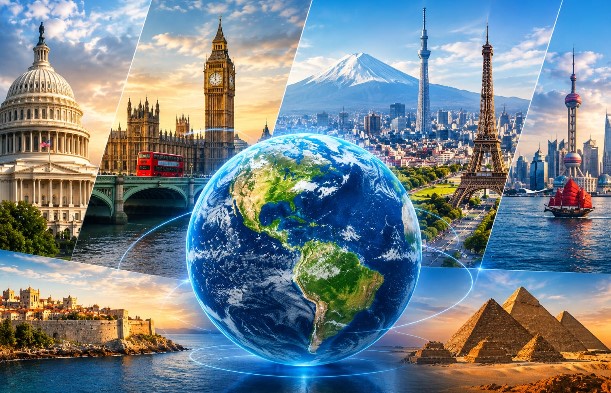
Political uncertainty in Israel, a deadly train collision in Spain, North Korea’s missile launches, Cyclone Arnab’s impact on India and growing diplomatic and economic tensions shaped the major international developments this week.
1. Israel election deadlock leaves Netanyahu short of majority
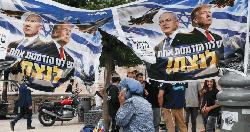
Israel's October 27 parliamentary election has ended without either major political bloc securing enough seats to form a government, leaving Prime Minister Benjamin Netanyahu facing difficult coalition negotiations.
Preliminary results put Netanyahu's Likud-led bloc at 53 seats in the 120-member Knesset, compared with 48 for the opposition bloc led by former military chief Gadi Eisenkot. Arab-led parties secured 19 seats, potentially giving them a decisive role in government formation. A majority requires 61 seats.
President Isaac Herzog is expected to consult political parties before deciding which candidate should receive the mandate to form the next government. Netanyahu remains caretaker prime minister during the negotiations.
The result could affect Israel's domestic policies, relations with neighbouring countries and its approach to the ongoing conflict involving Iran and other regional actors.
2. Spain train collision kills at least 69
Spain is mourning one of Europe's deadliest railway disasters after two high-speed trains collided in the central province of Toledo on October 28, killing at least 69 people and injuring dozens.
The collision occurred near Urda when a Renfe train struck a stationary Iryo train. Several carriages derailed, with some falling down an embankment. Rescue workers searched the wreckage for victims while emergency services treated injured passengers.
A preliminary investigation indicated that a signalling-system failure and subsequent decisions by railway controllers may have contributed to the disaster. A Renfe train was reportedly authorised to continue despite an active red signal warning of the stationary train ahead.
Prime Minister Pedro Sanchez announced a period of national mourning and pledged a full investigation. The disaster has renewed questions about railway maintenance, signalling systems and safety standards across Spain's high-speed rail network.
3. North Korea fires around 10 ballistic missiles
North Korea fired around 10 short-range ballistic missiles towards the East Sea, also known as the Sea of Japan, on October 29, according to South Korea's military.
The missiles were launched from the Wonsan area on North Korea's eastern coast at around 12:30PM local time and travelled approximately 250 kilometres, South Korea's Joint Chiefs of Staff said.
Seoul increased surveillance and coordinated with Washington and Tokyo to assess the launches. Japan also monitored the situation and said the missiles did not appear to have landed within its exclusive economic zone.
The launches came amid heightened tensions following landmine explosions near the inter-Korean border that injured three South Korean soldiers. Seoul has blamed Pyongyang, which has denied responsibility.
The latest tests have raised concerns about regional security and North Korea's expanding missile capabilities
4. Cyclone Arnab hits India's eastern coast, 180,000 evacuated
Cyclone Arnab made landfall on India's eastern coast on October 28, bringing powerful winds, heavy rainfall and widespread disruption across Andhra Pradesh and neighbouring Odisha.
More than 180,000 people were evacuated from vulnerable coastal areas ahead of the storm. Authorities arranged emergency shelters and deployed disaster-response teams as the cyclone approached.
The India Meteorological Department classified Arnab as a very severe cyclonic storm, with sustained wind speeds forecast at 115–125 kilometres per hour and gusts reaching 140 kilometres per hour.
The storm uprooted trees, damaged electricity infrastructure and disrupted transport services. Several schools were closed, while some train and flight services were cancelled.
Authorities initially reported no deaths in Andhra Pradesh or Odisha, although power outages and damage to infrastructure were recorded. The cyclone also raised concerns over flooding and agricultural losses in affected districts
5. G20 talks face divisions over global conflicts
Foreign ministers from the Group of 20 major economies are meeting in Atlanta, Georgia, on October 30–31, amid deep divisions over the wars in Ukraine and the Middle East.
US Secretary of State Marco Rubio is hosting the meeting as Washington holds the G20 presidency. Discussions are expected to cover international conflicts, global trade, energy security, supply chains and economic cooperation.
Russia's participation, represented by Foreign Minister Sergei Lavrov, is expected to create diplomatic friction with Western governments over Moscow's war in Ukraine. Disagreements over US policy towards Russia and the conflict involving Iran are also expected to complicate discussions.
The meeting is intended to prepare for the G20 leaders' summit scheduled for December 14–15 in Miami, Florida. However, diplomatic divisions may make it difficult for members to agree on a common declaration.
6. Brazil's election dispute deepens after Lula's victory
Brazil's political tensions have intensified after President Luiz Inácio Lula da Silva secured a historic fourth term by defeating Senator Flávio Bolsonaro in the October 25 presidential runoff.
Lula won by more than 4.4 million votes, according to Brazil's electoral authorities. His victory came despite opinion polls suggesting a closely contested race.
Flávio Bolsonaro, the son of former president Jair Bolsonaro, refused to accept the result and announced plans to seek its annulment. He challenged a Supreme Court decision that extended voting hours in certain areas because of difficulties transporting voters.
The extension was ordered after requests from both presidential campaigns, including Bolsonaro's. The defeated candidate nevertheless argued that the decision affected electoral fairness.
The dispute has raised concerns about political polarisation and the acceptance of electoral outcomes in Latin America's largest economy.
7. Middle East tensions raise concerns over global markets
Continuing tensions in the Middle East have kept energy security and oil supply disruptions in focus, particularly amid concerns over possible renewed military action involving the United States, Israel and Iran.
Any escalation affecting major shipping routes, particularly the Strait of Hormuz, could disrupt international oil and gas supplies and increase transportation and insurance costs. Such disruptions could add to inflationary pressure in energy-importing countries.
Investors are also monitoring the technology sector, where heavy spending on artificial intelligence infrastructure has raised questions about the speed and scale of future returns.
However, the supplied material does not establish a specific weekly rise in oil prices or a verified decline in technology stocks. Those market movements need separate financial-market data before this item is published as a factual weekly development.
Source: Reuters
-AH

Loading...
Loading...
Also read



Editor : Iqbal Sobhan Chowdhury
Published by the Editor on behalf of the Observer Ltd. from Globe Printers, 24/A, New Eskaton Road, Ramna, Dhaka.
Editorial, News and Commercial Offices : Aziz Bhaban (2nd floor), 93, Motijheel C/A, Dhaka-1000.
Phone: PABX- 41053001-06; Advertisement: 41053012; 01793317829, 01550707291, 01550707296
E-mail: [email protected], [email protected]. [email protected], [email protected], [email protected], [email protected], Online-email: [email protected]


