



| HEADLINE |

|

New rules to rein in e-rickshaws
Published : Saturday, 31 October, 2026 at 12:00 AM
Tanvir Raihan


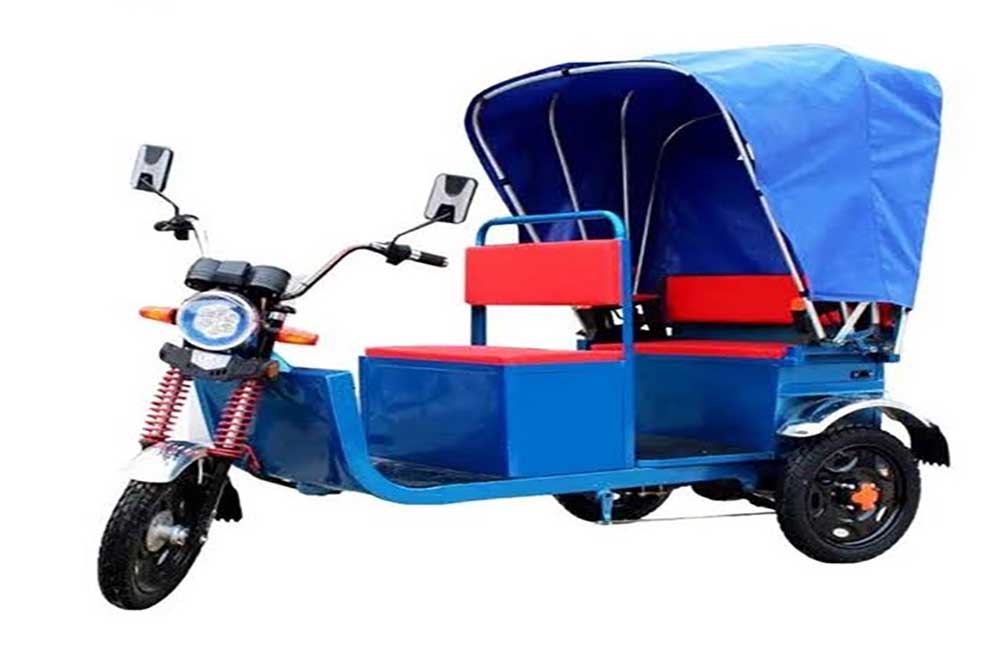 The government has introduced a new regulatory framework to control the movement of battery-powered three-wheeled rickshaws, commonly known as e-rickshaws, in city corporation areas, making registration, designated routes and authorised charging facilities mandatory.
Under the new rules, no e-rickshaw will be allowed on the roads without registration. A person can register a maximum of five vehicles against a single National Identity Card (NID), while each registered vehicle will receive a unique registration number and a QR-code-enabled number plate.
The Local Government Division published the Three-Wheeled Low-Speed Battery-Operated Rickshaw (E-Rickshaw) Movement Rules, 2026 in the official gazette on Thursday. The rules will apply to e-rickshaws operating in all city corporation areas across the country.
According to the rules, each city corporation will determine the number of e-rickshaws allowed within its jurisdiction after obtaining prior government approval and consulting the relevant traffic department. The limit may be set for the entire city or separately for different zones.
Authorities will also determine the routes, vehicle limits and designated colours for each zone. An e-rickshaw registered in one zone will not be allowed to operate in another. Similarly, vehicles registered in one city corporation will not be permitted to operate commercially in another city corporation area.

Applicants will have to submit applications using the prescribed form, along with an attested copy of their NID, two recent passport-size photographs, proof of payment of the registration fee and a fitness certificate in the prescribed format.
The authorities will examine the applications and supporting documents against technical and safety standards set by the Bangladesh University of Engineering and Technology (BUET). Registration must be issued within 30 working days of receiving an application.
The registration will remain valid for five years. Each vehicle must display its unique QR-code-enabled registration number at a visible location. The relevant traffic department must countersign the registration and renewal documents.
The economic lifespan of an e-rickshaw has been set at 12 years from the date of registration. Once this period expires, its registration, along with the number plate, must be cancelled.
Existing e-rickshaws will also have an opportunity to obtain approval after modifying their structures to comply with BUET's technical and safety standards. They will also need fitness certificates countersigned by the relevant traffic department.
The maximum permitted speed for an e-rickshaw has been set at 25 kilometres per hour. However, the speed limit will be reduced to 15 kilometres per hour near schools, hospitals, religious institutions and crowded areas.
Depending on the vehicle's size, an e-rickshaw may carry either two or four passengers, excluding the driver. Installing a speedometer or odometer in every vehicle has been made mandatory.
E-rickshaws will be prohibited on national highways, expressways, elevated expressways, major bus routes and Bus Rapid Transit (BRT) corridors. Their movement on footpaths will also be prohibited.
Drivers must keep to the left lane and cannot use mobile phones while driving. Unlawful overtaking, improper lane changes and carrying commercial goods other than passengers' personal belongings will also be prohibited. Horns cannot exceed 40 decibels.
The rules seek to bring battery charging under formal oversight. E-rickshaw batteries must be charged at authorised charging points or designated garages licensed by the relevant city corporation.
Authorities have been instructed to encourage the use of solar power and other renewable energy sources at charging facilities. The rules also provide for connecting solar power systems to the national grid through net metering.
Discarded or damaged batteries cannot be dumped in open spaces, soil, water bodies or general waste, or burned. Battery sellers must collect an old battery from customers when selling a new one and ensure that it is sent to an authorised recycling facility.

Loading...
Loading...
Also read



Editor : Iqbal Sobhan Chowdhury
Published by the Editor on behalf of the Observer Ltd. from Globe Printers, 24/A, New Eskaton Road, Ramna, Dhaka.
Editorial, News and Commercial Offices : Aziz Bhaban (2nd floor), 93, Motijheel C/A, Dhaka-1000.
Phone: PABX- 41053001-06; Advertisement: 41053012; 01793317829, 01550707291, 01550707296
E-mail: [email protected], [email protected]. [email protected], [email protected], [email protected], [email protected], Online-email: [email protected]


