



| HEADLINE |

|

The Sun That Stopped Shining


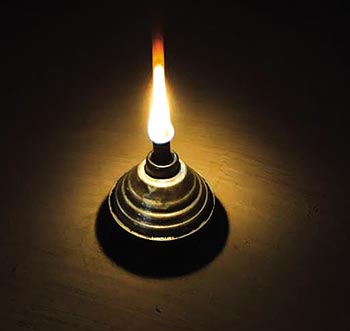 Today, 47 percent of those household installations sit dead, their glass surfaces collecting dust instead of sunlight. The survey by the Centre for Policy Dialogue and Samakal reveals a sobering truth: poorly maintained equipment, untrained users, and vanished funds have turned innovation into abandonment.
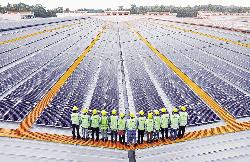
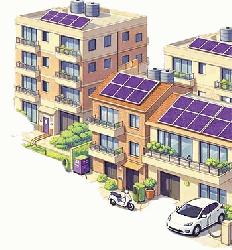
In Dhaka, the story repeats on a grander scale. Nearly 70 percent of rooftop solar systems across the capital-113 megawatts of installed capacity-lie dormant. Multi-owner buildings complicate maintenance. Monitoring gaps let problems fester. Substandard panels failed before their time.
Families who once dreamed of clean energy now burn diesel again, paying premiums for the privilege of disappointment.
The policy push began in 2010, mandating solar for new connections. By December 2025, regulations tightened further-1,000 square feet of roof space, twenty-year commitments. Yet rules without oversight are merely paper.
Experts call for stronger quality control, regular inspections, community training. But beneath technical recommendations lies a deeper issue: accountability. When funds disappear and systems die, public trust dies with them.
The sun still shines over Bangladesh. The question is whether the nation can build systems-and institutions-that last long enough to harness it.
Over a decade of policy push had only 113.67-megawatt-capacity panels installed across the capital city, but nearly 70 per cent of the rooftop solar systems in DPDC area are found inactive due to weak maintenance, monitoring gaps, and multi-owner residential complexities. In 2010, the government made it mandatory for customers to have solar-energy systems to get new electricity connections, in order to boost renewable-energy coverage.
Residential units must generate at least 3.0 per cent of their power from solar systems each while industrial and commercial users exceeding 50KW are required to generate 10 per cent, according to a government rule.
Dhaka Power Distribution Company Limited (DPDC) data show until March 2026, DPDC had installed a total of 52 megawatts of solar capacity since 2014, of which around 9.0mw is currently under net metering. Overall, only about 30 per cent of the systems are active, while nearly 70 per cent are lying idle. Until June 2025, Dhaka's distributors-- DPDC and Dhaka Electricity Supply PLC (DESCO)--had reported installed capacity of rooftop solar systems across the capital at roughly 113.67 megawatts.
On December 21, 2025, the Power Division issued a revised circular making rooftop solar installation under the net metering system mandatory for buildings with at least 1,000 square feet of usable roof space for a minimum of 20 years.
This correspondent finds many rooftop solar installations inactive during visits to several areas in the sprawling capital city.
By June 2025, a total of 73.67mw solar-power systems had been installed on the premises of 50,594 consumers within the jurisdiction of DESCO, including systems under the net metering mechanism.
Among these, 896 net meters alone account for a capacity of 12.16mw.

Loading...
Loading...
Also read




Editor : Iqbal Sobhan Chowdhury
Published by the Editor on behalf of the Observer Ltd. from Globe Printers, 24/A, New Eskaton Road, Ramna, Dhaka.
Editorial, News and Commercial Offices : Aziz Bhaban (2nd floor), 93, Motijheel C/A, Dhaka-1000.
Phone: PABX- 41053001-06; Advertisement: 41053012; 01793317829, 01550707291, 01550707296
E-mail: [email protected], [email protected]. [email protected], [email protected], [email protected], [email protected], Online-email: [email protected]


