



| HEADLINE |

|

Rooftop Solar Business Models Financing Prospects and Implementation Priorities
Published : Sunday, 1 November, 2026 at 12:00 AM
Shahriar Ahmed Chowdhury


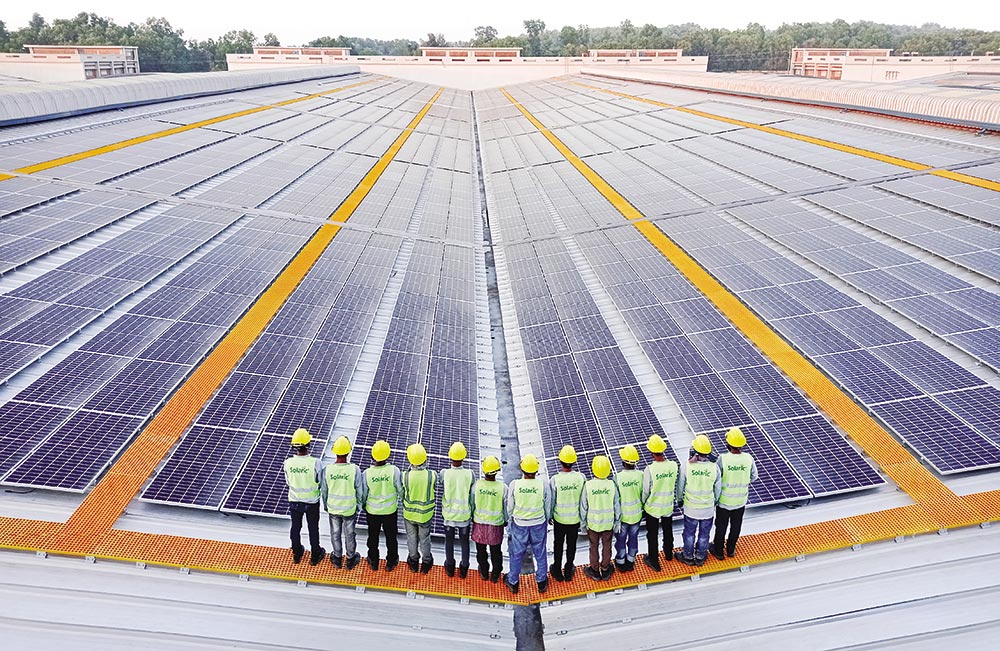
 Following several policy initiatives that failed to achieve their intended outcomes, Bangladesh appears to be entering a more decisive phase of its renewable energy transition. The government has revised its renewable energy ambitions and introduced supportive measures, including import-duty concessions and financing initiatives for rooftop solar development. These measures signal renewed commitment to translating policy targets into actual investments. Rooftop solar offers considerable opportunities to utilize largely untapped industrial, commercial and public-sector rooftops. However, achieving meaningful deployment will require bankable business models, affordable financing, appropriate tariff structures and effective implementation mechanisms.
CAPEX and OPEX: Two Pathways to Solar Expansion
Two principal business models can accelerate rooftop solar deployment: Capital Expenditure (CAPEX) and Operational Expenditure (OPEX). Under CAPEX, consumers finance, own and operate their solar systems, directly benefiting from electricity generation. Under OPEX, third-party investors finance, install, own, operate and maintain the systems, while consumers purchase electricity through long-term power purchase agreements (PPAs).
OPEX eliminates upfront capital requirements and transfers technical responsibilities to professional developers. It is particularly suitable for garment factories, textile mills, warehouses, shopping centres, educational institutions and government facilities with substantial daytime electricity consumption. Consumers preserve capital for core activities, while developers benefit from economies of scale. Both models are important, but OPEX deserves particular attention where financing constraints prevent investment.
OPEX Tariff Models: Ensuring Bankability and Consumer Savings
A commercially viable OPEX tariff must provide measurable savings to consumers while ensuring adequate returns for investors. The fundamental principle should be that contracted solar tariffs remain below applicable grid electricity tariffs throughout the PPA period. Several tariff structures can achieve this objective.
Fixed solar tariff: Consumers pay a predetermined electricity price throughout the contract. This provides long-term predictability, although the initial tariff must account for financing costs, inflation, maintenance and equipment degradation.
Grid-linked tariff with fixed discount: Solar electricity is priced below the prevailing grid tariff by an agreed amount. For example, against a grid tariff of Tk 14/kWh, solar electricity could cost Tk 10/kWh, ensuring savings of Tk 4/kWh. The agreed discount remains unchanged when grid tariffs fluctuate.
Grid-linked floating tariff: Solar electricity is priced at an agreed percentage of the grid tariff. At 70% of a Tk 14/kWh grid tariff, consumers pay Tk 9.80/kWh. Subsequent grid tariff adjustments automatically modify solar prices while maintaining the agreed percentage discount.
Escalating tariff: Solar tariffs increase periodically by predetermined percentages. For example, an initial Tk 10/kWh tariff could increase by 5% every two years to accommodate inflation and maintenance expenses. Contractual safeguards must prevent solar tariffs from exceeding grid tariffs.
Hybrid tariff: A fixed base tariff is combined with a grid-linked adjustment. For example, a Tk 10/kWh tariff could increase by 50% of any increase in the applicable grid tariff, subject to contractual limits protecting consumer savings.
No single tariff structure suits every project. Standardized PPAs should clearly specify tariff adjustments, payment security, performance guarantees, maintenance obligations, dispute resolution and treatment of surplus electricity. Agreements should also establish asset-transfer or contract-extension arrangements upon PPA expiry, including Build-Own-Operate-Transfer (BOOT) provisions where appropriate.
 Financing Prospects: Mobilizing Investment at Scale
Bangladesh cannot achieve its rooftop solar ambitions through consumers' capital alone. Commercial banks, development finance institutions, international climate funds and specialized financial institutions must participate more actively.
Institutions such as IDCOL, BIFFL and PKSF, alongside commercial banks, can strengthen financing opportunities through dedicated credit facilities, competitive interest rates, extended repayment periods and appropriate grace periods. Partial credit guarantees and risk-sharing mechanisms could encourage lending to technically viable projects lacking conventional collateral.
For OPEX projects, financing should primarily depend on predictable electricity sales under long-term PPAs. Standardized agreements, credible payment security, enforceable contracts and regulatory certainty are essential for attracting institutional investors. Portfolio financing, combining multiple rooftop installations into larger investment packages, could reduce transaction costs and improve access to capital.
Public-sector rooftops, including educational institutions, hospitals and government offices, represent another substantial opportunity. Aggregated procurement through OPEX or suitable public-private investment arrangements could attract experienced developers, improve financing efficiency and accelerate implementation.
Implementation Priorities: Quality, Grid Readiness and Accountability
Bangladesh has established important policy foundations through the Net Metering Guideline 2025, National Rooftop Solar Program 2025 and National Renewable Energy Development Strategy 2026-2030. These initiatives have been further complemented by the introduction of an online Net Metering (NEM) Application System, which is expected to streamline application processing, enhance transparency and facilitate faster project implementation. However, their overall effectiveness will depend on consistent implementation, transparent approval procedures and stronger institutional coordination.
A unified digital platform should facilitate the entire process, from application submission and technical approvals to inspections, operational clearances, metering arrangements and settlement of surplus electricity. Clearly defined processing timelines and institutional accountability would further enhance transparency and strengthen investor confidence.
Equipment quality and safety must receive equal priority. Solar modules, inverters, mounting structures, cables and protection systems should comply with applicable international standards. Procurement decisions based exclusively on lowest initial cost risk compromising long-term performance. Structural assessments, fire protection, qualified installation, warranties and professional operation and maintenance are essential for reliable generation.
Distribution networks must also accommodate increasing rooftop solar penetration. Voltage fluctuations, reverse power flows and transformer overloading may emerge where networks lack adequate capacity. Distribution utilities should assess feeder-level hosting capacity, upgrade infrastructure and establish appropriate inverter and protection requirements. Battery storage should be encouraged where economically justified, particularly for managing evening demand and local network constraints.
The Way Forward
Bangladesh requires a differentiated rooftop solar strategy that accommodates both CAPEX and OPEX models. CAPEX should serve consumers capable of direct investment, while OPEX should facilitate third-party financing for industrial, commercial and public-sector installations.
The Power Division, SREDA, distribution utilities, financial institutions and private developers should operate within a coordinated implementation framework, supported by measurable annual targets and clearly assigned responsibilities.
Most importantly, OPEX contracts must guarantee genuine consumer savings. Tariff structures that initially offer discounts but subsequently become more expensive than grid electricity would undermine confidence in third-party investment.
Ultimately, Bangladesh's rooftop solar ambitions will depend not merely on policy announcements but on commercially viable projects, affordable financing, transparent contracts, reliable equipment and accountable institutions. Aligning these elements can unlock substantial rooftop solar capacity, strengthen energy security, improve industrial competitiveness and accelerate the country's transition towards cleaner electricity.
Director, Centre for Energy Research,United International University, Email: [email protected]

Loading...
Loading...
Also read






Editor : Iqbal Sobhan Chowdhury
Published by the Editor on behalf of the Observer Ltd. from Globe Printers, 24/A, New Eskaton Road, Ramna, Dhaka.
Editorial, News and Commercial Offices : Aziz Bhaban (2nd floor), 93, Motijheel C/A, Dhaka-1000.
Phone: PABX- 41053001-06; Advertisement: 41053012; 01793317829, 01550707291, 01550707296
E-mail: [email protected], [email protected]. [email protected], [email protected], [email protected], [email protected], Online-email: [email protected]


