



| HEADLINE |

|

From Fossil Fuel to Renewable Resources Strong political will to help ensure smooth energy transition
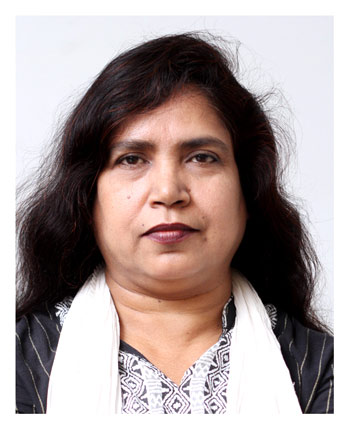


 Farah Kabir, Country Director of ActionAid Bangladesh, is a distinguished advocate for climate justice, gender equality, human rights and sustainable development. Drawing on more than three decades of experience in the development sector, she has consistently championed people-centred approaches to development, emphasising the rights, voices and leadership of women and marginalised communities in shaping national policies and priorities.
In the energy sector, she has been a strong proponent of a Just Energy Transition (JET), underscoring the need to ensure that the transition from fossil fuels to renewable energy is not only environmentally sustainable but also socially just and economically inclusive.
Her vision for the sector encompasses the expansion of decentralised renewable energy, increased investment in solar and wind power, greater transparency and accountability in energy governance, and the meaningful participation of women and young people in energy-related decision-making. She believes that access to clean, affordable and reliable energy is fundamental to achieving sustainable development and building a climate-resilient future for Bangladesh.
Through her leadership and advocacy, Farah Kabir continues to advance an energy agenda rooted in climate justice, people's rights, energy security and equitable access to clean energy, ensuring that the benefits of the energy transition reach all sections of society.
Shahnaj Begum, In-Charge of the Power & Energy page at The Daily Observer, recently had the opportunity to speak with Farah Kabir on various aspects of Bangladesh's energy sector, the challenges and opportunities of a just energy transition, and the way forward towards a sustainable and inclusive energy future. The interview is presented below for our valued readers:
The Daily Observer: What change do you want to see in Bangladesh’s energy sector after 10 or 15 years, especially in terms of energy transition?
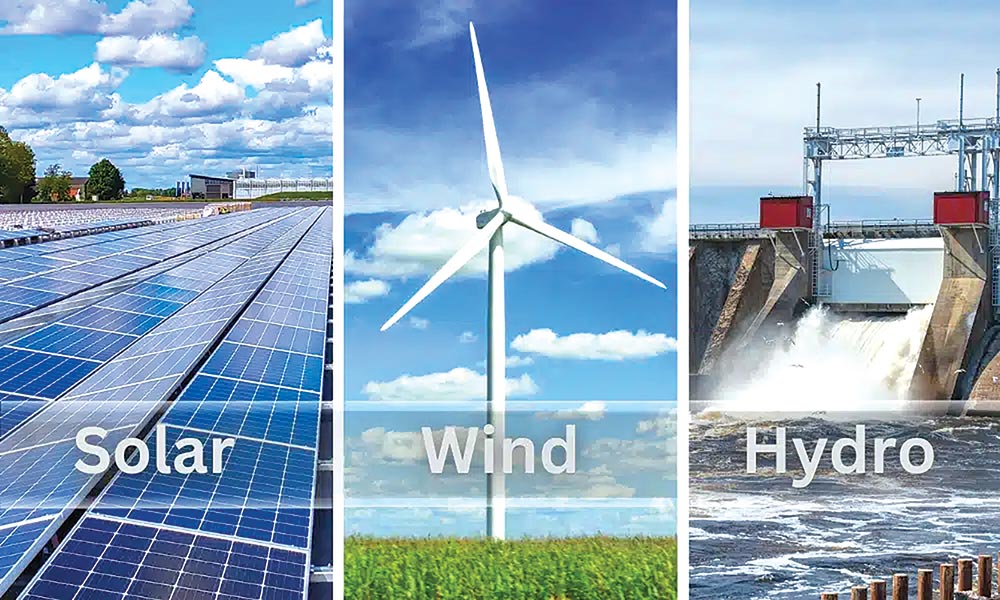
Farah Kabir: We want to see a just transition. That is why, for the last 10 years we have been talking about moving away from fossil fuels to alternatives. And now we know there are alternatives. We have seen how they work-solar energy, hydro energy, wind energy. We would like to see Bangladesh chalk out a path towards that just transition. We are not expecting it to happen overnight, but the plan, the strategy, and the finances need to be in place. Ten years from now, Bangladesh will have not only a mixed energy position but a just energy position.
DO: Is it possible for the government and NGOs to implement the idea of spreading renewable energy, especially solar panels, across the country within the next five years, with a target of producing 3,000 to 5,000 megawatts?
FK: I believe it is possible. It is not just about the government and NGOs-it is about the whole of society.
DO: As the issue of importing panels has arisen, we see that Bangladesh is looking for the cheapest options, which are not fourth-generation items. This is going to be a huge problem for Bangladesh in the near future. How do you want to address this issue, and what is your comment on the battery issue?
FK: As I already mentioned, the government has to provide specific guidelines on what is permissible to import-what kind of solar panels we are allowed to use, whether in a home, a factory, or an institution. Unless you have those guidelines, you cannot solve this problem ad hoc. Traders or companies may try to sell the cheapest item, but it is demand that will ultimately decide whether you want cheap or long-term sustainable panels. Technology is advancing, so a lot of things have changed. I don’t have any major comments on that except that the government has to take action in terms of guidance and then play a monitoring role. And I don’t see the government having proper guidance on batteries and e-waste disposal. This is something we need to take up. We need to have this conversation with the government, raise awareness, and find the relevant strategy that will help address and reduce the problem.
 DO: You have said several times that government guidelines are a must to implement renewable energy projects. Could you explain why political will and monitoring are essential?
FK: Absolutely. Without political will, no country can take up new action or a new strategy. The government needs to explain to society-to the private sector and non-government sectors-why it is important to adopt solar and alternative energy. It is not an impossible task; it is very possible. In fact, we would have already reached this target if there had been the political will over the past 10 years. Monitoring is also critical to see whether these changes are effective-whether they help the most affected communities make that shift. And the most important thing in all this is global politics. When I talk about political will, it is at the national level, but also at the global level. With such a serious fossil fuel industry lobby, it is very difficult for nations to move on their own because they are bombarded by the fossil fuel industry and corporates trying to influence them. So, we need to take a strong position.
DO: As far as renewable energy and energy transition are concerned, where do women stand? What about women's access to finance?
FK: Women’s position is at the centre of household or rooftop energy packages. When we talk about mega projects, of course, they can be accompanied by other measures. But when we talk about making the change, we are looking at homesteads and communities. In these spaces, women are at the centre-they keep the community and the country going. So it is critical that we start designing a role for women in this transition. It can be at the micro-level: a community woman doing poultry with solar panels, involved in agriculture, working in the field, involved with irrigation-you can support her there. Then when you come to industries, whichever industry you are looking at, it is high time to switch to alternative energy. Our biggest industry is the readymade garments industry, and it is women who work there. So again, there is a role for women to play. That is why I believe that women’s understanding, contribution, and participation-not just at the implementation end but also in designing these projects-will make all this possible.
DO: The government has already taken up a new policy for renewable energy. Do you see that as a positive step? Does it fulfil the idea you are suggesting for women?
FK: Yes, it is in the right direction. The government is taking some steps in the right direction, but not all of these are gender-sensitive. The problem we have is structural and systemic: women are not recognised as having agency. Women are only recognised as being vulnerable, as vulnerable communities at the receiving end. But we know that women can change, are changing, and we should talk about that. So when the government makes a policy, it needs to be gender-sensitive. When we look at these policies through a gender lens, it is very difficult to find gender sensitivity and gender inclusion in them.
Therefore, our work continues. We are continuing to lobby and advocate for the inclusion of youth and persons with disabilities. When you are bringing change, this is the opportunity to change all the old negative practices and come up with new inclusive practices.

Loading...
Loading...
Also read







Editor : Iqbal Sobhan Chowdhury
Published by the Editor on behalf of the Observer Ltd. from Globe Printers, 24/A, New Eskaton Road, Ramna, Dhaka.
Editorial, News and Commercial Offices : Aziz Bhaban (2nd floor), 93, Motijheel C/A, Dhaka-1000.
Phone: PABX- 41053001-06; Advertisement: 41053012; 01793317829, 01550707291, 01550707296
E-mail: [email protected], [email protected]. [email protected], [email protected], [email protected], [email protected], Online-email: [email protected]


