



| HEADLINE |

|

200 Feed Mills Face Closure as Bangladesh Eyes Global Halal Market
Published : Monday, 2 November, 2026 at 12:00 AM
Mohosinul Karim


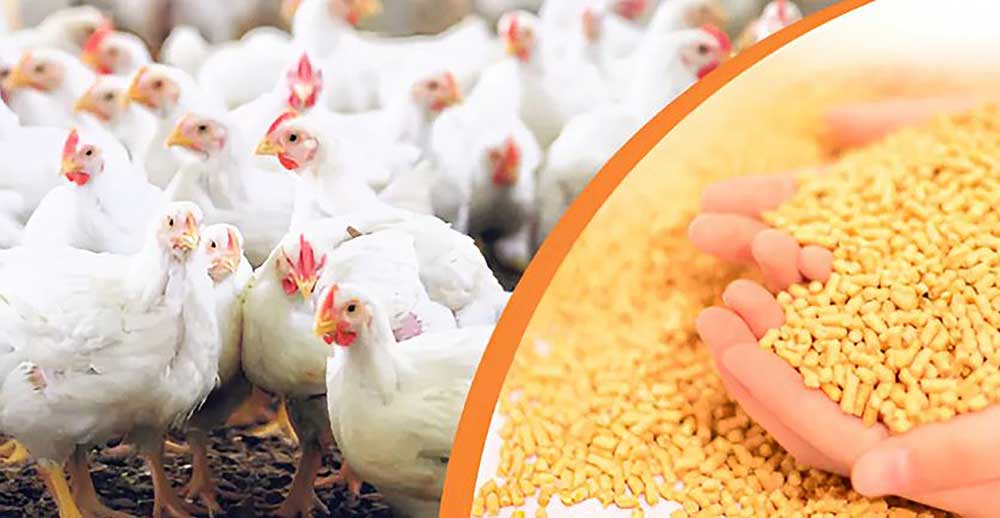 The government has launched a crackdown on 200 animal feed mills over alleged quality failures, stepping up efforts to ensure safe livestock production, curb antibiotic use and position Bangladesh to capture a larger share of the rapidly expanding global halal market.
The Department of Livestock Services (DLS) has already served notices on the 200 feed mills, initiating action to shut down the establishments as part of a broader drive to improve feed quality, strengthen food safety and bring the country's livestock industry in line with international standards.
The move comes as Bangladesh's animal product exports gather momentum, offering fresh opportunities to tap into a global halal economy valued at around $3 trillion and projected to reach $9.45 trillion by 2034.
"We want to sustain export growth and secure a significant share of the global halal market by improving product quality, ensuring food safety and strengthening compliance with international standards," a senior DLS official told The Daily Observer.
According to DLS data, Bangladesh earned $15.45 million from animal product exports in the first three months of the current fiscal year (July-September 2026), with September alone contributing $8.66 million. The earnings are equivalent to nearly Tk 193.09 crore.
The export performance follows a sharp turnaround in the preceding six months. Between March and August 2026, earnings reached $10.46 million, marking a 217.20 per cent increase from $3.30 million in the September 2025-February 2026 period. August alone generated $4.88 million, surpassing the combined earnings of the previous six months.
Bangladesh exports a diverse range of animal-based products, including meat and meat products, dairy items, curd, sweets, gelatin, duck feathers, pigeons, animal horns, leather scraps and veterinary supplements.
Its export destinations include the Maldives, Canada, the United States, Singapore, China, Malaysia, Italy, Kuwait, Thailand, France, South Korea and Nepal.
The country's expanding domestic production base is also creating opportunities to scale up exports. In FY26, milk production rose to 157.53 lakh tonnes from 155.38 lakh tonnes a year earlier. Meat production increased to 90.70 lakh tonnes from 89.54 lakh tonnes, while egg output climbed to 2,509.41 crore from 2,440.65 crore.
The country had 253.29 lakh cattle and 274.65 lakh goats during the fiscal year. Around 43.64 per cent of households are involved in livestock or poultry rearing in some form, according to DLS.
The livestock sector contributed 1.81 per cent to GDP and 16.56 per cent to agricultural GDP in FY26, registering growth of 3.30 per cent.
A lucrative market, but quality remains the key
The global halal economy offers Bangladesh a potentially lucrative export frontier. According to the Ministry of Commerce, the country's halal product exports amounted to nearly $943 million in the last fiscal year.
Saudi Arabia, the United Arab Emirates, Qatar, Kuwait, Oman and Bahrain are among the major potential destinations, with strong demand for meat, frozen food, spices, bakery products and other consumer goods. Malaysia and Indonesia also offer significant opportunities.
The global halal food market alone was valued at $1.53 trillion in 2024, highlighting the scale of the opportunity. However, industry experts warn that Bangladesh cannot translate this market potential into export earnings without addressing persistent weaknesses in certification, quality assurance, packaging, branding and compliance with international standards.
Dr Md Deen Islam, associate professor of economics at Dhaka University, said Bangladeshi producers often lacked adequate market research and effective marketing strategies to compete internationally.
"Obtaining halal certification alone will not guarantee access to international markets. Producers must understand market-specific demand and improve product quality, packaging, pricing, supply chains and branding," he said.
He also stressed the need for stronger coordination between the ministries of commerce and foreign affairs to identify overseas markets, facilitate market access and help exporters meet country-specific requirements.
DLS Director General Dr Md Shahuzzaman Khan said the government was pursuing a comprehensive programme to align livestock production with the expanding global halal economy.
"Initiatives are underway to bring antibiotic use in livestock down to zero. We have also conducted operations at feed mills producing animal feed. Notices have already been served to shut down 200 feed mills," he said.
He said the department was working to ensure food safety, control animal diseases and meet international sanitary and phytosanitary standards.
The government is also pursuing plans to establish internationally accredited laboratories, modern storage facilities, processing plants and standardised packaging systems to improve the competitiveness of animal products in overseas markets.
The DLS aims to transform livestock production into a sustainable, modern and export-oriented industry through public-private partnerships and greater participation by entrepreneurs.

Loading...
Loading...
Also read



Editor : Iqbal Sobhan Chowdhury
Published by the Editor on behalf of the Observer Ltd. from Globe Printers, 24/A, New Eskaton Road, Ramna, Dhaka.
Editorial, News and Commercial Offices : Aziz Bhaban (2nd floor), 93, Motijheel C/A, Dhaka-1000.
Phone: PABX- 41053001-06; Advertisement: 41053012; 01793317829, 01550707291, 01550707296
E-mail: [email protected], [email protected]. [email protected], [email protected], [email protected], [email protected], Online-email: [email protected]


