



| HEADLINE |

|

Earnings hit Tk 193 crore in three months
Notice served to shut down 200 feed mills
Livestock ministry working on export of halal animal products
Published : Sunday, 1 November, 2026 at 5:42 PM
Toriqul Islam Sumon


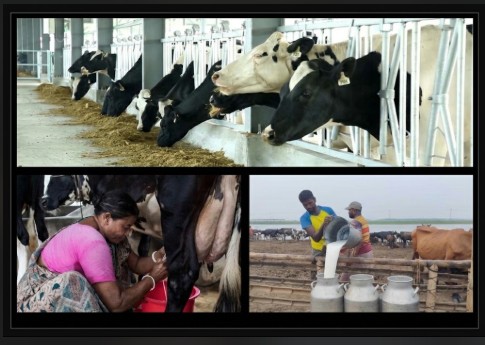
Building an export-oriented Bangladesh is one of the primary goals of the current government. To touch export milestones, the livestock sector is gradually transforming into a robust export-driven domain. This sector plays a crucial role in achieving self-sufficiency in food production, meeting the demand for animal protein, ensuring food security, alleviating poverty, and boosting the economy.
Alongside meeting domestic demand, the export of animal products to international markets is on the rise due to increased production of milk, meat, and eggs. Between March and August 2026—a span of six months—earnings from animal product exports stood at $1,04,63,727 (USD 10.46 million), marking a significant 217.20 percent increase compared to the previous six-month period.
Notably, the export earnings for August alone reached $48,82,095, surpassing the combined earnings of the preceding six months.
According to the Ministry of Fisheries and Livestock, Bangladesh exports a diverse range of animal products to various countries. These include meat and meat products, bull sticks, curd, roshmalai, sweets (dairy products), duck feathers, gelatin, cow tail hair, pigeons, omasum, moglai parota (egg-based products), buffalo/cattle horns, leather scraps, and veterinary medicine supplements. Importing countries include Maldives, Canada, the United States, Singapore, Nigeria, Vietnam, China, Indonesia, Italy, Malaysia, Egypt, Kuwait, Pakistan, Thailand, France, South Korea, Hong Kong, and Nepal.
Data from the Department of Livestock Services (DLS) reveals that earnings from animal product exports were $32,98,662 during the September 2025–February 2026 period, which subsequently surged to $1,04,63,727 in the following six months—representing an increase of $71,65,065 within half a year.
A month-by-month breakdown also demonstrates an upward trajectory: earnings stood at $6,78,129 in March 2026, rising to $10,48,903 in April. Although earnings dipped slightly to $7,50,808 in May, they rebounded to $11,98,778 in June, reached $19,05,014 in July, and peaked at $48,82,095 in August.
This growth momentum in export earnings has continued into the first quarter of the subsequent fiscal year. Earnings from July to September of the 2026–27 fiscal year registered at $1,54,47,170, which is approximately Tk 193.08 crore in local currency. September alone contributed $86,59,861 to this total.
Sources note that alongside exports, domestic production has also made notable headway.
According to DLS statistics for the 2025–26 fiscal year, milk production reached 157.53 lakh tons, up from 155.38 lakh tons in the previous fiscal year—an annual increase of 2.15 lakh tons. Various initiatives have been undertaken to boost milk production, including breed improvement, supply of quality feed, disease control, and modernization of farm management.
Implemented with World Bank financing at a cost of approximately Tk 4,280 crore, the Livestock and Dairy Development Project (LDDP) has worked on enhancing productivity, market linkages, animal insurance, and creating consumer demand for milk. School feeding programs have also been initiated to foster milk-drinking habits among children.
Meat production has similarly witnessed growth, rising from 89.54 lakh tons in the 2024–25 fiscal year to 90.70 lakh tons in 2025–26. Over the same period, the country’s cattle population stood at 253.29 lakh, while goats numbered 274.65 lakh. The poultry sector also expanded; egg production reached 2,509.41 crore in the 2025–26 fiscal year, compared to 2,440.65 crore the previous year, marking a growth of 68.76 lakh eggs in a single year.
Department figures indicate that 43.64 percent of total households in the country are engaged in livestock and poultry rearing in some capacity. Specifically, 11.15 percent of households are solely involved in livestock rearing, while 23.52 percent are engaged exclusively in poultry farming.
In the 2025–26 fiscal year, the livestock sector contributed 1.81 percent to the country’s Gross Domestic Product (GDP), accounting for 16.56 percent of the total agricultural GDP. The sector’s GDP growth rate stood at 3.30 percent during this period.
According to the Ministry of Commerce, halal product exports reached nearly $943 million in the last fiscal year, equivalent to approximately Tk 11,600 crore at current exchange rates. Compared to the global halal market, Bangladesh's halal exports remain below $1 billion, with current shipments hovering around $850 million. Saudi Arabia, the United Arab Emirates, Qatar, Kuwait, Oman, and Bahrain serve as major markets, showing high demand for food, meat, frozen foods, spices, bakery items, and consumer goods, with Malaysia and Indonesia presenting secondary opportunities.
In 2024, the global market value for halal food alone reached $1.53 trillion. Research published in 2025 regarding the global halal industry noted that major challenges include quality assurance, certification, and the harmonization of international standards—hurdles that equally apply to Bangladesh.
Dr. Md. Deen Islam, Associate Professor of Economics at the University of Dhaka, observed that local producers frequently suffer from a lack of market research and marketing strategies.
According to him, despite having products, producers must understand specific market demands, while branding and packaging need substantial improvement. Coordination between the Ministry of Commerce and the Ministry of Foreign Affairs is also imperative.
He emphasized that simply acquiring halal certification will not build overseas markets; product quality, packaging, pricing, supply chains, and branding must all be optimized.
Director General of the Department of Livestock Services, Dr. Md. Shahuzzaman Khan, stated, "The global economy is currently leaning toward the halal trend, and we are striving to follow the same path.
To this end, initiatives are underway to bring the use of antibiotics in livestock down to zero, and operations are being conducted across various feed mills that produce animal feed. Already, steps have been initiated to shut down 200 feed mills, and official notices have been served."
He added that efforts are ongoing to ensure product quality, food safety, disease control, and compliance with international sanitary and phytosanitary (SPS) standards in global markets to further boost export earnings.
Additionally, steps are being taken to establish internationally accredited laboratories, modern storage facilities, processing plants, and standard packaging amenities.
The Director General further reiterated that, alongside fulfilling domestic animal protein demands, the department is working with the vision of developing the livestock sector into a sustainable, modern, and export-oriented industry. Through public-private partnerships and the cooperation of entrepreneurs, expansion of animal product exports in the international arena is actively underway.

Loading...
Loading...
Also read




Editor : Iqbal Sobhan Chowdhury
Published by the Editor on behalf of the Observer Ltd. from Globe Printers, 24/A, New Eskaton Road, Ramna, Dhaka.
Editorial, News and Commercial Offices : Aziz Bhaban (2nd floor), 93, Motijheel C/A, Dhaka-1000.
Phone: PABX- 41053001-06; Advertisement: 41053012; 01793317829, 01550707291, 01550707296
E-mail: [email protected], [email protected]. [email protected], [email protected], [email protected], [email protected], Online-email: [email protected]


