



| HEADLINE |

|

BD should consider 2+2 bachelor’s model to bridge classroom-industry gap
Published : Wednesday, 4 November, 2026 at 12:00 AM


 Nearly 78.87 per cent of Bangladesh’s unemployed population comprises young people, while around 12 per cent of university graduates remain jobless, according to some estimates. More concerning, about 18.9 per cent of young people are classified as NEET - not in education, employment or training.
Despite having around 171 public and private universities, Bangladesh’s higher education system is struggling to equip graduates with job-market skills.
Technological skills can increase earning potential by at least 17 per cent, but Bangladeshi graduates score an average of only 44 out of 100 in basic computer literacy, the article notes.
Inadequate investment and outdated, memorisation-based curricula disconnected from workplace needs are identified as key reasons. To address the problem, Bangladesh should consider a 2+2 Bachelor’s Model (Classroom + Industry), combining two years of academic study with two years of practical industry experience.
Rethinking higher education in the age of AI: The conventional four-year undergraduate structure is rooted in an education model developed more than a century ago, when universities were the principal sources of knowledge. Today, the internet, Google and artificial intelligence have made theoretical knowledge widely accessible.
A 2+2 Bachelor’s Model combines two years of academic study with two years of practical industry experience. The first two years would cover essential subject knowledge, professional ethics and digital literacy while the third and fourth years would focus on industry specialisation
Universities should therefore move beyond simply delivering information and focus on preparing students for changing industries and workplaces. Much of the existing curriculum is disconnected from employment, while four years of study place a major burden on families.

How the 2+2 model would work: The first two years would cover essential subject knowledge, professional ethics and digital literacy. On completion, students would receive an Associate Degree.
This qualification would provide an exit route for those unable to afford four years of study. They could enter the job market with a recognised qualification rather than being labelled university dropouts, potentially applying for mid-level positions.
The third and fourth years would focus on industry specialisation and apprenticeship under a Triple Helix Model, bringing together government, academia and industry. At least 40 per cent of the programme during this stage would be delivered by industry professionals.
In the third year, students would receive dual supervision from academic and industry supervisors. University teachers would monitor their workplace progress, while industry professionals would teach on campus. Before internships, students would complete three- to four-week professional courses in areas such as digital marketing and financial modelling.
Interns would receive Tk 10,000-12,000, alongside reduced or subsidised tuition fees.
In the fourth year, students would work under industry supervisors through apprenticeship arrangements, moving towards direct employment without requiring an academic supervisor.
Benefits for students, families and businesses: Parents would bear the cost of two years of academic study instead of four. Students would earn through internships in the third year and could receive around Tk 20,000 in the fourth year, compared with an illustrative full-time salary of Tk 30,000.
Industries would gain early access to promising graduates and train them according to their requirements, potentially reducing recruitment and training costs.
The proposal cites Chinese university workshops where students work with industry professionals. In Bangladesh, BUET students could develop solutions to Old Dhaka’s traffic congestion without demolishing buildings or displacing businesses.
Bringing academia and industry closer: Teachers must become familiar with workplace realities. A commercial manager, for example, may be better placed to explain letter of credit management than a textbook-based instructor.
It suggests inviting corporate professionals to teach, forming Industry Advisory Boards, establishing company-funded laboratories and incubators, introducing capstone projects and appointing experienced professionals as adjunct faculty.
Barriers include slow curriculum updates, promotion systems favouring theoretical publications, weak university-business trust, students’ limited soft skills and poor links with small and medium-sized enterprises.
Policy changes needed: The proposal questions the widespread pursuit of master’s degrees without clear academic or professional goals. It argues that research should focus more on practical problems, including the fuel, working hours and economic losses caused by traffic congestion.
For national implementation, it recommends a common outcome-based curriculum, withdrawing duties on imported books and educational materials, waiving VAT on tuition fees, reducing corporate tax for compliant private universities from 15 to 10 per cent, and introducing a minimum academic wage and portable healthcare and pension benefits for teachers.
The UGC should assess programmes by graduates’ employment outcomes, not enrolment alone.
Bangladesh must invest more in higher education and turn its young population into a skilled workforce. Rather than producing graduates with certificates alone, universities should equip students with practical abilities that meet the needs of the economy. A national assessment of the 2+2 Bachelor’s Model, followed by possible implementation, could be an important step towards that goal.
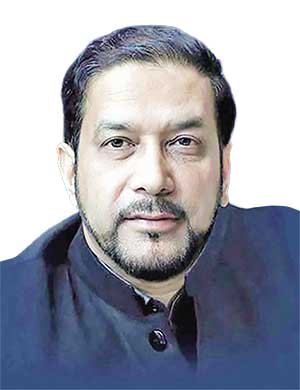
The writer is Director, Institute of Business Administration (IBA), University of Dhaka

Loading...
Loading...
Also read



Editor : Iqbal Sobhan Chowdhury
Published by the Editor on behalf of the Observer Ltd. from Globe Printers, 24/A, New Eskaton Road, Ramna, Dhaka.
Editorial, News and Commercial Offices : Aziz Bhaban (2nd floor), 93, Motijheel C/A, Dhaka-1000.
Phone: PABX- 41053001-06; Advertisement: 41053012; 01793317829, 01550707291, 01550707296
E-mail: [email protected], [email protected]. [email protected], [email protected], [email protected], [email protected], Online-email: [email protected]


