



| HEADLINE |

|

The Courage That Won Bangladesh
Published : Friday, 6 November, 2026 at 12:00 AM
Rajeev Ahmed


 A country boat moves along a river in 1971, carrying food and messages for fighters nearby. On the bank, a student waits for news. In a village courtyard, a family prepares a meal for strangers, while beyond the fields, young people have left home to join the struggle. These were not isolated acts; they formed the human core of Bangladesh’s Liberation War.
Ordinary people won the war by taking extraordinary risks. When the Pakistani military crackdowns began on 25 March 1971, resistance quickly spread beyond the regular Bengali soldiers who refused orders. Students, farmers, teachers, workers, police officers, and villagers responded. Some joined organised units, but many others sheltered fighters, carried intelligence, supplied food, treated the wounded, or helped displaced families. I think it is clear that the Mukti Bahini succeeded primarily because it was the armed expression of this wider civilian effort.
Formal military charts tell only part of the story. General M A G Osmani organised the armed resistance into distinct sectors, combining regular soldiers with guerrilla units. Yet maps and organisational hierarchies fail to capture why the movement survived. Families donated whatever food they had, while teenagers walked towards enemy fire without knowing if they would see home again. Coordination mattered, but the true driving force was decentralised grit. I would argue that official command structures only succeeded because ordinary people sustained them from the ground up.
Taramon Bibi’s experience in Kurigram disrupts conventional imagery around the 1971 war. She started at a guerrilla camp simply preparing meals for fighters. Soon she gathered intelligence on occupying forces and underwent training to join combat operations in Sector 11. A woman from a disadvantaged rural background stepped directly into armed resistance. Her service demanded exceptional nerve. The state awarded her the Bir Pratik title in 1973, but she remained completely unaware of it for decades. A researcher eventually tracked her down, and she finally received the recognition in 1995. Post-war reality brought persistent hardship rather than comfort. State medals ring hollow when veterans face daily destitution. Gratitude means little unless it addresses basic survival and dignity.
Kakon Bibi earned the Bir Pratik award, yet historical accounts regularly minimise women’s combat roles during 1971. Belonging to the Khasi community, she served as an intelligence operative and engaged directly alongside guerrilla units. Official records note her presence in roughly twenty armed clashes. Her service proves that the Mukti Bahini drew strength across social divides rather than from a single demographic. I would argue that framing female participants as mere helpers erases the genuine tactical weight they carried. They formed the actual backbone of the armed resistance.
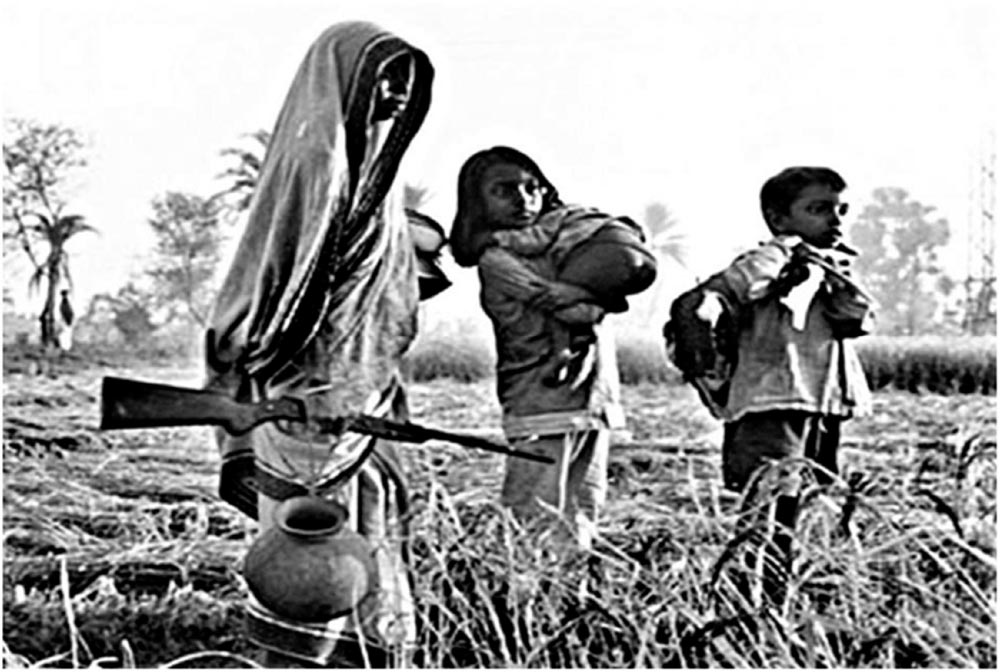 A Liberation War Museum account from Jessore describes villagers sheltering families fleeing urban centres and hiding soldiers who slipped out of the cantonment. Local students and residents organised food supplies for guerrilla units. These quiet logistics mattered more than frontline firepower because armies starve without civilian backing. A bowl of rice or a hidden room kept the movement alive. Villages formed the core infrastructure of the war rather than passive scenery.
Archives at the Liberation War Museum keep these lives visible. Its collections include wartime diaries, helmets, photographs, and other donated objects. By August 2021, the oral history programme gathered more than 50,000 testimonies, including accounts gathered by students interviewing elders. Official histories frequently overlook the personal dimensions of a war. These records demonstrate that 1971 involved remembered journeys, family losses, and the everyday choices through which people built a country.
For younger Bangladeshis, these accounts should escape the trap of mere nostalgia. The constitution’s preamble ties the republic’s birth directly to the sacrifice of 1971. It enshrines nationalism, socialism, democracy, and secularism alongside guarantees of fundamental rights, equality, and justice. Those principles form the direct inheritance of the liberation struggle. Honouring the people who fought means confronting a hard question: does the modern state actually live up to that blueprint?
Honouring the people of 1971 requires more than official monuments. Schools must teach these accounts, archives need proper protection, and surviving witnesses deserve a hearing before their generation passes. Families should record what grandparents and neighbours remember. Local histories from villages, river ports, and border towns demand the same attention given to major military engagements. The freedom fighter whose name is known deserves honour; the countless helpers whose names were never recorded deserve remembrance too.
The writer is the Editor of geopolits.com

Loading...
Loading...
Also read



Editor : Iqbal Sobhan Chowdhury
Published by the Editor on behalf of the Observer Ltd. from Globe Printers, 24/A, New Eskaton Road, Ramna, Dhaka.
Editorial, News and Commercial Offices : Aziz Bhaban (2nd floor), 93, Motijheel C/A, Dhaka-1000.
Phone: PABX- 41053001-06; Advertisement: 41053012; 01793317829, 01550707291, 01550707296
E-mail: [email protected], [email protected]. [email protected], [email protected], [email protected], [email protected], Online-email: [email protected]


