



| HEADLINE |

|

How developers fix flat prices
Published : Friday, 6 November, 2026 at 12:00 AM
Walid Khan


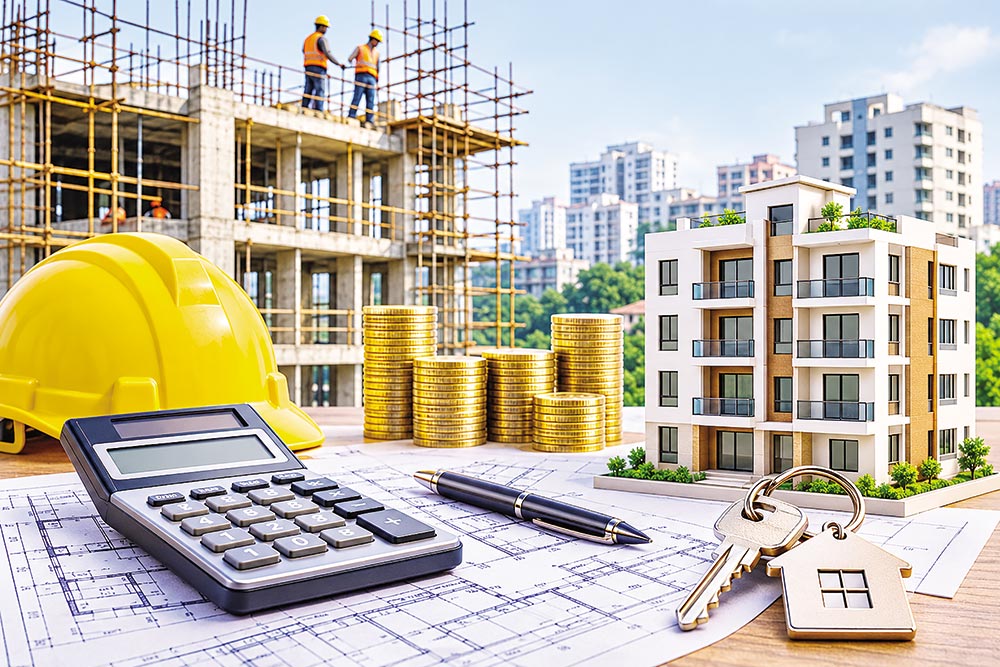 The price of a flat depends on several factors, including land costs, construction expenses, government approvals, bank loans, project location, amenities and the developer’s profit margin. As a result, flats of the same size in the same locality can have significantly different price tags.
When buying a flat in Dhaka, one of the first questions buyers ask is about the price per square foot. But many do not know what costs are included in that price or why similar flats in neighbouring buildings may have different prices.
Real estate developers say flat prices are determined by the overall cost of a project, which varies from one location and developer to another.
Land is one of the largest expenses in a housing project. In areas such as Gulshan, Banani, Dhanmondi, Uttara, Mirpur and Mohammadpur, differences in land prices directly affect the selling prices of flats.
Many housing projects in Dhaka are developed through joint ventures between landowners and developers. In these arrangements, the landowner provides the land, while the developer finances and manages the construction.
Under an agreement, both parties receive a certain number of flats or a share of the saleable area. The larger the landowner’s share, the fewer flats remain for the developer to sell. This can increase the cost that must be recovered from the remaining units.
Construction expenses are another major factor. These include the costs of steel rods, cement, sand, bricks, stone, tiles, sanitary fittings, electrical equipment, doors, windows and lifts.
Developers also have to pay for architects, engineers, workers and construction supervision. The costs vary depending on the building’s height and design, soil conditions, piling requirements and the quality of materials used.
A project also involves expenses beyond land and construction. Developers have to pay government fees for design approvals, clearances, utility connections and other administrative procedures.
These include prescribed fees for approval from the Rajdhani Unnayan Kartripakkha (RAJUK) and permits from relevant authorities, including the city corporation.
Delays in obtaining approvals can extend the project timeline and increase costs. Developers may have to pay additional interest on bank loans, staff salaries and other operating expenses during the extended period.
Some real estate developers also allege that informal payments are sometimes made to relevant officials to speed up approvals and paperwork. They say such payments add to project costs and may eventually affect flat prices.
However, there is no reliable, comprehensive data on how widespread these alleged payments are or how much money is involved. Official fees and alleged informal payments should therefore be treated separately.
The Floor Area Ratio (FAR), which determines how much a developer can build on a plot, is another important factor.
If planning restrictions limit the total floor area, developers may have fewer flats or less saleable space. But land costs and some other fixed expenses remain unchanged. This increases the cost per square foot of the space available for sale.
Location and facilities also play a major role in pricing. Flats near main roads, metro rail stations, schools, hospitals and markets often attract higher demand.
Even within the same building, prices may vary depending on the floor, natural light, ventilation, views, balconies and parking facilities.
Amenities such as swimming pools, gyms, community halls, rooftop gardens and security systems also add to project costs and can influence selling prices.
Many developers use bank loans to finance their projects. Interest payments and other financing costs are therefore included in the overall project expenditure. Construction delays can further increase these expenses.
Developers also spend money on marketing, office operations, security, legal services and administration. After calculating these costs, they add an expected profit margin to set the selling price.
The profit margin varies depending on project risks, market demand and competition.
Buyers, meanwhile, should not rely only on the price per square foot mentioned in advertisements. They should check the difference between saleable area and usable area. Saleable area may include space occupied by walls and shared facilities such as staircases and lifts. Other expenses, including parking, utility connections, service charges and registration fees, can also increase the total cost of buying a flat.
Greater transparency in flat pricing can build confidence among both buyers and developers. A clear breakdown of land costs, construction expenses, government fees, financing costs and other charges would help buyers compare projects and make informed decisions.

Loading...
Loading...
Also read



Editor : Iqbal Sobhan Chowdhury
Published by the Editor on behalf of the Observer Ltd. from Globe Printers, 24/A, New Eskaton Road, Ramna, Dhaka.
Editorial, News and Commercial Offices : Aziz Bhaban (2nd floor), 93, Motijheel C/A, Dhaka-1000.
Phone: PABX- 41053001-06; Advertisement: 41053012; 01793317829, 01550707291, 01550707296
E-mail: [email protected], [email protected]. [email protected], [email protected], [email protected], [email protected], Online-email: [email protected]


