



| HEADLINE |

|

Garment Unrest Raises New Alarm
Bangladesh’s Economic Lifeline Under Fire
Published : Saturday, 7 November, 2026 at 12:00 AM
FARUK AHMED


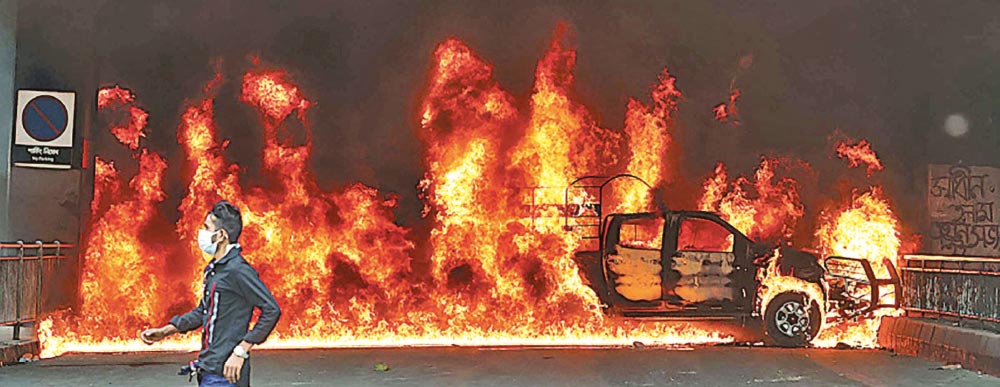
Bangladesh cannot afford to have its export lifeline paralysed while its domestic economy struggles to regain momentum and external risks multiply. A wage settlement is no longer merely an industrial necessity; it is an economic imperative.
Bangladesh’s economic lifeline is coming under fire from within and without.
As thousands of garment workers take to the streets demanding higher wages, the country’s biggest export industry is facing a potentially damaging industrial crisis just when external shocks, Middle East tensions and fragile domestic demand are exposing the economy’s vulnerabilities. What began as a wage dispute is threatening to become a much bigger test of Bangladesh’s economic resilience.
The timing could hardly be worse. The garment industry, the principal engine of export earnings and industrial employment, is facing mounting production disruptions, while escalating geopolitical tensions threaten energy security, trade flows and the country's external stability. Remittances remain a critical buffer, but any simultaneous pressure on garments, exports and overseas employment could leave the economy dangerously exposed.
There is, however, a tentative opening for compromise. The newly formed six-member wage board agreed on Wednesday to introduce a revised pay structure from December, following five days of protests that disrupted production across major apparel manufacturing hubs. The first salaries under the revised structure are expected in January 2027.
But the board has yet to decide the size of the increase. Workers are demanding a minimum monthly wage of Tk30,000, up from Tk12,500, arguing that persistent inflation and soaring food, housing and transport costs have devastated their purchasing power. Babul Akter, the workers' representative on the board, said further meetings would determine the new pay structure.
Meanwhile, the streets remain volatile. Clashes between workers and police erupted in Savar and Gazipur, two major industrial centres, as protesters blocked roads and highways. Police responded with tear gas and sound grenades, while several factories suspended operations amid fears of further violence. Hundreds of factories have reportedly shut during a crucial production period for spring and summer export orders, raising concerns over shipment delays and contractual obligations.
The central question is no longer simply how much workers should earn, but how much economic damage Bangladesh can absorb if the industrial confrontation continues.
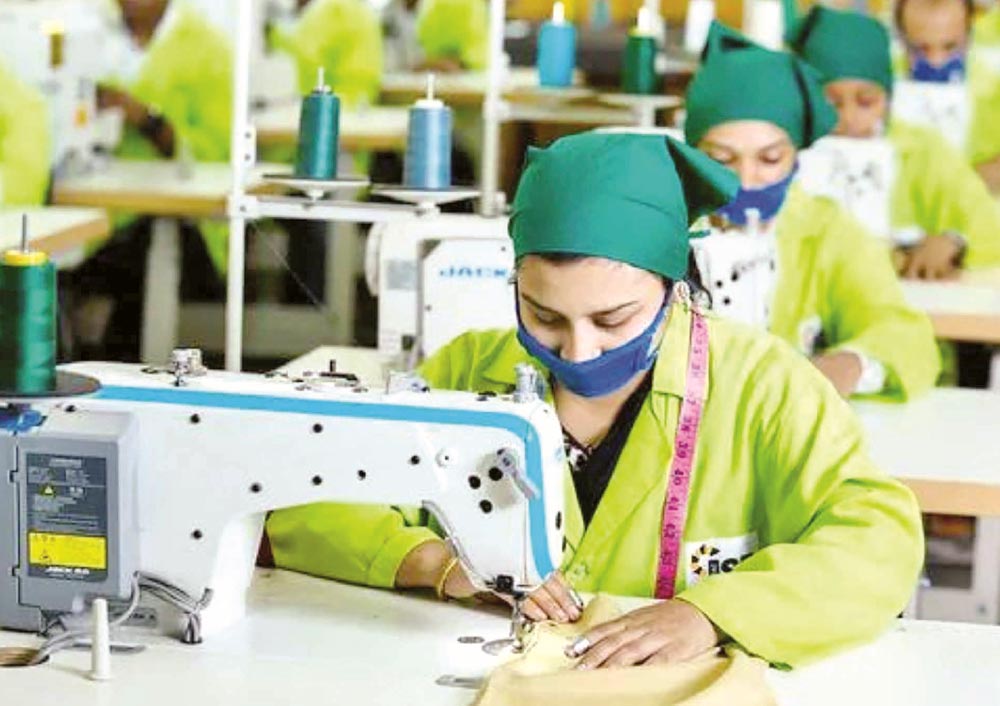 The stakes are enormous. The ready-made garment (RMG) sector employs around four million workers, contributes approximately 10 per cent to GDP and generates more than 80 per cent of export earnings. Any prolonged disruption could undermine production schedules, delay shipments, squeeze foreign exchange receipts and weaken Bangladesh's standing as the world's second-largest apparel exporter after China.
The crisis is unfolding against an already fragile domestic economic backdrop. Despite improving external indicators and renewed investment ambitions, the economy remains constrained by weak private-sector confidence, expensive credit, persistent inflation and energy uncertainty.
Private-sector credit growth plunged to a record-low 4.17 per cent in September 2026, while inflation edged up to 8.34 per cent from 8.26 per cent in August. Exports grew by only around 6 per cent during the first four months of FY2027, although remittances increased by 13 per cent, providing an important cushion.
These figures expose a troubling imbalance: the external sector is showing some resilience, but domestic investment and business activity remain subdued. High borrowing costs, energy constraints, weak demand and cautious bank lending are discouraging businesses from expanding. Bangladesh Bank's references to subdued purchasing managers' index (PMI) readings and weak capital-goods demand reinforce concerns that companies are postponing investment.
The garment unrest could deepen this weakness. If factories cannot operate consistently, manufacturers may lose production time, miss shipment deadlines and face higher compliance and financing costs. International buyers operating under tight sourcing schedules have alternatives across competing apparel-producing countries. Once orders shift elsewhere, Bangladesh may find it difficult to recover them.
The wage dispute also exposes a structural contradiction in the country's export model. Bangladesh has built its global apparel competitiveness partly on relatively low labour costs, but that advantage is becoming increasingly difficult to sustain as living costs rise and workers demand a greater share of the industry's value. Suppressing wages cannot be a permanent substitute for productivity, technological upgrading, better management and higher-value manufacturing.
Factory owners, meanwhile, face their own cost pressures, including expensive energy, financing constraints and intensifying regional competition. The challenge is to establish a wage structure that protects workers' purchasing power without undermining the financial viability of manufacturers, particularly smaller factories. International buyers must also shoulder responsibility by offering commercially sustainable prices rather than demanding lower costs while expecting higher compliance standards.
The wider geopolitical picture adds another layer of risk. An escalation of the Middle East conflict could intensify energy-market volatility, raise import costs and disrupt global trade. Bangladesh, heavily dependent on imported fuel and energy, would be particularly vulnerable to another external price shock. Any adverse impact on migrant employment and remittance flows would further complicate the country's balance-of-payments position.
At the same time, Bangladesh is seeking to attract substantial foreign investment, including Japanese capital under the BIG-B initiative, to accelerate industrialisation and diversify exports. But investment ambitions cannot be realised in an environment where factories face recurring shutdowns, labour disputes and uncertainty over production continuity. Global investors assess not only incentives and infrastructure but also industrial relations, policy predictability and the reliability of supply chains.
The government therefore faces a test extending well beyond the wage board. It must facilitate a credible settlement, prevent further violence, protect workers' rights and restore confidence in the industrial sector. Factory owners must engage constructively, while workers need a transparent timetable and a credible commitment to improved wages and working conditions.
The warning is clear: Bangladesh cannot afford to have its export lifeline paralysed while its domestic economy struggles to regain momentum and external risks multiply. A wage settlement is no longer merely an industrial necessity; it is an economic imperative. Failure could cost the country far more than higher wages - lost orders, weaker foreign exchange earnings, declining investor confidence and millions of livelihoods placed at risk.

Loading...
Loading...
Also read






Editor : Iqbal Sobhan Chowdhury
Published by the Editor on behalf of the Observer Ltd. from Globe Printers, 24/A, New Eskaton Road, Ramna, Dhaka.
Editorial, News and Commercial Offices : Aziz Bhaban (2nd floor), 93, Motijheel C/A, Dhaka-1000.
Phone: PABX- 41053001-06; Advertisement: 41053012; 01793317829, 01550707291, 01550707296
E-mail: [email protected], [email protected]. [email protected], [email protected], [email protected], [email protected], Online-email: [email protected]


