



| HEADLINE |

|

IDRA UNDER FIRE
Can a Watchdog Under Scrutiny Clean Up Bangladesh’s Insurance Industry?



 “IN A WORLD STARVED OF FOOD, the earth becomes poetry, and the full moon looks like a freshly baked loaf of bread. But in a world poisoned by bribery, IDRA seems to have become a fantasyland where integrity, ethics and conscience have apparently been sent on an indefinite holiday!”
That was the biting sarcasm of a retired insurance expert when asked about the deepening crisis of confidence surrounding Bangladesh’s Insurance Development and Regulatory Authority (IDRA).
His next observation was even more telling: “A regulator cannot command public confidence when its own integrity remains under question.”
The remark exposes a disturbing paradox at the heart of Bangladesh’s insurance industry. Millions of policyholders depend on insurers to protect their savings and provide financial security, yet delayed claims, weak corporate governance and financial irregularities continue to undermine that promise. The regulator entrusted with protecting their interests now faces questions not only about its conduct but also about its capacity to enforce discipline across the industry.
The challenge is enormous. With 84 life and non-life insurance companies operating in Bangladesh, does IDRA have the regulatory muscle, institutional independence and technical capacity to monitor their financial health, enforce solvency requirements, prevent malpractice and ensure timely settlement of claims? More importantly, can it exercise those powers without political, corporate or internal interference?
Unlike Bangladesh Bank, which has a comparatively extensive supervisory structure and enforcement mechanisms over commercial banks, IDRA's regulatory capacity remains constrained by institutional weaknesses, limited enforcement effectiveness and questions about its operational autonomy. Its ability to detect financial distress early, compel corrective action, hold errant insurers accountable and protect policyholders against mounting liabilities remains a critical concern.
 The problem is not simply whether IDRA possesses legal authority on paper, but whether it has the institutional strength, skilled manpower, resources and determination to translate that authority into effective supervision. A regulator that cannot adequately scrutinise insurers' financial positions, enforce compliance or ensure accountability risks becoming a passive observer rather than an effective guardian of public interests.
The consequences could be devastating. Insurance is fundamentally a business of trust: customers pay premiums today in the expectation of financial protection tomorrow. When claims remain unsettled, companies suffer from weak governance and regulatory enforcement fails to deliver results, that trust begins to collapse. The damage extends beyond individual policyholders, threatening investment, business confidence and the industry's contribution to economic development.
The contradiction is therefore impossible to ignore. IDRA is expected to enforce transparency, integrity and accountability across the insurance industry, but it must first demonstrate that these principles govern its own institution. Without credible leadership, independent supervision, stronger enforcement and transparent decision-making, even the most ambitious insurance reforms risk remaining little more than policy declarations.
The central question is no longer merely how to clean up Bangladesh's troubled insurance industry. It is whether the institution entrusted with that responsibility has the credibility, capacity and institutional courage to do the job.
And when the watchdog itself comes under scrutiny, who will hold the watchdog accountable?
As the new chairman of IDRA launches initiatives to restore discipline, Bangladesh's insurance industry faces a challenge far greater than introducing new rules. It needs a credible, independent and professionally competent regulator capable of enforcing those rules without fear, favour or vested interests.
Investigative reports published in several newspapers have raised allegations of bribery, questionable financial dealings and abuse of discretionary authority involving officials of IDRA. Industry insiders claim that informal networks have exercised influence beyond the official chain of command, undermining institutional discipline and transparency.
Among the most serious allegations are questionable enlistments of audit firms, including firms reportedly facing restrictions from the Bangladesh Securities and Exchange Commission, allegedly in exchange for financial benefits. Questions have also been raised over payments allegedly sought for approving chief executive appointments, including candidates whose professional qualifications or eligibility were reportedly questionable.
Other allegations concern the withholding or manipulation of official notices and insurers' responses, potentially exposing companies to regulatory pressure and penalties. Industry sources have also alleged a high-value financial arrangement involving a senior IDRA official and the managing director of a leading life insurance company.
 These allegations remain unverified and must not be treated as established facts. Those implicated deserve an opportunity to respond. Nevertheless, the seriousness of the allegations warrants an independent investigation into regulatory approvals, audit-firm enlistments, official communications, financial transactions and potential conflicts of interest.
The institutional problem is compounded by an environment of fear and silence. Insurance professionals reportedly hesitate to speak openly because appointments, business operations and regulatory approvals depend heavily on IDRA. Such dependence can discourage whistleblowing and create opportunities for arbitrary authority.
But the crisis extends beyond alleged corruption. It exposes a deeper weakness in the country's insurance regulatory architecture: the gap between issuing regulations and delivering measurable results.
The new chairman's reform measures include tighter qualifications for managing directors, chief executives and chief financial officers, alongside restrictions on operating expenditure and changes affecting employment conditions and remuneration. Professional standards and financial discipline are essential. However, regulatory intervention must be proportionate, legally grounded and consistent.
The controversy over compulsory CFO qualifications illustrates the dilemma. Experienced financial executives risk displacement despite years of practical expertise, while smaller insurers could struggle to recruit suitably qualified professionals. Such restrictions may increase operating costs without necessarily improving financial governance.
Sections 15 of the IDRA Act 2010 and 50 of the Insurance Act 2010 provide regulatory functions and intervention powers. However, the legal basis for specific qualification requirements must be clearly established. IDRA should recognise equivalent professional qualifications, relevant experience and demonstrated competence rather than rely excessively on rigid certification requirements.
The more pressing question is whether the authority has the institutional capacity to supervise the industry effectively.
Bangladesh has approximately 82 insurers, according to Bangladesh Bank's published sector statistics. Yet the regulator faces considerable challenges in developing specialised actuarial expertise, risk-based supervision, digital monitoring and effective enforcement.
 The industry's financial performance reveals the consequences of inadequate supervision. Bangladesh Bank's Financial Stability Report 2025 puts the life insurance claims settlement ratio at just 66.54 per cent, down from 72.43 per cent in 2023. The management expense ratio stood at 34.83 per cent in 2025, indicating substantial operating costs. These figures raise serious questions about insurers' efficiency, financial discipline and capacity to meet policyholders' expectations.
The international comparison is particularly revealing.
India's Insurance Regulatory and Development Authority (IRDAI) has developed a more comprehensive supervisory and policyholder-protection framework. Its 2024 regulations require board-approved claims-settlement policies, transparent assessments and greater accountability in insurers' dealings with customers. Its Bima Bharosa digital grievance platform provides a central mechanism for registering and monitoring complaints, complemented by an established Insurance Ombudsman system.
In FY2024-25, Indian life insurers settled 97.82 per cent of individual death claims by number, according to IRDAI's annual report. The comparison with Bangladesh's 66.54 per cent overall life insurance claims settlement ratio is not methodologically identical, but it illustrates the substantial difference in policyholder outcomes that Bangladesh must investigate and address.
India's experience also demonstrates that stronger regulatory infrastructure does not eliminate consumer complaints. IRDAI recorded 257,790 grievances across life, general and health insurance in FY2024-25. The significance lies in having a structured mechanism to receive, investigate, resolve and disclose complaints rather than allowing disputes to remain buried within individual companies.
Pakistan offers another relevant lesson. Its Securities and Exchange Commission (SECP), which regulates the insurance industry, has pursued a phased Risk-Based Capital regime, requiring insurers to assess capital against their underlying risks. Its five-year strategic plan also establishes a roadmap for strengthening policyholder protection, corporate governance and the insurance market. The approach demonstrates the importance of linking regulatory requirements to measurable financial resilience rather than relying primarily on administrative restrictions.
The International Association of Insurance Supervisors (IAIS), representing regulators across more than 200 jurisdictions, provides globally recognised Insurance Core Principles covering supervisory independence, governance, solvency, risk management, market conduct and policyholder protection. These principles should form the benchmark for Bangladesh's regulatory reforms.
The comparison exposes a critical weakness in IDRA's approach: regulation must be measured by outcomes, not the number of circulars issued or restrictions imposed.
To be fair, IDRA has not remained entirely inactive. It introduced a Risk-Based Supervision Framework in 2024, Insurance Claims Management Guidelines 2024 and Insurance Customer Protection Guidelines 2024. It has also launched the Insurance Information Management System (IIMS) to improve digital recording of policyholder information and premium payments.
These are important institutional steps. But their real value depends on implementation, enforcement and measurable improvements in insurers' financial health and customer service. A supervisory framework that cannot identify distressed insurers early, enforce corrective action and prevent policyholder losses remains incomplete.
The central weakness is the absence of sufficiently effective, continuous supervision of insurers' financial positions. Unlike Bangladesh Bank's extensive banking-supervision architecture, IDRA needs stronger mechanisms for monitoring capital adequacy, solvency margins, actuarial liabilities, investment risks, provisioning and related-party transactions.
Insurance companies collect premiums today against liabilities that may fall due years later. Without reliable actuarial valuations, adequate reserves and prudent investment management, an insurer may appear financially sound while lacking the resources to honour future claims.
IDRA must therefore move beyond routine inspections towards continuous, risk-based supervision. It should introduce stronger early-warning mechanisms, publish regular solvency assessments, scrutinise investment portfolios and intervene before financial distress becomes irreversible. Its statutory powers must translate into effective board-level accountability, corrective action and, where necessary, restructuring or resolution of failing insurers.
The World Bank's Bangladesh Insurance Sector Development Project has also identified institutional capacity and supervisory weaknesses as important obstacles to developing a stronger insurance market. The challenge is not simply to strengthen the rulebook but to build the institutional machinery capable of enforcing it.
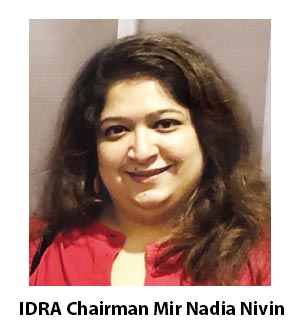
The new chairman Mir Nadia Nivin now faces a defining test. She must investigate allegations without favour, dismantle any proven informal power networks, establish transparent appointment and approval procedures, protect whistleblowers and strengthen independent internal audit and compliance mechanisms. Regulatory decisions, including the selection of auditors and approval of senior executives, should be supported by published criteria and traceable records.
The government must also ensure that political influence, administrative patronage and industry pressure do not compromise the authority's operational independence.
Bangladesh's insurance industry does not need another round of ceremonial reform announcements or indiscriminate restrictions. It needs a regulator that can protect policyholders' money, enforce solvency requirements, discipline powerful corporate boards and ensure timely claims settlement.
The ultimate test of IDRA's reform agenda is not how tightly it controls insurance companies, but how effectively it protects millions of policyholders and polices its own officials. Until the watchdog itself becomes transparent, accountable and professionally competent, Bangladesh's insurance reforms will remain vulnerable to institutional failure-and policyholders will continue to bear the cost.

Loading...
Loading...
Also read









Editor : Iqbal Sobhan Chowdhury
Published by the Editor on behalf of the Observer Ltd. from Globe Printers, 24/A, New Eskaton Road, Ramna, Dhaka.
Editorial, News and Commercial Offices : Aziz Bhaban (2nd floor), 93, Motijheel C/A, Dhaka-1000.
Phone: PABX- 41053001-06; Advertisement: 41053012; 01793317829, 01550707291, 01550707296
E-mail: [email protected], [email protected]. [email protected], [email protected], [email protected], [email protected], Online-email: [email protected]
Published by the Editor on behalf of the Observer Ltd. from Globe Printers, 24/A, New Eskaton Road, Ramna, Dhaka.
Editorial, News and Commercial Offices : Aziz Bhaban (2nd floor), 93, Motijheel C/A, Dhaka-1000.
Phone: PABX- 41053001-06; Advertisement: 41053012; 01793317829, 01550707291, 01550707296
E-mail: [email protected], [email protected]. [email protected], [email protected], [email protected], [email protected], Online-email: [email protected]


