



| HEADLINE |

|

JAPAN’S $6.35 BILLION BET
Can Bangladesh Turn BIG-B into an Industrial Breakthrough?
Published : Saturday, 31 October, 2026 at 12:00 AM
FARUK AHMED


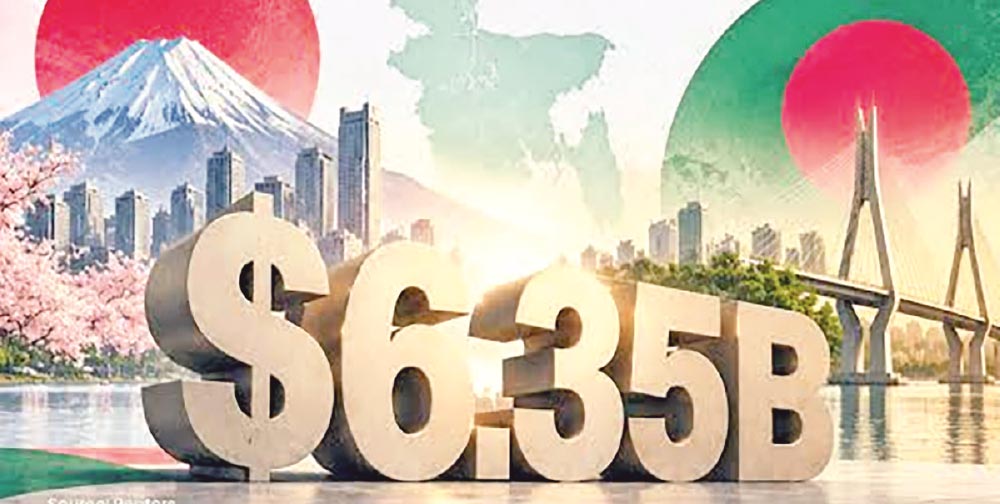
Japan’s trillion-yen investment ambition could help transform Bangladesh into a regional manufacturing and technology hub. But corruption, bureaucratic paralysis and geopolitical rivalry threaten to turn a historic opportunity into another unfulfilled promise.
Foreign investment is no free lunch. Every dollar attracted must deliver lasting value to the host economy.
For Bangladesh, Japan’s ¥1 trillion investment ambition "approximately $6.35 billion over five years "could open the door to a new industrial era. But will it bring factories, technology, skilled jobs and export diversification "or leave behind another grand promise buried under red tape and policy failures?
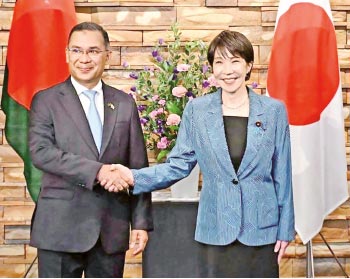
Prime Minister Tarique Rahman’s Japan visit has placed Bangladesh’s industrial future at a defining crossroads. The ambition is to move beyond dependence on ready-made garments, attract higher-value manufacturing and establish the country as a strategic production and logistics hub on the Bay of Bengal.
Yet a bigger question looms: can Bangladesh turn Japan’s investment drive into a Singapore-style economic transformation, or will bureaucratic bottlenecks, corruption and regional power rivalries derail the dream before it reaches the factory floor?
The stakes rose on Tuesday as Bangladesh and Japan agreed to upgrade their flagship Bay of Bengal Industrial Growth Belt (BIG-B) initiative to “BIG-B for Shared Prosperity”, giving the longstanding partnership a broader focus on industrialisation, connectivity, supply-chain resilience and emerging technologies.
Following the summit in Tokyo between Tarique and Japanese Prime Minister Sanae Takaichi, the two countries agreed to expand cooperation to address new economic opportunities, technological change and geopolitical uncertainty. Their priorities include connectivity, resilience against natural disasters and geopolitical risks, public-private partnerships, economic growth, and peace and stability.
The proposed investment could generate approximately 200,000 jobs, according to the summit announcement. But the distinction is crucial: ¥1 trillion is a projection of prospective private investment, not money already fully committed or disbursed.
The jobs, too, remain potential outcomes "not achievements to be counted in advance.
The trillion-yen ambition may open the door. Only credible reforms and determined execution can turn it into an industrial breakthrough.
 BIG-B: FROM INFRASTRUCTURE TO INDUSTRIAL POWER
The upgraded initiative Japan’s BIG-B Plan seeks to connect ports, energy facilities, industrial zones, transport networks and digital infrastructure into an integrated economic corridor. The objective is to make Bangladesh more attractive to manufacturers and strengthen its links with regional and global supply chains.
At the centre stands the Matarbari Deep-Sea Port and the surrounding Maheshkhali-Matarbari area, which could emerge as a major logistics, energy and industrial hub.
The Chattogram Port Authority under the Ministry of Shipping is constructing Matarbari Deep Sea Port at Moheshkhali upazila’s Matarbari and Dhalghata area in Cox’s Bazar.
But a port alone cannot create an industrial powerhouse. Its economic value depends on efficient road and rail links, reliable energy, competitive logistics and streamlined customs procedures. Factories must be able to receive raw materials and ship finished products without excessive cost or delay.
The same principle applies to airport and urban transport infrastructure. Improved connectivity can support trade, investment and productivity, but only when projects are financially sustainable, completed on schedule and integrated with wider economic needs.
BIG-B must therefore be judged not by the number of projects announced or kilometres of infrastructure built, but by the investment generated, trade costs reduced, exports expanded and productive jobs created.
Private Investment by Toyota: The Test of Industrial Ambition
Automotive manufacturing could provide one of the clearest tests of whether Japanese investment can help Bangladesh move up the industrial ladder.
Toyota Tsusho, a member of the Toyota Group, has outlined plans for a hybrid electric vehicle manufacturing facility in Bangladesh. Preparatory work is expected to begin in 2027, with full-scale production targeted for 2029. Toyota also plans to invest about $40 million in two sales, service and spare-parts centres in Dhaka and Chattogram.
These are prospective investments, not evidence of an operating manufacturing plant. Yet their significance extends beyond vehicle assembly.
A viable automotive industry requires component suppliers, skilled technicians, quality-testing facilities, logistics operators and reliable local supply chains. Bangladeshi businesses could enter these networks if they meet international standards for quality, cost and delivery.
The government must therefore pursue a clear localisation strategy, backed by technical training, supplier development and technology transfer. Assembly may be the first step into a sophisticated industry, but it should not become the final destination.
The real prize is a domestic automotive ecosystem capable of producing more components locally, creating skilled employment and eventually competing in wider markets.
Energy: The Industrial Make-Or-Break Factor
No industrial strategy can succeed without reliable and affordable energy. Bangladesh’s gas shortages and supply constraints remain serious obstacles to factory expansion and investor confidence.
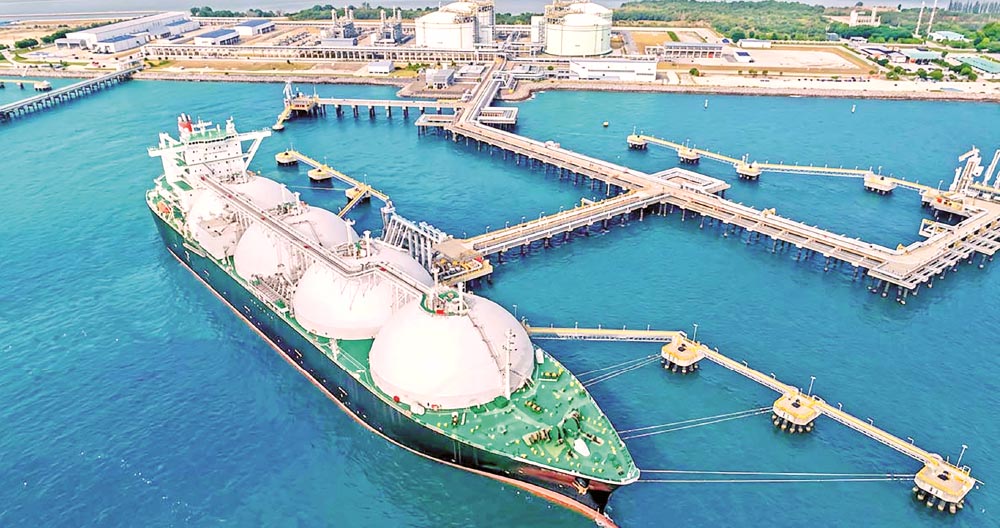
Japanese energy company JERA has proposed an LNG terminal and associated infrastructure in the Maheshkhali-Matarbari area. During his Japan visit, Tarique toured JERA’s LNG terminal and power plant in Futtsu.
An LNG terminal could diversify gas supplies by receiving liquefied natural gas and converting it back into gas for distribution. More dependable supplies could support power generation and industrial production.
But the proposal requires rigorous commercial scrutiny. International LNG prices and exchange-rate fluctuations can push up costs. Bangladesh must assess financing, procurement terms and long-term affordability before proceeding.
Energy infrastructure will strengthen industrial competitiveness only if it delivers dependable supply at sustainable prices. Otherwise, a project intended to support growth could create additional financial pressure.
 Beyond Garments: Technology, Skills And Exports
Bangladesh’s dependence on ready-made garments leaves its economy exposed to global demand shifts, competition and changes in trade preferences. Japanese investment could help diversify exports into electronics, pharmaceuticals, agro-processing, engineering products and digital services.
A proposed Bangladesh-Japan Tech Park could connect Japanese companies with Bangladeshi engineers, entrepreneurs and universities, opening opportunities in robotics, artificial intelligence, electronics and other technology-intensive fields.
But a technology park cannot generate innovation simply by occupying a designated site. It requires specialised skills, research partnerships, reliable digital infrastructure and access to finance.
Bangladesh should seek concrete commitments to train local workers, develop domestic suppliers and transfer technical knowledge. Partnerships between Japanese manufacturers, Bangladeshi businesses and technical institutions could strengthen capabilities in precision engineering, automation, quality management and industrial research.
The objective must be to build capabilities that remain in Bangladesh: skilled workers, stronger domestic firms, higher productivity and a broader industrial base.
The Japan-Bangladesh Economic Partnership Agreement, signed on February 6, 2026, offers another platform for expanding trade and investment. But market access alone will not diversify exports. Bangladeshi companies must meet Japanese standards, improve productivity and compete on quality, price and reliability.
THE BIG BARRIERS TO BIG-B
Corruption and Red Tape Threaten a $6.35 Billion Investment Vision
Japan’s projected $6.35 billion in private investment over five years, with the potential to create 200,000 jobs, puts Bangladesh’s investment climate to a defining test.
Prime Minister Tarique Rahman has secured a major opportunity to accelerate industrialisation and position the country as a regional business hub. But corruption, bureaucratic delays and regulatory uncertainty could undermine the promise before the investment reaches factories and businesses.
Investors need predictable taxation, efficient customs, timely licences, reliable energy and transparent rules. When approvals depend on connections, unofficial payments inflate costs and administrative delays stall projects, Bangladesh loses ground to competing destinations. BIDA can promote the country’s potential, but investment presentations alone will not secure billions in productive capital.
Bangladesh Investment Development Authority (BIDA) Executive Chairman Ashik Chowdhury and his team must now help convert investor interest into bankable projects by coordinating ministries, clearing regulatory bottlenecks and simplifying approvals.
Progress must be measured transparently, distinguishing expressions of interest and signed agreements from financial closure, actual capital deployment and operational projects. The ultimate test is delivery, not announcements.
The corruption burden underscores the scale of the challenge. According to Transparency International Bangladesh’s National Household Survey 2025, citizens paid an estimated Tk 12,633.2 crore in bribes to obtain public services during the survey’s reference period of November 2024 to October 2025. Some 63.6 per cent of households reported paying bribes, while 81.6 per cent experienced corruption in at least one service sector.
For investors, the same institutional weaknesses can translate into higher costs, uncertain timelines and compromised competition. Opaque procurement, customs clearance and regulatory approvals create opportunities for rent-seeking, while weak oversight of public spending can inflate infrastructure costs and diminish project returns.
Bangladesh’s score of 24 out of 100 in Transparency International’s 2025 Corruption Perceptions Index reinforces concerns over public-sector integrity.
The government must tackle these barriers through a HYBRID ANTI-CORRUPTION MODEL combining independent enforcement with digital public services, transparent procurement, risk-based audits, whistle-blower protection and effective judicial action.
Bureaucratic reform must deliver equally tangible results: time-bound approvals, fewer discretionary procedures, digital tracking of applications and public disclosure of contracts. These measures will work only if officials are held accountable and violations carry meaningful consequences.
The stakes extend beyond the investment total. Big-B’s success will depend on whether Bangladesh can turn Japanese capital into productive factories, technology transfer, stronger supply chains, export diversification and quality jobs. The government must also ensure that incentives and public support generate measurable economic returns.
Japan can provide the capital, but Bangladesh must remove the barriers that prevent it from working. Unless Tarique Rahman’s government makes integrity, administrative efficiency and accountability central to economic policy, the $6.35 billion Big-B opportunity "and its potential 200,000 jobs "could fall short of expectations.
With decisive reform and disciplined execution, it could instead become a turning point in Bangladesh’s industrial transformation.
7,379 Bangladeshi vs 1,039 Japanese Products: Can Tokyo Bridge the Trade Gap?
Prime Minister Tarique Rahman’s Japan visit has opened a promising economic chapter under the BIG-B plan, but the real test is whether Bangladesh can turn diplomatic gains into export growth.
Under the Japan "Bangladesh Economic Partnership Agreement (EPA), 7,379 Bangladeshi products will receive duty-free access to Japan, compared with 1,039 Japanese products entering Bangladesh duty-free. This asymmetry offers Bangladesh a potentially significant advantage "but only if exporters can seize the opportunity.
Bilateral trade stands at approximately $3.28 "3.5 billion, with Bangladesh running a persistent deficit. It imports industrial raw materials, steel and automobile parts from Japan while relying heavily on readymade garments and knitwear for exports.
For Tarique, the visit marks a diplomatic achievement. Yet preferential access does not guarantee sales, nor does the BIG-B investment ambition automatically narrow the deficit. Bangladesh must diversify exports, strengthen industrial capacity and attract Japanese investment into export-oriented manufacturing.
The ultimate measure of success will be whether Bangladesh can transform wider market access into higher exports, better jobs and a more balanced trading relationship.
THE DECISIVE TEST: Delivery
Japan’s trillion-yen ambition could help Bangladesh accelerate industrial diversification, strengthen connectivity and expand higher-value exports. But the projected investment and 200,000 jobs remain ambitions, not achievements.
The government must now focus on projects that can be financed, built and operated. Progress should be measured by capital reaching financial closure, factories entering production, exports expanding, local suppliers joining international value chains and workers acquiring marketable skills.
Bangladesh faces a stark choice: turn BIG-B into a launchpad for industrial transformation "or allow another grand vision to disappear into bureaucracy, corruption and delay.

Loading...
Loading...
Also read








Editor : Iqbal Sobhan Chowdhury
Published by the Editor on behalf of the Observer Ltd. from Globe Printers, 24/A, New Eskaton Road, Ramna, Dhaka.
Editorial, News and Commercial Offices : Aziz Bhaban (2nd floor), 93, Motijheel C/A, Dhaka-1000.
Phone: PABX- 41053001-06; Advertisement: 41053012; 01793317829, 01550707291, 01550707296
E-mail: [email protected], [email protected]. [email protected], [email protected], [email protected], [email protected], Online-email: [email protected]


