



| HEADLINE |

|

A Goldmine of Opportunity, A Minefield of Mismanagement
Deepening Governance Crisis Threatens Bangladesh’s Insurance Industry
Vast untapped market, rising climate and health risks offer huge growth prospects, but unpaid claims, financial irregularities and a weak regulator threaten public trust.



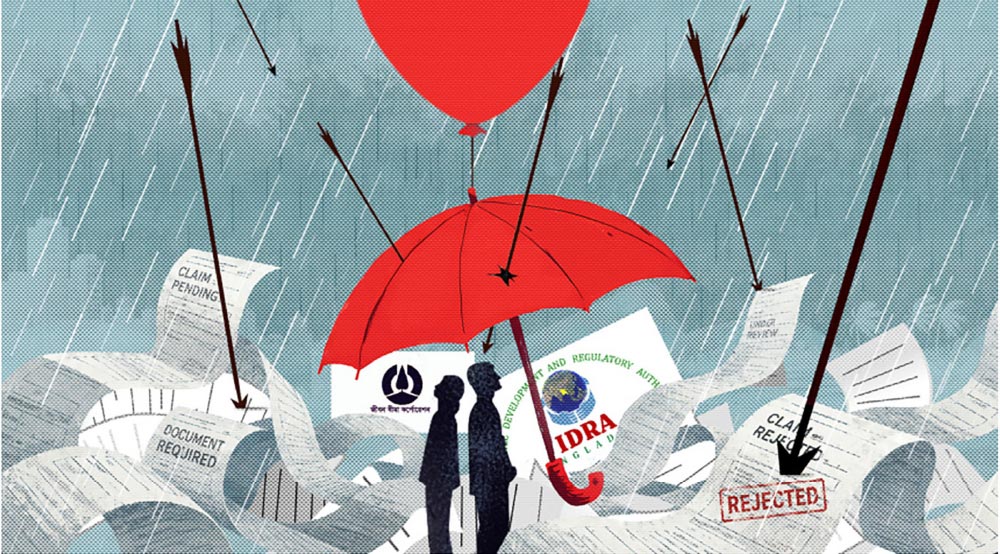

“You don't need to pray to God any more when there are storms in the sky, but you do need to be insured.”
The country's insurance industry is caught in a disturbing paradox. Its potential is enormous, but its credibility is alarmingly weak. A massive backlog of unpaid claims, questionable investments, poor corporate governance, low market penetration and an underpowered regulator have combined to keep the industry far below its economic potential. Worse, the institution entrusted with protecting policyholders is itself facing questions over its governance, institutional capacity and regulatory effectiveness.
The scale of the crisis is staggering. According to the Insurance Development and Regulatory Authority (IDRA), insurance companies had received claims worth Tk10,611 crore by March 2026, of which Tk7,779 crore, or 73.31 per cent, remained unsettled. The non-life segment was particularly disturbing: insurers had settled only 11.3 per cent of claims by value, leaving Tk3,369 crore unpaid.
In other words, thousands of families and businesses are still waiting for the financial protection for which they paid premiums. For an industry whose most valuable asset is public confidence, this is more than an operational failure; it is a direct threat to its survival.
The new IDRA chairman, Mir Nadia Nivin, has acknowledged the gravity of the situation, identifying the settlement of nearly Tk7,000 crore in outstanding claims as a priority. Seven financially distressed insurers alone account for almost Tk4,000 crore of the liabilities.
The authority has discussed liquidating assets and investments in phases to finance claim payments. It has also announced plans for risk-based supervision, a unique policyholder identification system and stronger action against commission irregularities. These are important initiatives. But promises and policy announcements will mean little unless policyholders actually receive their money.
 The problem is deeply rooted. Bangladesh has 82 insurance companies-36 life and 46 non-life insurers, including state-owned institutions-yet insurance remains a marginal component of the country's financial system. According to Bangladesh Bank's Financial Stability Report 2025, published in 2026, total gross premium income increased to Tk19,587 crore in 2025 from Tk18,768 crore in 2024, a modest growth of 4.36 per cent.
More alarming is the declining penetration rate. Insurance penetration, measured as gross premiums against GDP, fell to just 0.34 per cent in 2025 from 0.36 per cent in 2024 and 0.42 per cent in 2021. The industry's total assets stood at Tk71,527 crore, equivalent to only 1.24 per cent of GDP.
These figures expose an industry struggling to keep pace with the expansion of the national economy. Despite a huge population, rising household expenditure, growing industrial activity and mounting climate risks, insurance has yet to become an integral part of Bangladesh's economic life.
The contrast between the industry's promise and its performance becomes even sharper when claims settlement is examined. Bangladesh Bank's latest report shows that life insurers settled 66.54 per cent of claims by number in 2025, a marginal improvement from 66.27 per cent in 2024. But the non-life sector's performance deteriorated sharply, with its claims-settlement ratio falling to 28.51 per cent from 33.74 per cent.
The figures are based on the number of claims settled, not their monetary value, and should not be confused with the separate IDRA data on outstanding claims by value. Nevertheless, both sets of indicators reveal the same underlying weakness: the industry is struggling to honour its obligations promptly.
The financial position and governance of several insurers have also come under scrutiny. Audit observations involving listed non-life companies have raised questions about investment documentation, fixed deposits with financially distressed banks, excessive management expenses and potentially overstated investments. Eastern Insurance, Bangladesh General Insurance and Islami Commercial Insurance have faced scrutiny over different investment and compliance issues.
Such observations require independent verification and appropriate regulatory action; they should not automatically be treated as proof of fraud. But they highlight the urgent need for transparent financial reporting, independent audits and strict protection of policyholder funds.
The wider concern is that poor governance and questionable investment decisions can expose insurers to risks extending far beyond individual companies. Insurance premiums are not ordinary business receipts. They represent long-term financial commitments to families and businesses. Mismanagement of these funds can destroy the financial security of thousands of people and undermine confidence in the entire sector.
The regulator's credibility is therefore as important as the financial health of the companies it supervises.
Established in 2010, IDRA was expected to introduce discipline, transparency and accountability into the insurance market. Yet nearly 16 years later, the industry continues to struggle with weak supervision, delayed claims, questionable corporate practices and inadequate enforcement.
More troublingly, IDRA itself has faced allegations of corruption, internal irregularities, abuse of regulatory authority and questionable decision-making. These allegations require impartial investigation and cannot be treated as established findings. However, they raise a fundamental question: can a regulator facing questions about its own institutional governance effectively enforce accountability across the industry?
The comparison with Bangladesh Bank is instructive. While the two regulators operate under different legal mandates and supervise different types of institutions, Bangladesh Bank has developed a considerably broader supervisory infrastructure, including specialised inspection, risk assessment, financial reporting and intervention mechanisms. IDRA needs comparable professional depth and enforcement capacity within its own mandate.
Effective insurance supervision demands actuarial expertise, skilled inspectors, reliable financial information, digital monitoring and the ability to detect weaknesses before they become irreversible. Regulators must continuously examine insurers' capital adequacy, solvency margins, investment portfolios, technical reserves, reinsurance arrangements and liquidity positions.
Without these capabilities, even the most elaborate regulations risk becoming little more than administrative paperwork.
The government has recognised the need for structural changes. In September 2026, Finance and Planning Minister Amir Khosru Mahmud Chowdhury indicated that amendments to the Insurance Act 2010 and a crisis-resolution framework were being prepared to address the industry's weaknesses. Management restructuring and measures to overcome legal obstacles were also under consideration.
However, legislation alone cannot rescue the industry. The authorities must establish a transparent mechanism for dealing with financially distressed insurers, including restructuring, mergers or orderly resolution where necessary. Shareholders and directors responsible for mismanagement must not be allowed to shift the consequences of their decisions onto policyholders or taxpayers.
The industry also needs a fundamental change in its business philosophy. For too long, premium collection and market expansion have overshadowed the quality of service and the ability to settle claims. The real measure of an insurance company's performance should be how reliably and promptly it honours its contractual commitments.
The economic consequences of reform could be enormous. Insurance is not simply a mechanism for compensating losses; it is an important instrument for mobilising long-term savings, financing investment and distributing economic risks. A financially sound insurance industry can support industrialisation, infrastructure development, housing, trade and entrepreneurship.
The opportunities are particularly significant in health insurance. Rising medical expenses are pushing many households into debt, while a large section of the population remains exposed to catastrophic healthcare costs. Affordable health coverage could protect families from financial ruin and complement public healthcare services.
Agricultural insurance offers another largely untapped opportunity. Farmers face recurrent losses from floods, droughts, cyclones, river erosion and crop diseases. Well-designed crop, livestock and fisheries insurance could provide financial protection and encourage investment in modern agricultural practices.
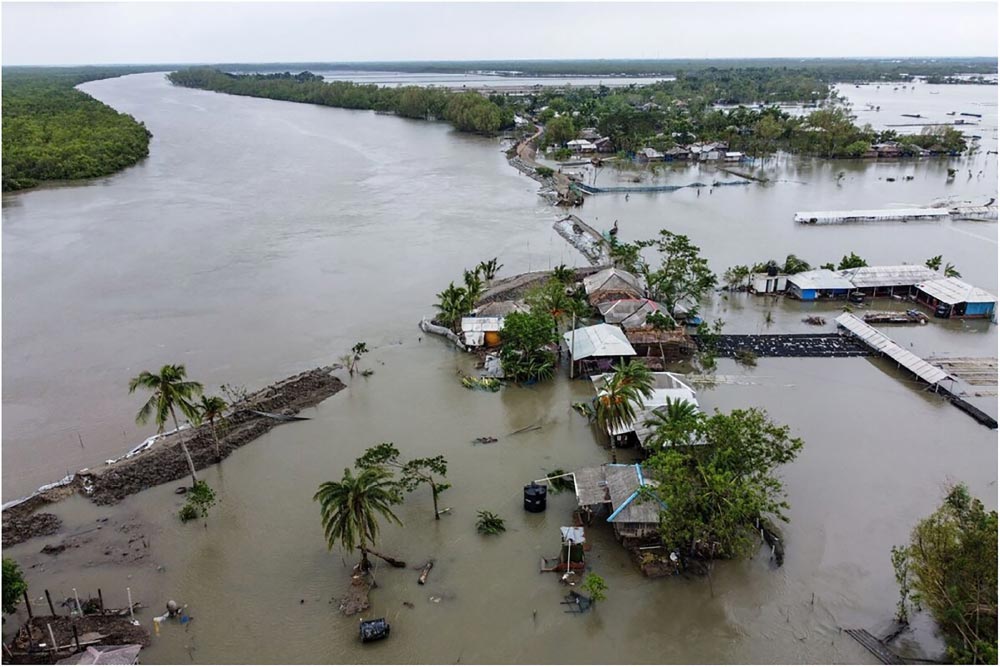
Climate change makes this opportunity even more urgent. Bangladesh's exposure to cyclones, floods, salinity intrusion and other extreme weather events creates substantial economic risks. Yet insurance protection for vulnerable households, small businesses and agricultural producers remains extremely limited. Parametric insurance, which triggers payouts when predefined weather or disaster thresholds are reached, could help accelerate financial assistance after natural disasters.
The potential also extends to microinsurance for informal workers, small entrepreneurs and low-income households. Affordable policies distributed through mobile financial services, banks, cooperatives and digital platforms could bring millions of previously excluded people into the formal financial protection system.
Bancassurance, introduced in Bangladesh in 2024, offers another promising distribution channel. By allowing banks to sell insurance products through their established customer networks, it could reduce distribution costs and expand access. Twelve banks had received licences by July 2025, according to Bangladesh Bank. However, the success of bancassurance will depend on transparent sales practices, proper disclosure and the ability of insurers-not banks-to settle claims efficiently.
Professional capacity is equally important. Shortages of actuaries, underwriters, risk managers, claims specialists and skilled compliance professionals undermine product development, risk pricing and financial supervision. The industry needs stronger professional training, modern technology, credible actuarial assessments and a robust reinsurance framework.
The government and IDRA must also address the shortage of qualified professionals in senior management. Regulatory requirements for appointing experienced executives should be matched by a realistic assessment of the available talent pool, professional training opportunities and the industry's ability to recruit and retain competent personnel.
There is, therefore, no shortage of opportunities. What is missing is a credible institutional foundation capable of converting those opportunities into sustainable growth.
The immediate priorities are clear: clear verified outstanding claims through transparent, time-bound plans; strengthen IDRA's independence, staffing and enforcement capacity; introduce risk-based supervision; enforce capital and solvency requirements; protect policyholder funds; scrutinise insurers' investment portfolios; and publish regular, comparable data on claims, assets, liabilities and financial performance.
The authorities should also establish an effective policyholder protection and complaint-resolution mechanism, backed by strict penalties for unjustified delays in settling valid claims. Every insurer should disclose its claims-settlement performance, including the number and value of claims received, paid, rejected and outstanding.
Above all, the government must ensure that regulatory accountability begins at the top. An effective regulator must be independent, professionally competent, transparent and accountable for its own decisions.
Bangladesh's insurance industry stands at a decisive crossroads. Its potential to protect households, support businesses, mobilise long-term investment and strengthen climate resilience is immense. But an industry that cannot honour its promises cannot command public confidence, attract new customers or become a meaningful pillar of the national economy.
The challenge is not simply to expand the insurance market or increase premium income. It is to rebuild the credibility of the entire system-from company boards and management to the regulator and policymakers.
Bangladesh does not merely need more insurance companies, bigger premium collections or another round of regulatory promises. It needs an insurance industry that protects people's savings, pays legitimate claims and delivers security when life turns against them.

Loading...
Loading...
Also read









Editor : Iqbal Sobhan Chowdhury
Published by the Editor on behalf of the Observer Ltd. from Globe Printers, 24/A, New Eskaton Road, Ramna, Dhaka.
Editorial, News and Commercial Offices : Aziz Bhaban (2nd floor), 93, Motijheel C/A, Dhaka-1000.
Phone: PABX- 41053001-06; Advertisement: 41053012; 01793317829, 01550707291, 01550707296
E-mail: [email protected], [email protected]. [email protected], [email protected], [email protected], [email protected], Online-email: [email protected]
Published by the Editor on behalf of the Observer Ltd. from Globe Printers, 24/A, New Eskaton Road, Ramna, Dhaka.
Editorial, News and Commercial Offices : Aziz Bhaban (2nd floor), 93, Motijheel C/A, Dhaka-1000.
Phone: PABX- 41053001-06; Advertisement: 41053012; 01793317829, 01550707291, 01550707296
E-mail: [email protected], [email protected]. [email protected], [email protected], [email protected], [email protected], Online-email: [email protected]


