



| HEADLINE |

|

Women need pathways to leadership: Nahar Khan
Published : Sunday, 8 November, 2026 at 12:00 AM
Staff Correspondent


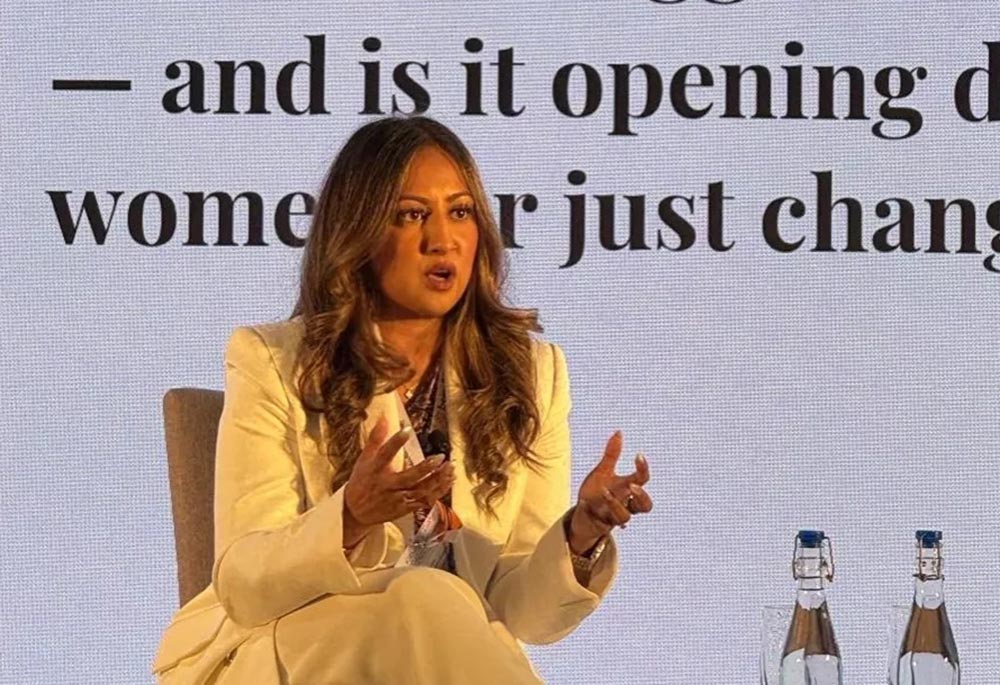 Women’s representation in the media is not translating into equal access to leadership, as structural barriers, workplace assumptions and technological changes continue to shape their career paths, speakers said at a panel discussion in Tokyo.
Speaking at the FIBEP World Media Intelligence Congress 2026, Nahar Khan, Executive Editor of United News of Bangladesh (UNB) and founder of Solis, highlighted the need to create meaningful opportunities for women to advance to senior positions.
During the session, titled “Leading the Story: Women Shaping the Future of Media”, Nahar also warned that artificial intelligence (AI) could make leadership less accessible if newsrooms automated entry-level tasks without replacing the learning opportunities they provide.
She said traditional newsroom assignments help young journalists develop essential skills, including fact-checking, identifying stories, building sources, working under pressure and exercising editorial judgement.
“If we automate the work but fail to replace the learning, we will eventually have a leadership problem that is much harder to solve,” she said.
Nahar called for structured editorial apprenticeships, supervised investigative assignments, newsroom rotations and earlier exposure to decision-making to prepare the next generation of media professionals.
She also identified unequal access to high-profile assignments, promotions, professional sponsorship and decision-making opportunities as major barriers to women's career progression. A significant number of women leave the profession at the mid-career stage, partly because of a lack of structured career development, she said.
Distinguishing between mentorship and sponsorship, Nahar said mentorship provides guidance and confidence, while sponsorship involves recommending women for positions, creating opportunities and advocating for their promotion.
“Mentorship helps women prepare for the room. Sponsorship helps get them into it,” she said, stressing that men must also take an active role in advancing women's leadership.
Japan-based freelance journalist Louise George Kittaka said many women enter the media and communications sectors but are lost during the transition to managerial and senior leadership positions.
Describing the situation as a “leak, not a pipeline problem”, she said workplace assumptions often undermine women's ambitions. In one Japanese company, the proportion of women seeking promotion rose from 32 per cent to more than 70 per cent within six months after they were given opportunities to interact with senior executives and discuss their career ambitions.
Kittaka also highlighted the challenges of balancing professional advancement with childcare and eldercare responsibilities, noting that supportive workplace policies do not always translate into equal career opportunities.
The session was moderated by Susan Aitken of TVEyes and brought together international media professionals to discuss women's leadership and the changing media landscape.

Loading...
Loading...



Editor : Iqbal Sobhan Chowdhury
Published by the Editor on behalf of the Observer Ltd. from Globe Printers, 24/A, New Eskaton Road, Ramna, Dhaka.
Editorial, News and Commercial Offices : Aziz Bhaban (2nd floor), 93, Motijheel C/A, Dhaka-1000.
Phone: PABX- 41053001-06; Advertisement: 41053012; 01793317829, 01550707291, 01550707296
E-mail: [email protected], [email protected]. [email protected], [email protected], [email protected], [email protected], Online-email: [email protected]


