



| HEADLINE |

|

What legal troubles Netanyahu could face as Herzog turns to Eisenkot
Published : Sunday, 8 November, 2026 at 2:29 PM
Observer Special Report


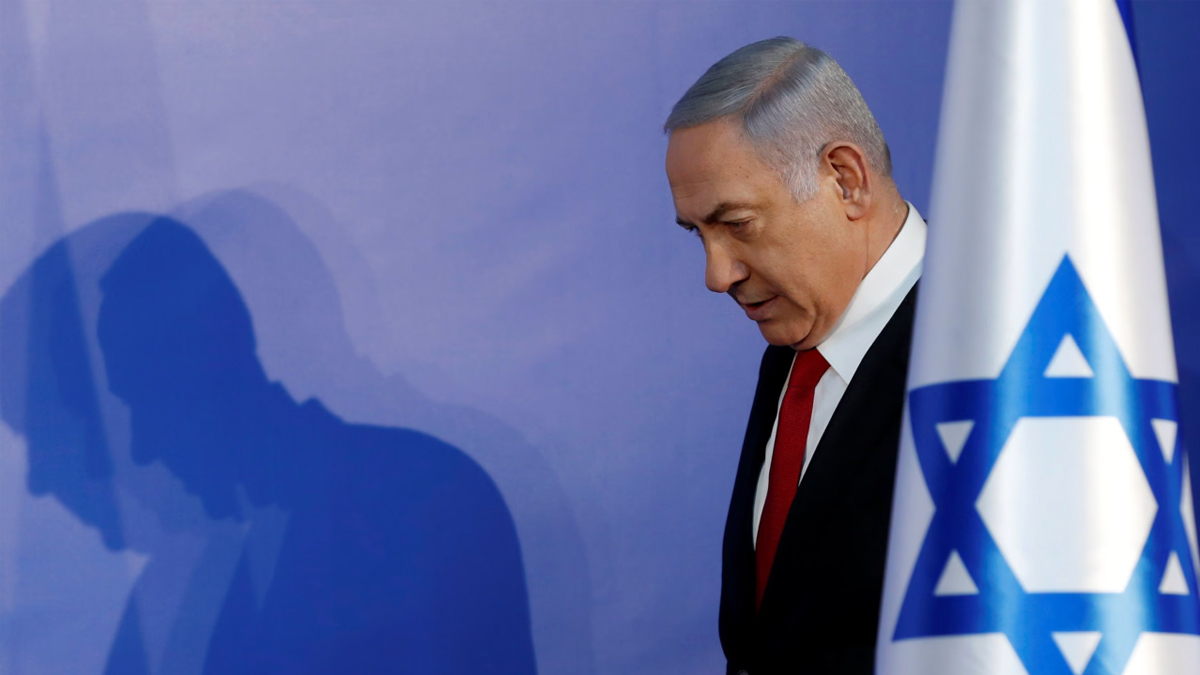
As Israeli President Isaac Herzog has chosen former military chief Gadi Eisenkot to try and form the next government, longtime Prime Minister Bibi Netanyahu could face courtroom battles and potential arrest–due to the international arrest warrant.
Herzog’s decision
Herzog held consultations with political parties this week after neither side secured a majority in the October 27 general election. Herzog told Eisenkot on Saturday evening that he would task him with forming a government, and the formal handover is set for Sunday.
Factions totalling 67 members of the 120-seat Knesset recommended Eisenkot, the Yashar party chairman. Factions totalling 46 members recommended Netanyahu, and one seven-seat faction recommended no one. Al Jazeera’s reporter said Herzog “took the predictable route”, since Eisenkot had the most recommendations.
Arab leaders, who say they view the policies of Netanyahu and his far-right allies as racist, nominated Eisenkot to try first, which gave him the most endorsements.
A difficult road for Eisenkot
The mandate does not guarantee a coalition. The Times of Israel reported that the “change bloc” Eisenkot leads is still trying to line up partners, including ultra-Orthodox parties, Arab-led parties and even Netanyahu’s Likud. Some parties that recommended him have not committed to joining his government or to guaranteeing the votes needed to sustain it.
Eisenkot said on X that now is the time to form a “national emergency government” and promised to do everything to be worthy of the task.
Netanyahu’s response
Netanyahu remains in office for now. He stays prime minister until a new government wins the Knesset’s confidence, and he could get another chance if Eisenkot fails. Analysts note that a failure could prolong the deadlock that has repeatedly sent Israelis back to the polls in recent years.
In a video statement on Saturday, Netanyahu urged the Eisenkot-led parties to form a “national unity government”, but said it would have to include all his allies from the last coalition, which means the ultranationalist Religious Zionism and its partners.
The corruption trial
Netanyahu is charged with bribery, fraud and breach of trust in three cases known as Case 1000, Case 2000 and Case 4000, which stem from investigations that began in 2016 and are heard together in a single trial.
Case 1000: Prosecutors allege he and his wife received expensive gifts, including cigars and champagne, from businessmen Arnon Milchan and James Packer in exchange for political favours. He faces fraud and breach-of-trust charges.
Case 2000: He is accused of negotiating with Yedioth Ahronoth publisher Arnon Mozes for more favourable coverage in return for efforts to limit the circulation of rival Israel Hayom. The charges are fraud and breach of trust.
Case 4000: This is the most serious case where Netanyahu is accused of bribery, fraud and breach of trust. The allegation is that he granted regulatory favours to the telecoms company Bezeq, then owned by Shaul and Iris Elovitch.
The trial opened in 2020 and there is still no verdict. Netanyahu denies all charges. If convicted, he could face up to 10 years in prison for bribery and up to three years for each fraud and breach-of-trust count, though legal experts caution that maximum sentences are unlikely.
The ballot box will not settle the case. TRT World reported that none of the legal proceedings will be decided by the election, whether he wins or loses.
The pardon request
Netanyahu submitted a 111-page pardon request to Herzog on November 30, 2025, weeks after US President Donald Trump urged a “full” pardon in the Knesset and in a letter. He did not admit guilt, saying a pardon would help “reconcile the national rift”.
In April, Herzog’s office said a deal between Netanyahu’s defence team and prosecutors would be the “proper and correct solution”, and that talks should be pursued outside the courtroom before the pardon request is addressed. Herzog later said his considerations were “solely substantive”, and that Netanyahu had not yet responded to his mediation proposal. No pardon has been announced.
The plea-deal question
Herzog proposed mediation between Netanyahu and the Attorney General. That puts Netanyahu’s lawyer, Amit Hadad, face to face with Attorney General Gali Baharav-Miara, whose relationship with the cabinet is deeply strained.
The central issue in any such deal is likely to be the finding of “moral turpitude”. In earlier talks reported in 2022, the unresolved question was whether Netanyahu would have to admit to it, which carries a seven-year bar from politics. Those negotiations produced no agreement.
The ICC warrant
The International Criminal Court issued arrest warrants for Netanyahu and his former defence minister on November 21, 2024. The warrant is not a conviction. Israel disputes the court’s jurisdiction and Netanyahu rejects the allegations. Leaving office would not cancel it.
Will Netanyahu really be imprisoned?
The sources agree on one point: there are scenarios, but no certainties. Eisenkot could assemble a broad coalition within 28 days, the mandate could pass to Netanyahu or another lawmaker, or the deadlock could return voters to the polls–leading to another election, and potential survival of prison for Netanyahu.

Loading...
Loading...
Also read









Editor : Iqbal Sobhan Chowdhury
Published by the Editor on behalf of the Observer Ltd. from Globe Printers, 24/A, New Eskaton Road, Ramna, Dhaka.
Editorial, News and Commercial Offices : Aziz Bhaban (2nd floor), 93, Motijheel C/A, Dhaka-1000.
Phone: PABX- 41053001-06; Advertisement: 41053012; 01793317829, 01550707291, 01550707296
E-mail: [email protected], [email protected]. [email protected], [email protected], [email protected], [email protected], Online-email: [email protected]


