



| HEADLINE |

|
Understanding polyvocal Islam
Published : Sunday, 31 March, 2019 at 12:00 AM
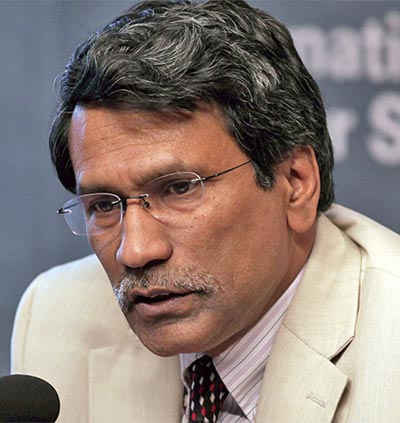
dr Ali Riaz


 Questions such as 'What is Islam?' and 'Who is a Muslim?' may sound na�ve, but they are central to understanding the debates and discussions among many Muslim communities around the globe. From personal piety to political activism, many Muslims, living in either Muslim majority societies or as members of a minority community, have been immensely influenced and significantly shaped by these questions. In some measures, these questions have also impacted global politics for the past decades.
 As for the meaning of Islam, there have been two distinct strands of understanding; 'one sees Islam as the unfolding of a common uniform pattern that as a world religion it is supposed to signify and represent. The other sees Islam as evolving in response to local demands within each Islamic country or population' (Imtiaz Ahmad, 'Introduction', Lived Islam in South Asia: Adaptation, Accommodation and Conflict. Edited by Imtiaz Ahmad and Helmut Reifeld). The challenges to and debates on defining Islam are not exclusively related to Islam, but essentially a rephrasing of the question what do we mean by a religion? Is a religion a set of articles of faith and rituals independent of it adherents' agency and or is the religion an institutionalized bargain, a power contract between the individual and the society? This difference, in the context of Islam has been described by Olivier Roy in his book Secularism Confronts Islam, as a difference between 'dogma' and the culturally informed experience of adherents. According to Hamid Dabashi, 'we need to make a distinction between "Islam" in its doctrinal foundations in the Qur'an and Hadith literature and its juridical character in Islamic law (Shari'ah), on the one hand, and "Islam" as a lived experience that covers a vast range of symbolic, discursive and institutional domains, on the other.' (Being a Muslim in the World).
It is the latter aspect, that is lived Islam, which has not received due attention in the extant discussions in Bangladesh. In order to understand the role of Islam in public sphere, we need to understand Islam which manifests itself through personal practices, social institutions and political activism of the Muslims in Bangladesh.
I have always argued that a religion cannot be understood without comprehending the lives and practices of its adherents, and without the temporality - the history, the society and the political structure within which it is being considered. Religion cannot be analyzed as if it is a 'trans-historical and trans-cultural phenomenon.' Islam and for that matter any religion have had contestations and accommodations in the past; they continue to be the defining characteristics of any religion, including Islam, today.
In my understanding, a 'true', universal notion of Islam remains limited only in the fundamental articles of faith, the remainder of religion is shaped and reshaped by its adherents based on multiple factors. Is this new a phenomenon? The answer is unequivocally negative. As Hamid Dabashi noted: 'Polyfocal has always been the discursive disposition of Islam, just as the languages and cultures through which it has spoken are polyvocal, and the geographical domains and domesticities of its historical manifestations are polylocal.' In such a formulation the question as to 'what is Islam?' remains contentious among the adherents as much as among the theologians and Islamists.
As the definition of Islam remains contentious and there are no convincing reasons to accept the irrelevancy of geographical boundaries and cultures, what follows is the question 'Who is a Muslim?' It is not only a matter of asking whether a member of a specific ethnic group can be identified as a Muslim or if there is a specific ritual that needs to be followed to be identified as a Muslim or if it is necessary to have a lineage to be a Muslim, but most importantly how do we arrive at a definition, whom do we cede the authority to make that determination and how does that authority earn legitimacy. I strongly concur with Dabashi's arguments that: "No particular Islamic institution - legal, philosophical, or mystical - has an exclusive prerogative deciding who a Muslim is. It is Muslims themselves, in the plurality of their class, gender, and radicalized(sic) identities - who are now (as they have always been) on a vastly variegated and open-ended highway making that decision for themselves - a decision between them and their creator, them and what they hold to be sacrosanct in their mind and hearts."
The plurality, in terms of defining Islam and a Muslim, does not reside only in the different cultural settings but also within a country and a community. Exploration of the expressions of this multiplicity is imperative. In Lived Islam and Islamism in Bangladesh, I have attempted to explore these dimensions. It is more necessary in the wake of the proliferation of transnational Islamist movements, and the propagation of a global Muslim identity - an identity that, in the words of Olivier Roy, 'delink Islam from any given culture in favor of a transnational and universal set of specific patterns (beliefs, rituals, diet, prescriptions and so on).'
The contemporary expressions of lived Islam in Bangladesh, from social Islam to political Islam, from mystical Baul tradition to transnational terrorist groups, are a testimony to the absence of a monolithic Islam and a homogenous Muslim community. Without an appreciation of this diversity, our understanding of religion and its role in the society is bound to be limited at its best and erroneous at its worst. Unfortunately, dominant discourse on Islam in Bangladesh often ignores the multiplicity and reproduces the cliché. More we explore the diversity, that is the polyvocal nature of Islam, more we will able to understand the complexity of religion in the society.
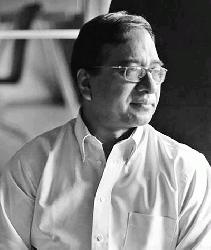
The writer is distinguished Professor of Political Science at Illinois State University, USA
Loading...
Loading...
Also read

Editor : Iqbal Sobhan Chowdhury
Published by the Editor on behalf of the Observer Ltd. from Globe Printers, 24/A, New Eskaton Road, Ramna, Dhaka.
Editorial, News and Commercial Offices : Aziz Bhaban (2nd floor), 93, Motijheel C/A, Dhaka-1000.
Phone: PABX- 41053001-06; Advertisement: 41053012; 01793317829, 01550707291, E-mail: [email protected], [email protected] Online: email: [email protected] 41053014; 01550707297 Advertisement: 01550707296
Published by the Editor on behalf of the Observer Ltd. from Globe Printers, 24/A, New Eskaton Road, Ramna, Dhaka.
Editorial, News and Commercial Offices : Aziz Bhaban (2nd floor), 93, Motijheel C/A, Dhaka-1000.
Phone: PABX- 41053001-06; Advertisement: 41053012; 01793317829, 01550707291, E-mail: [email protected], [email protected] Online: email: [email protected] 41053014; 01550707297 Advertisement: 01550707296


