



| HEADLINE |

|
Exciting days as cub reporter: The time in the erstwhile Pakistan Observer in 1960-63
Published : Sunday, 31 March, 2019 at 12:00 AM
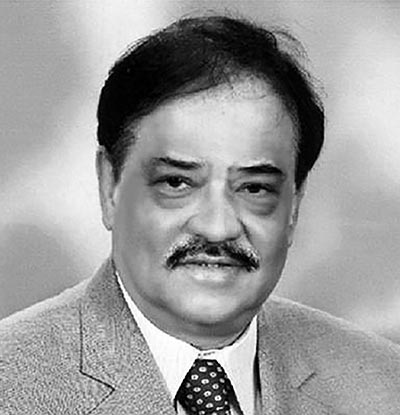
dr mizanur rahman shelley


 The splendid world of journalism:
The late 1950s and early 1960s constituted a 'time between times'. It spearheaded exciting days of transition for the country as well as us who were in their late teens. We were students of prestigious Dhaka University with its glorious heritage of academic achievements and leadership in national movements. This was where the historic movement for recognition of Bangla as a state language began and reached its successful climax in 1952. Again it was in this university that the earliest protest against the first martial law regime of 1958 had its inception in 1961. At that time we were students of the second-year honours class. Next year in 1962, we participated spiritedly in the anti-Education Commission report movement. It was in this stormy time that I became the part-time university correspondent of the then Pakistan observer.
Recollection of useful and sparkling features of that experience may not be out of place here. Unlike today during the 1960s there were only a handful of dailies: major ones in Bangla were Azad, Ittefaq and Sangbad while the principal English dailies were the Pakistan Observer and Morning News. Hence, the number of university correspondents, solely of Dhaka University was limited. Thus, I succeeded my senior Mahmud Hassan of English as university correspondent of the Observer. Mr Hassan on completion of his studies was appointed staff reporter of the observer and I stepped into his shoes. One year my junior AKM Jalaluddin, later a member of the erstwhile Civil Service of Pakistan and ambassador of Bangladesh, worked for the Morning News. My class friend Mahbub Talukder, later a noted writer and high government official and currently in 2019 a member of the Bangladesh Election Commission, worked for the daily Ittefaq. Mr Rakib Siddiqi worked in daily Azad and later became a full-time journalist.
The terms of my appointment in the Observer were fairly generous for that period of time. The remuneration per month was fixed at Rs 25 as retainer fees. Another Rs 25 as conveyance and 10 paisa per line of my reports published. All told it was a nice package which varied between Rs 150 and 200 a month. This was quite an attractive package when US dollar was roughly equivalent to Rs 2 and monthly salary of a first class government officer of the highest grade was Rs 500. It may appear very little by today's price index but in the 1960s when the price of rice was barely half a rupee a kilogram and one could travel by rickshaw from Motijheel to Azimpur at half a rupee or could buy a packet of Capstan cigarette nearly at the same price. My earnings as a part-time cub reporter seemed to be fairly high.
Nevertheless, it was not the pay package which was the main attraction of the job. It rather lay in the fact that it gave an exciting window to the wide world at large. One could get an illuminating view of the expansive sky of life even when a captive in the limited confines of student days.
It is not possible to describe in details the varied and wonderful experiences encountered during my days with the Observer. This English daily played a historic role in spiritedly articulating, defending and obtaining the just political, economic and cultural rights of the Bengalis inhabiting the then East Pakistan. By publishing news items and analyses based on hard facts, objective information and reliable data the news paper carried on sustained campaign against the exploitation of East Bengal by the vested interest centred in the then West Pakistan. In this mission of realising the rightful dues of the Bengalis, the Observer braved the grave threats, warning and repressive measures of the Pakistani establishment. The journalist working in the daily were dedicated to the cause of self-assertion of the Bengalis. They were all noted and committed media persons. The editor was the virtual doyen of the journalists of that period Abdus Salam. Reputed journalist ABM Musa was the news editor. The chief reporter was Shahidul Haque, a committed professional who later became the editor of Bangladesh Times and press minister of Bangladesh in India. Among senior reporters were Enayetullah Khan, later the founder chief editor and editor of weekly Holiday and daily New Age respectively, reputed journalist Ataus Samad, later with the BBC and editor of Amardesh, and Abdur Rahim, later principal information officer of Bangladesh. Among the assistant editors and senior sub-editors were such noted personalities as KG Mustafa, later Bangladesh ambassador in Iraq, Wahidul Haque, later founder of Chhayanaut, and Zahidul Haque.
Under their enlightening guidance and lively company, I learnt at the crossroads of my adolescence and youth many valuable lessons of life and journalism. At the same time, I could gather deeper knowledge about the identity and nature of the movements for the realisation of the inalienable rights of downtrodden Bengalis in Pakistan.
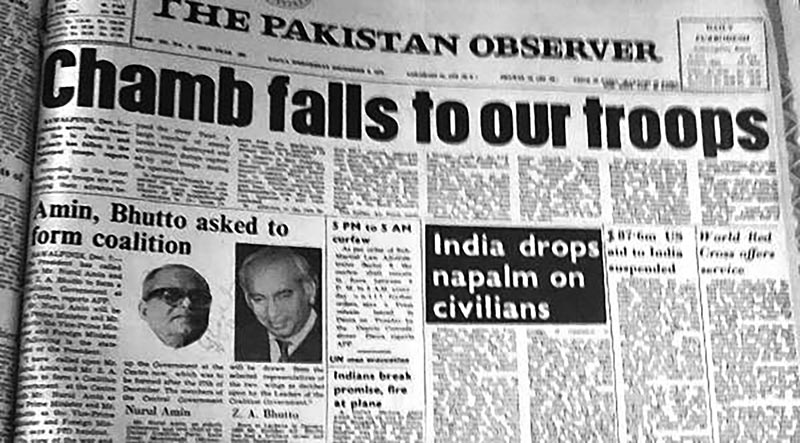 As university correspondents, our duties and responsibilities were fairly well defined. We had to collect and report news, about events and happenings of Dhaka University, BUET, Dhaka Medical College, other colleges and educational institutions. All academic and co-curricular activities including literary, cultural and sports activities came within our orbits. We used to cover major events in the educational institutions during our off periods. Sometimes, when the happenings were of greater significance we used to absent ourselves from class and attend the function or events. Working as part-time journalist did not pose any problem during long summer vacation or disruption on account of political movements. Though we were not required as full time journalist to attend office everyday, we could not resist the temptation of attending office in the evenings.
 Attraction of the dynamic working atmosphere:
The attraction of the dynamic working atmosphere of the office was tempting. We enjoyed the tasty snacks and numerous cups of tea while gossiping with jovial colleagues. When one or more reporters failed to turn up in time, we used to perform 'office duty' on instruction of the chief reporter. The main responsibilities were making telephone calls to the city police stations and various hospitals to collect news about crimes and accidents and prepare news stories on their basis. Then there were also press releases from different institutions and organisations. Sometimes, funny incidents occurred. Staff reporter Abdur Rahim, Rahim bhai to us, often suffered from headache. He took the then popular pain killer Saridon to get some relief. One evening when he had such an attack, he was gathering news from police stations. He held the phone receiver with one hand and wrote the report with other. As soon as the call was ended, he looked amazed at his own writing on the note pad. The police officer told him that three thieves were caught red-handed at Armanitola. Poor Rahim bhai distressed with headache wrote, 'thieves were caught three handed'! Having seen this he immediately handed over the note to me and asked me to write the report correctly and left the office in haste.
Cruel reporting:
Reporting about social problems and everyday accidents and disasters tragic as they were often lead to cruel humour. Staff reporter Ataus Samad was busy in the office one evening writing a report on launch disaster near Narayanganj. He suddenly asked directing the question to all in the office, 'What is the English of khol?' Chief reporter Shahidul Haque, Shahid bhai, asked, 'Why?' Ataus Samad replied, bodies of four passengers were found in the 'khol' of the launch that sank near Narayanganj. I ventured to help and said perhaps you could use the term 'lower deck'. Samad bhai quickly replied, 'No, it was not a deck but more of a cargo hold.' Shahid bhai went on typing with a solemn face and said, 'khol does not have an English equivalent, English speaking countries are mostly advanced and they do not carry passengers in khol. You better use the word "khol" as it is and put it within quotation marks!' As far as I remember that was what Ataus Samad bhai exactly did.
My days as university correspondent were marked by various responsibilities and complexities. On one hand, there were the ceaseless demands of student politics; on the other was the time-consuming temptation of long hours of friendly chats. During 1961-62, I was the elected literary secretary to the SM Hall Students' Union. During the same year and the following period, I was busy discharging the responsibilities of the post of general secretary and later that of the president of the popular middle of the road students' party Chhatra Shakti. It had branches in all the halls of Dhaka University and various districts of the then East Pakistan.
Even after all this, I never neglected my duties as a part-time journalist. In fact, it seemed that there lay grater attraction and interest for me.
Loving admonition from a senior:
I remember a night in mid-1963. My MA examinations were knocking at the door. Yet, I hung around the busy Observer office at Motijheel up to 11:00pm. As I was doing light work and participating in small talks with colleagues, the shift-in-charge veteran journalist and political activist KG Mustafa, looked at me sternly. With a frown, he said, 'What are you doing here at this late hour of the night? Are you planning to appear at the MA examination extempore? This is the time for your preparations. Go home and study now. You will have plenty of time later to do journalism.'
That night I bowed my head and silently left the office. Scolding by a senior colleague naturally made me feel irritated and sorry. Nevertheless, when almost a year later despite various distractions, I stood first in first class in MA as I did earlier in BA (Honours) in 1962, among those who were most delighted and happy were my seniors in the Observer, especially KG Mustafa, ABM Musa, Shahidul Huq, Waheedul Haque, Ataus Samad, Enayetullah Khan, Abdur Rahim, Zahidul Hoque, Aminul Islam Fatik, Shamsul Huda and Humayun Kabir. So profound was the love and affection that our seniors had for us in those days of unalloyed fellowship.
Exciting scoops: the white crow:
I had the good fortune to do two scoops for the Observer. The first was to have a sight of a white crow on a tree in the arts building and to publish a full report with a large photograph of the rare bird. It was a front-page news story. I was having a cup of tea in Madhu's canteen during the forenoon. A classmate came running and excitedly told me, 'Shelley, there is a white crow in a tree near the pond. At first I did not believe my friend but out of curiosity went near the tree and was amazed to see a crow, all white sitting on a branch and cawing. I lost no time in using the coin-operated telephone in the arts building to call the Observer's noted photojournalist Mozammel bhai and Bulu bhai. They took several photographs of the crow. Meanwhile, I went to the Curzon Hall science faculty to interview reputed zoology professor Dr Zakir Hossain, an expert in ornithology. He said, 'Though rare, there are a handful of white crows. In fact, they are not a separate or distinct species of crow. They are actually "Albinos" like we have among humans.'
I wrote the news story with all these information. The next day my report was published with almost a life-size photo of the white crow on the front page and only in the Observer. Other university correspondents were disappointed and sad at missing the story. But the Morning News university reporter AKM Jalaluddin was seemingly indomitable. He said to me that his editor Badruddin, a non-Bengali, had told him, 'I have seen many such white crows in my native Bihar!'
K B Ahmed's sales moving car:
The second scoop was about an old style car that slid on its own into the pond located in the old arts building. The large car belonged to KB Ahmed who was a year junior to us. He is now a well-known businessman. The black car was parked on the bank of the pond. It was probably on the neutral gear and it wheeled down the slippery slope without a driver. The car was only half sunk as it encountered some under water barrier near the edge of the pond. The story of the sliding car was published next day on the front page of the Observer. I was naturally proud of my news reports which attracted widespread humorous attention.
Writing about the thriller challenges of coeducation:
Two reports with a difference that I wrote for the Observer were linked to coeducational life in the university. During the 1950s, a relatively few girl students enjoyed greater freedom of movement and association with male students than their sisters and mothers in the conservative society. Some of them such as Nadera Chowdhury (later Kibria) and Rowshan Ara Bachchu took leading part in the 1952 language movement. Artist and social activist Zaharat Ara and Munira Khan were among the prominent coeds at that time.
During the 1960s, the number of girl students increased manifolds. They were modern and free and more at ease in the company of their male counterparts. It was generally the practice that the girls stand in the corridors waiting for the teachers to enter the classroom. The boys were already in and sat on their seats keeping the first rows vacant for the girls to come later and occupy the front seats. However, during even the early 1960s, some courageous class friends such as Ayesha Chowdhury, Zakia and Sayeda Umme Sufia (later my wife) boldly broke the convention and took their seats in the last benches in a subsidiary class of history. Later, Gias Uddin Ahmed who became a martyr in the glorious war of liberation in 1971 was visibly unruffled by the brave conduct of our female classmates. Today in 2015, this may appear to be no strange happening as girls and boys move around mixing freely on the campus. Times were not so easy in our days. If a boy wanted to speak with a girl in the university, he had to go upstairs and wait in the specious verandah of the arts building where the girls' common room was located. He then gave a chit with the name of the girl he wanted to see to Adam Ali, the common room bearer. Then the girl used to come out on the verandah and talk to the boy in full view of teachers and students who passed by. It needed a lot of courage for them to do it. They maintained a more than safe distance between themselves. Thus one day when our class friends Mahbub Talukder and Nilufer were speaking in the verandah, a fellow student, Syedur, remarked jokingly, 'a three ton truck could easily pass between the two of them'!
My report in the Observer was about a notice by the proctor, Dr Wadudur Rahman. Quoting an obscure old university circular about the procedure that the male student must follow if he wanted to talk to a female student in the university during their off period. I was informed of the notice stuck on a board in front of the girls' common room.
It said, 'according to the relevant circular issued by the registrar's office any male student desiring to see a female student must first apply in writing to the proctor seeking permission to do so. After obtaining the proctor's permission they could speak with each other maintaining a decent distance between them'. Amused and excited, I immediately had the notice photographed and with it filed my critically mirthful report. The next day it was published prominently in the Observer and created quite a stir among the students and the reading public. The following day, the proctor's office withdrew the notice and nothing more was heard about it.
The other report about coed activities was regarding a spirited girl who slapped a boy, a fellow student, for his abusive language while addressing her. Whatever relations they had evidently soured and the angry girl slapped the offending boy in broad day-light in full view of a stunned audience. I filed this report without photographs and names for obvious reasons. The assembled students all supported the girl and the boy quietly walked away with his head bowed. My report on the incident amused the senior sub-editor in-charge and he humorously captioned it 'Coed Wins'.
Articulative demand of Bengali language and culture:
One of the distinctive activities of the Observer during that period was to articulate and assert the cause of Bangla literature and Bengali culture. In January 1962, news editor ABM Musa (Musa bhai) gave me the assignment to prepare an investigative report on the Shaheed Minar to commemorate the martyrs of the language movement of 1952. He also wanted me to find out why it could not be completed according to the original architectural plan; I kept myself busy for one whole month interviewing the political and administrative leaders and architects and engineers concerned of the early and late 1950s. As a result, I could prepare a comprehensive report on the original plan and subsequent deviation in the construction of the Shaheed Minar. I was incomparably elated and satisfied when my report was published with due importance on the front page of the Observer of February 21, 1962.
Movement against education commission report of the Ayub regime:
1961 and 1962 were marked by the beginnings and intensification of the student movements against the military dictatorship of field marshal Ayub Khan and the notorious education commission report prepared by Ayub's education secretary Sharif. We, the university reporters, tirelessly covered the spirited agitation and demonstrations by the students. We were proud of fearlessly reporting the moving history of that resistance. Some of us also took active parts in the movements as student leaders. Student politics and journalism created a strange mix of dual personality.
During 1962, our agitations against the education commission report resulted in boycotting the classes for quite a few months. Our ceaseless strikes and demonstrations finally resulted in clashes with the police and martyrdom of students.
The role of the Observer in my wedding with Salma:
In spite of my involvement in student politics and national movements, cultural and literary activities and last but not the least with studies, between me and my classmate Syeda Umme Sufia alias Salma alias Tahmina became a many-splendoured romance. Things moved with stunning and satisfying rapidity and we got married on our own on April 16, 1962 just a few months before our BA (Hons) examinations. Our decision to get married hastily was occasioned by the apprehension of Sufia that her live-in aunt (Fupu amma) would very soon arrange to send her to kin's place in Kushtia. The affectionate aunt suspected her weakness for me as yet a student dependent on his parents. She wanted to force a snapping of links of 'calf-love'.
Our move to marry secretly was to frustrate her plans. I had no money for registration and had to urge Ma to give me a hundred rupees saying that our chief reporter Shahid Bhai, Mr Shahidul Huq, needed money as loan. It needs to mention here that I was at that time university correspondence of the then Pakistan Observer (Shahid Bhai was especially affectionate to me). I later told Shahid Bhai about my concocted story involving him. He understood and smiled saying, 'Don't worry. I also had a love marriage.'
Ceremonial end to the successful movement:
The government withdrew the report and we had to call a ceremonial halt to the movement. So we, all the student leaders of the movement, met and decided to announce the end of our protest in what was the very first student-people meeting in Paltan Maidan. Before this, Dhaka University students never held such a public meeting in the field. It was the monopolistic preserve of the political parties.
The meeting was chaired by the then general secretary of the DUCSU Enayetur Rahman and addressed by EPSU leader Kazi Zafar Ahmed, Students' League leader Sheikh Fazlul Haque Moni, NSF leader Abul Hasnat, and I, as Chhatra Shakti (Students' Force) leader. The Observer report of that day's meeting was not naturally prepared by me. The staff correspondent's report was accompanied by a photograph of mine addressing the meeting but with my back to the camera and without mention of my name. The camera took the picture of the audience. The mighty news editor of the Observer, ABM Musa, was strictly objective in the treatment of news. Perhaps that is why he caused the photograph of his paper's university correspondent in that nameless fashion. It did not matter to him as news editor that the reporter also happened to be leader of a major student party.
The journalist I never became:
My attraction for journalism as a profession was beyond explanation. The respected editor of the Observer, Abdus Salam asked me whether I would like to become a staff reporter. At that youthful juncture of my life, this offer from a reputed editor and revered intellectual such as Mr Salam was like a welcome order that could not be disobeyed. But objection came from the news editor ABM Musa who was like an elder brother to me. He spoke with clear and almost harsh voice, 'Do you really want to join this risky and stormy profession? Give it a second thought. If you fail to find anything better, come back. Otherwise at least I will not encourage a promising boy like you to come to this hazardous profession.' I did not like what Musa bhai said that day. I desperately longed to become a journalist. But a reputed, well-established and influential news editor stood resolutely on my way. I was frustrated and sad. I kept quite. I did not become a journalist. Life in its own capricious way took me to another path.
A second opportunity that did not materialize:
Years later during the early 1980s when I had left my government job voluntarily. I had an offer to join the observer. At the time Mr Hamidul Haque Chowdhury, a former Foreign Minister of Pakistan, a noted lawyer and press-lord asked me whether I would like to become the Editor of the esteemed daily, I was almost about to take up the responsibility. Differences of opinion about the technical and financial conditions between me and Mr. Chowdhury meant that this time also the possibility of my becoming an Editor of an English daily could not be realized. As a part-time journalist I, however, continued writing from the mid 1960s in a number of Bengali and English monthlies, weeklies and bi-monthlies. I became Chairman of the Bangladesh Times Trust in 1989 and was appointed a non partisan, technocrat Information Minister of Bangladesh in 1990. All these exiting activities was accompanied by the heady smell of the newsprint on which the observer was published.
The author, founder Chairman of Centre for Development Research, Bangladesh (CDRB) and Editor quarterly "Asian Affairs" was a former teacher of political science in Dhaka University(1964-1967) and former member of the erstwhile Civil Service of Pakistan (CSP) (1967-1980) and former non-partisan technocrat Cabinet Minister of Bangladesh (1990).
Loading...
Loading...
Also read

Editor : Iqbal Sobhan Chowdhury
Published by the Editor on behalf of the Observer Ltd. from Globe Printers, 24/A, New Eskaton Road, Ramna, Dhaka.
Editorial, News and Commercial Offices : Aziz Bhaban (2nd floor), 93, Motijheel C/A, Dhaka-1000.
Phone: PABX- 41053001-06; Advertisement: 41053012; 01793317829, 01550707291, E-mail: [email protected], [email protected] Online: email: [email protected] 41053014; 01550707297 Advertisement: 01550707296
Published by the Editor on behalf of the Observer Ltd. from Globe Printers, 24/A, New Eskaton Road, Ramna, Dhaka.
Editorial, News and Commercial Offices : Aziz Bhaban (2nd floor), 93, Motijheel C/A, Dhaka-1000.
Phone: PABX- 41053001-06; Advertisement: 41053012; 01793317829, 01550707291, E-mail: [email protected], [email protected] Online: email: [email protected] 41053014; 01550707297 Advertisement: 01550707296


