



| HEADLINE |

|
Progress of Bangladesh: Role of media in upcoming years
Published : Sunday, 31 March, 2019 at 12:00 AM
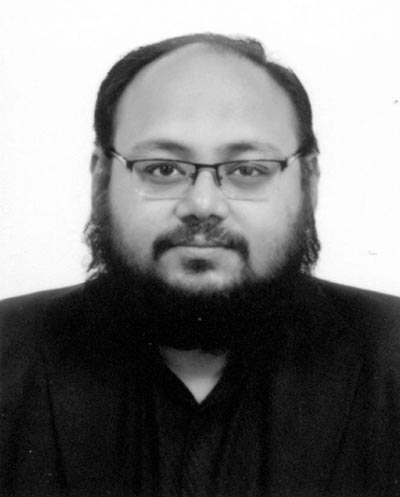
kaushik ahmed


 Media is the mirror of a nation. The citizens of a country get access to information through media. We come to know different events, incidents and happenings via media. As we mostly rely on different types of media like; print media, electronic media and social media for different information from different fields, we tend to believe whatever is exposed in media. It creates a huge responsibility for the people working in different media to present right, factious and timely information. Bangladesh is rolling on several development projects and is chasing the dream to become a developing country as well as a middle income country. In this context, media has a great role to play in the upcoming years and that role is going to be very crucial for the development and progress of our nation.
The word 'media' is derived from the word medium, suggestive of mode or carrier. Media is intended to reach and address a large target group or audience. The word was first used in respect of books and newspapers that is print media and with the initiation of technology, media now includes television, radio and internet. In today's world, media has become as essential as our daily needs.
Media of today is playing an exceptional role in creating and shaping of public opinion and intensification of society. Media is the chief means and one of the pillars of democracy. Media acts as watchdog to protect public interest against malpractice and create public awareness. As the fourth pillar of democracy along with judiciary, executive and legislature, media of today has an all espousal role to act against the injustice, oppression, misdeeds and partiality of our society.
The function of media in society has grown in recent years, especially due to the digitization of information technology. Audiences in the past had to depend profoundly on conventional messages that were generated, sent and controlled by institutions such as corporations and large media outlets. These institutions determined which issues and stories were newsworthy, thus influencing the public's perception of what was important.
The emergence of social media has affected communication patterns in those audiences, who are now information creators. They also play a more active role in determining which issues are important to cover from news perspective. However, the fundamental role of mass media remains the same- to provide audiences with information they need and want to know, for both informative and entertainment purposes.
Media have a big task in contributing to the economic and political development of citizens in any country in the world. Media is a significant aspect in promoting democracy and the rule of law only if it will be given the opportunity of freedom of expression and to deliver messages to the people without being oppressed or intimidated by the authorities of the respective countries or any entities that have the authority to prevent information from the people. Prevention of access to information to citizens is a violation of human rights. A free country requires its citizens to get information and communication on the development issues of their respective countries to promote democracy, good governance and law enforcement.
Media plays a crucial role in shaping a healthy democracy. It is the spine of a democracy. Media makes us aware of various social, political and economical activities happening around the world. It is like a mirror, which shows us or strives to show us the uncovered truth and harsh realities of life.
The media has certainly evolved to become more dynamic over the years. It is through the media that politicians are reminded about their unfulfilled promises at the time of elections. The excessive coverage by news channels during elections helps people, especially illiterates, in electing the right person to the power. This reminder compels politicians to abide by their promises. Television and radio have made significant achievements in educating rural illiterate masses of Bangladesh and other countries of the world and making them aware of all the events that are taking place in their language.
Media also exposes the loopholes in the democratic system, which ultimately helps the government to fill the vacuums and to make the system more liable, reactive and citizen-friendly. Democracy without media is similar to a vehicle without wheels. Media has a very big role to play in democracy and hence it is rightly called the fourth pillar of democracy because of the power they wield and the oversight function they exercise. It is through media that people become aware of so many aspects of life of which they are normally ignorant. Democracy is meaningless without a free, neutral and active media.
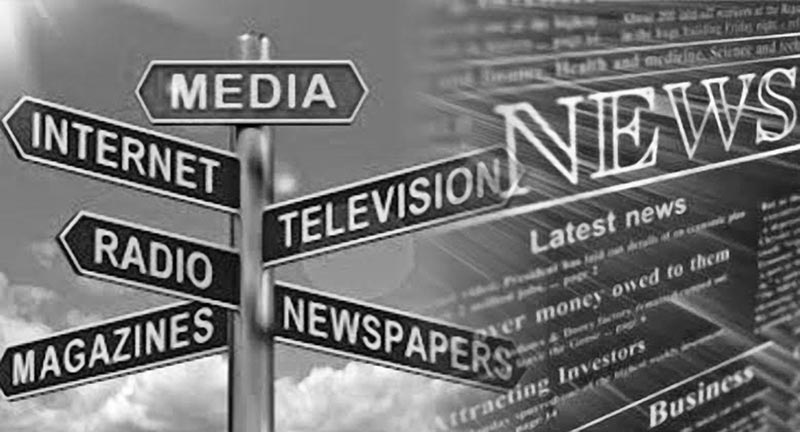 Media helps to disseminate education among citizens on various issues including national affairs, legislative, constitutional rights, political rights, economic issues, cultural and policies issues etc. Media is an important link between governments and citizens, political parties and citizens but also helps build economy and achieve the objectives of the industrial economy like; Sustainable Development Goals (SDGs), Vision 2041 etc.
Media act as a channel for democracy and development, helping to make public participation meaningful. If media is honest and committed in its job, democracy is bound to function more efficiently and the loopholes present in any democratic system can certainly be plugged to the fullest satisfaction of the people. On the contrary, if media is biased to corrupt and favours only a particular party or few individuals, it can be proved to be very dangerous for the smooth functioning of democracy. No one can become perfect and one can only strive to become so. The same holds true for our media also.
The media can play a positive role in democracy only if there is an enabling environment that allows them to do so. They need the requisite skills for the kind of in-depth reporting that a new democracy requires. There should also be mechanisms to ensure they are held accountable to the public and that ethical and professional standards are upheld. The media should also be accessible to as wide a segment of society as possible. Efforts to help the media should be directed toward the protection of press rights, enhancing media accountability, building media capacity and democratizing media access.
The role of media as 'detective' is a critical adjunct to the role of the press as public watchdog; however, it is dealt with separately here to emphasize the difference between reporting on public affairs and journalistic investigations into wrongdoing in the administration of public affairs. When journalists are well trained and have trusted sources of information, the press is able to investigate wrongdoing done by public officials. This 'press as defective' role is evidenced when the press is able to engage in fairly long-term, detailed, in-depth investigative journalism--the kind that is able to report to the public on large-scale systematic wrongdoing by public or even private officials, which may include favoritism, corruption, fraud or other kinds of criminal activities.
These reportings often rely on more than one journalist and require the backup of the media publication or outlet as a whole to provide the necessary resources for the investigative exercise. In many countries especially Bangladesh, the ability and willingness of the press to engage in investigative journalism is key to encouraging the police and prosecuting authorities to act against crimes, even if this only occurs as a result of the intolerable pressure that the resulting publicity puts on the law enforcers.
There is no doubt that media in Bangladesh has done a commendable job from time to time in making people aware about the harsh realities of social and political life, in exposing corruption prevalent in our society, in increasing the awareness level among the people and a lot more but still a lot remains to be done. Media is becoming increasingly popular among people from all walks of life and it certainly has the potential of influencing the thoughts of its readers or viewers to a large extent. Media should, no doubt, be neutral in airing views but it should also strongly desist from airing such views which can adversely affect the communal harmony and give rise to deep suspicion, tension and senseless violence which leads to killing innocent people.
Linked to its general educational role, but more controversially, the press can also play the role of good governance advocate. This role is controversial because it envisages the press as both advocate and impartial reporter. In this role, the press comments on issues of the day and advocates improved democratic practices and good governance. In this advocacy role, the press sees itself firmly on the side of the ordinary citizen, whose life can be improved or worsened depending on how public authority is exercised.
This advocacy role is also closely linked to the watchdog role of the press; however, it goes further. The press as advocate will report not only on what is happening but on what should be happening. The press in many developing countries is almost forced to playing this role because improving basic human living conditions cannot happen without democratic practices and good governance.
Establishing independent media in developing countries like Bangladesh requires more freedom of speech, skilled journalism or strong business management skills. Enabling independent media to perform the crucial roles of being a watchdog over government and educating people about the issues that affect their lives also requires supporting organizations such as trade unions and professional associations for journalists and a public educated about these roles and responsibilities of media and their function in a democratic and open society. If a democracy is to run smoothly in any country, it is a must that the media in all fairness should be given full autonomy it deserves in airing its views among the people and no unnecessary restrictions should be imposed on it.
On the other side, media also on its part should play a very responsible, active and neutral role in perfuming its duties without being influenced by any particular political party or individuals and should treat everyone on an equal footing. Media carries with it a huge responsibility in a democratic setup which it has to fulfil very carefully without any bias toward anyone by bringing out the real facts before the public.
In our country, it is unfortunate that the media houses are not at all focused on developing young journalists. Lack of adequate training and education is actually hurting the quality of journalism in our country. We are having thousands of new journalists every year but most of them are not enough skilled and rather keep themselves busy with different journalist organizations. Moreover, we rarely see any demands from the journalists to enrich the quality of their works rather it is more likely a stunt profession now-a-days. But to contribute in the development of Bangladesh, the quality of journalism must be ensured through nurturing skilled reporters and writers. It is good that many youths are now interested to enter the difficult profession of journalism with the emergence of hundreds of print media and many electronic media but time has come when we should focus more on quality rather than quantity.
Bangladesh during the last decade has placed itself as the role model of development in the world. Huge development works are taking place under the gracious and farsighted leadership of Prime Minister Sheikh Hasina. The main point of these development works is the economic development of the country and for that the media has to play a vital role in the upcoming years.
It is alright that we criticize different works of the government for the welfare of the people but it is also required to uphold our success stories in front of the world. We have to understand that we need to bring in foreign investment in terms of industrial and economic expansion which can be resulted from the development works of the government. But media's role is also very vital in luring the foreign investments into Bangladesh.
We must be aware of the mishaps with our tax money but we should not focus those in our media in such an extent that the foreign investors feel investing in Bangladesh very risky. Not only infrastructural developments but also developments in different human indices should be focused in our own media which will later be acknowledged by the global media. We should realize that we are in a fast growth phase and the next few years are very critical for our country's progress as economic reforms are speeding up within the next decade. Media must play the role of development partner of the government in the current context so that our achievements are more highlighted. Our media should act strategic with patriotic ideals at core.
We hope the government allows enough opportunity for the qualitative development of media in Bangladesh so that the citizens can have information of ongoing development projects in our country. At the same time government should nourish the development of media so that it can play the vital role as a development partner of the government in the future.
The writer is Associate Editor at Mohammadi News Agency (MNA) and Kishore Bangla
Loading...
Loading...
Also read

Editor : Iqbal Sobhan Chowdhury
Published by the Editor on behalf of the Observer Ltd. from Globe Printers, 24/A, New Eskaton Road, Ramna, Dhaka.
Editorial, News and Commercial Offices : Aziz Bhaban (2nd floor), 93, Motijheel C/A, Dhaka-1000.
Phone: PABX- 41053001-06; Advertisement: 41053012; 01793317829, 01550707291, E-mail: [email protected], [email protected] Online: email: [email protected] 41053014; 01550707297 Advertisement: 01550707296
Published by the Editor on behalf of the Observer Ltd. from Globe Printers, 24/A, New Eskaton Road, Ramna, Dhaka.
Editorial, News and Commercial Offices : Aziz Bhaban (2nd floor), 93, Motijheel C/A, Dhaka-1000.
Phone: PABX- 41053001-06; Advertisement: 41053012; 01793317829, 01550707291, E-mail: [email protected], [email protected] Online: email: [email protected] 41053014; 01550707297 Advertisement: 01550707296


