



| HEADLINE |

|

Nation pays tributes to language martyrs
President, PM pay homage at Shaheed Minar
Published : Saturday, 21 February, 2026 at 12:00 AM
Staff Correspondent


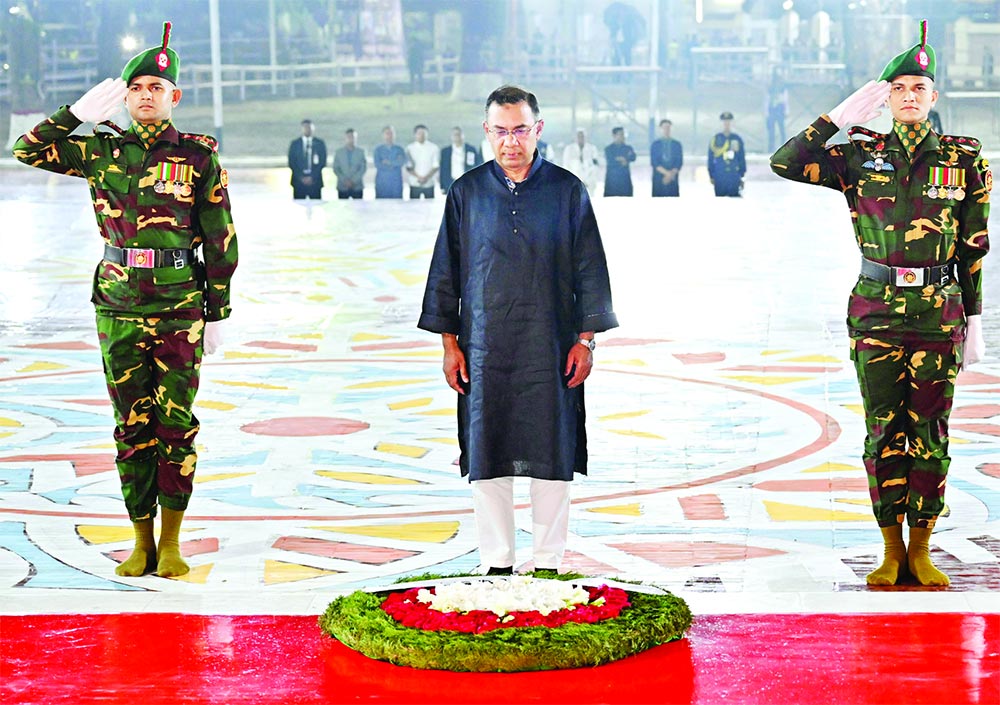 The nation observed 21 February with profound reverence today, marking Great Language Martyrs' Day and International Mother Language Day - a day etched in blood and memory as the eternal symbol of Bengali identity and sacrifice. The 74th anniversary of historic Ekushey was commemorated with solemnity, emotion and renewed pledges to uphold linguistic dignity.
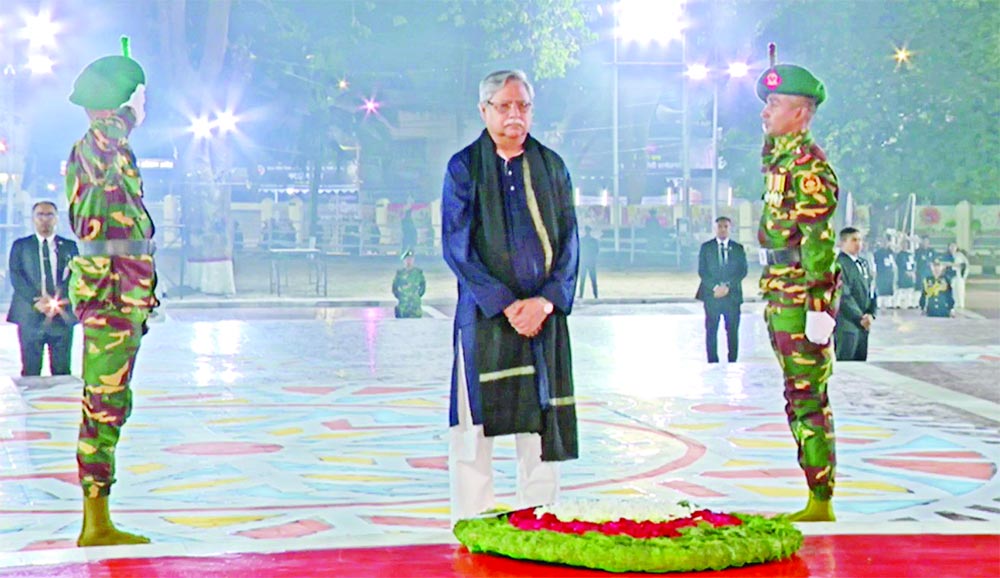 The observance began at 12:01am Friday as the President Md Shahabuddin and Prime Minister Tarique Rahman placed wreaths at the Central Shaheed Minar, standing in silent tribute to the martyrs. They were followed by cabinet members, chiefs of the armed forces, leaders of opposition parties led by Dr Shafiqur Rahman, foreign diplomats and vice chancellors of public universities.
After completion of the official phase, the monument was opened to the public, enabling citizens from all walks of life to proceed barefoot to the altar singing "Amar Bhaiyer Rokte Rangano Ekushey February" while carrying floral tributes, a practice widely regarded as a form of civic expression protected under democratic tradition.
The 2026 observance adopts the global theme "Youth voices on multilingual education".
On this day in 1952 students and youth of the then East Bengal defied Section 144 imposed by the Pakistani occupied authorities and mobilised in protest demanding that "Bangla be made the state language". Law enforcement agencies opened fire on the procession, resulting in the deaths of Salam, Jabbar, Shafiq, Barkat and Rafiq among others.
Their martyrdom is widely interpreted by scholars as a watershed moment that transformed linguistic identity into a rights based political movement. Since then, for the Bengali nation, the date has embodied deep grief and pain on the one hand and a historic day of supreme sacrifice for the realisation of the rights of the mother tongue on the other.
International recognition of the observance came when UNESCO on November 17 in 1999 formally proclaimed the date as International Mother Language Day, after which it began to be commemorated worldwide alongside national observances.
The day is being observed as a public holiday, with the national flag flown at half mast at educational institutions and all government, semi government, autonomous and private establishments in compliance with official directives. Religious observances have also been incorporated into the programme, including Fateha and Quran recitation at the Azimpur graveyard as well as special prayers at mosques, temples, churches and other places of worship nationwide.

Loading...
Loading...



Editor : Iqbal Sobhan Chowdhury
Published by the Editor on behalf of the Observer Ltd. from Globe Printers, 24/A, New Eskaton Road, Ramna, Dhaka.
Editorial, News and Commercial Offices : Aziz Bhaban (2nd floor), 93, Motijheel C/A, Dhaka-1000.
Phone: PABX- 41053001-06; Advertisement: 41053012; 01793317829, 01550707291, E-mail: [email protected], [email protected] Online: email: [email protected] 41053014; 01550707297 Advertisement: 01550707296
Published by the Editor on behalf of the Observer Ltd. from Globe Printers, 24/A, New Eskaton Road, Ramna, Dhaka.
Editorial, News and Commercial Offices : Aziz Bhaban (2nd floor), 93, Motijheel C/A, Dhaka-1000.
Phone: PABX- 41053001-06; Advertisement: 41053012; 01793317829, 01550707291, E-mail: [email protected], [email protected] Online: email: [email protected] 41053014; 01550707297 Advertisement: 01550707296


