



| HEADLINE |

|

Justice Murshed - remains a legend
Published : Friday, 3 April, 2026 at 12:00 AM
Barrister Nazir Ahmed


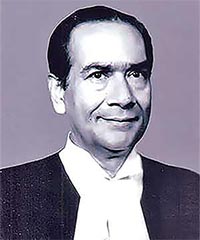 Late Justice Syed Mahbub Murshed's distinguished legal career and landmark judgments have made him renowned both within and beyond the legal community. Through his bravery, integrity, and unwavering commitment to liberty, fairness, and justice, he secured a place in history. Hardly anyone in the Indian subcontinent can pursue a legal career without encountering his name.
Born on 11 January 1911 into a respected and distinguished Muslim Bengali family, Justice Murshed's ancestry traced back to Syeds who settled in Murshidabad during the reign of Mughal Emperor Shahjahan. His father, Syed Abdus Salek, was a brilliant scholar from the University of Calcutta and served as a District Magistrate in Bogra and Dinajpur with a reputation for honesty and expertise. His mother, Afzalunnesa Begum, was the sister of Sher-e-Bangla A.K. Fazlul Haque and a descendant of Khalid-bin-Walid, the 7th-century Islamic general.
Justice Murshed excelled academically, topping the 1926 Calcutta University Matriculation Examination from Rajshahi Division. He earned a BA (Hons) in Economics from Presidency College, Calcutta, in 1930, an MA in Economics from the University of Calcutta in 1932, and an LLB in 1933 with First Class. He then pursued higher legal studies in the UK, being called to the English Bar in 1939, where he ranked first among candidates from British India.
Justice Murshed began his legal practice at the Calcutta High Court in the early 1940s, choosing to work under eminent lawyers Sharat Chandra Boshu and A.B. Khaitun rather than as an assistant to his uncle, Sher-e-Bangla. After the Partition, he joined the Dacca High Court and was elevated to its Bench in early 1955. His landmark judgments-including the Ministers Case, Pan Case, Basic Democracy Case, Mehmood Case, and Convocation Case-remain milestones in Pakistan's constitutional history. He also served as an Ad Hoc Justice of the Supreme Court of Pakistan in 1962, delivering judgments considered legal classics.
From 1964 to 1967, Justice Murshed served as Chief Justice of East Pakistan, upholding the rule of law with courage. His principled stance often drew government pressure, but he resigned on 16 November 1967 when he could not act against his conscience. After resignation, he remained active in public life, organizing the defense in the Agartala Conspiracy Case, supporting the 1969 mass uprising, and advocating for the students' 11-point program in the roundtable conference called by President Ayub Khan.
Throughout his life, he engaged in cultural and humanitarian activities. Leading figures have lauded his contributions. Former President of Bangladesh Justice Abu Syed Chowdhury called his judgment in Golam Sarwar vs. Pakistan Western Railway a "legal classic." Justice A.K.M. Nurul Islam praised his intelligence, simplicity, and humor. Justice Abdur Rahman Chowdhury described him as "a giant in the legal field," while Justice Mustafa Kamal noted that no contemporary in Pakistan matched his constitutional jurisprudence. Hussain Shahid Suhrawardy called him an "unfailing protector of civil liberties," and Birendranath Sarkar referred to him as "the only protector of minorities during the Ayub-Monaim Era." Barristers Syed Istiaque Ahmed and Moudud Ahmed highlighted his defense of the Constitution and ability to bridge judges' minds with the people's. Politician Ataur Rahman Khan noted his belief that democracy was the highest right.
Justice Murshed also contributed to Bengali nationalism. He played a crucial role in drafting the six-point plan demanding provincial autonomy, which Sheikh Mujibur Rahman politically championed. He helped shape the 21-point manifesto of the Jukta-Front government, summarized into the famous six points, and boldly supported student-led demands for autonomy. In the 1969 round-table conference, he advocated for "one man, one vote," resulting in East Pakistan gaining 169 seats out of 300 in the National Assembly, laying the foundation for majority governance in East Pakistan.
Justice Murshed passed away on 3 April 1979, leaving behind a legacy of commitment to liberty, justice, the rule of law, and liberal ideals. His firmness and boldness in upholding justice remain an enduring example for contemporary Bangladesh, where judicial independence and civil liberties are often challenged. He is remembered not only as a legal icon but also as a pioneer of Bengali nationalism and a guardian of national conscience. As Dr. Mizanur Rahman Shelly aptly noted, "Murshed was the man who endeavored to build bridges between the past, present, and future and was the keeper of national conscience." On his 114th birth anniversary, Justice Syed Mahbub Murshed is remembered with utmost respect, his life a beacon of integrity, courage, and unwavering dedication to justice.
The writer is a UK based legal and constitution expert, an Advocate of Bangladesh Supreme Court and Practising Barrister in the UK
Loading...
Loading...
Also read



Editor : Iqbal Sobhan Chowdhury
Published by the Editor on behalf of the Observer Ltd. from Globe Printers, 24/A, New Eskaton Road, Ramna, Dhaka.
Editorial, News and Commercial Offices : Aziz Bhaban (2nd floor), 93, Motijheel C/A, Dhaka-1000.
Phone: PABX- 41053001-06; Advertisement: 41053012; 01793317829, 01550707291, E-mail: [email protected], [email protected] Online: email: [email protected] 41053014; 01550707297 Advertisement: 01550707296
Published by the Editor on behalf of the Observer Ltd. from Globe Printers, 24/A, New Eskaton Road, Ramna, Dhaka.
Editorial, News and Commercial Offices : Aziz Bhaban (2nd floor), 93, Motijheel C/A, Dhaka-1000.
Phone: PABX- 41053001-06; Advertisement: 41053012; 01793317829, 01550707291, E-mail: [email protected], [email protected] Online: email: [email protected] 41053014; 01550707297 Advertisement: 01550707296


