



| HEADLINE |

|
BRRI’s zinc-enriched rice a commendable success


 Although Bangladesh has achieved self-sufficiency in food production, ensuring nutritional security remains an ongoing challenge. Increasing the nutritional value of the country's staple food�"particularly by developing and promoting zinc-enriched rice varieties�"offers a sustainable and cost-effective strategy for addressing widespread zinc deficiency and improving public health. Guided by Sustainable Development Goal (SDG) 2: Zero Hunger, the Bangladesh Rice Research Institute (BRRI) is working to enhance the nutritional quality of rice by increasing the levels of essential nutrients such as zinc, iron, protein, vitamins, and minerals to meet the dietary needs of the population. To develop nutrient-rich rice varieties, BRRI employs state-of-the-art biofortification and genetic engineering (GM) technologies. This approach is particularly important because, while many people in Bangladesh cannot regularly afford nutrient-rich foods such as milk, eggs, fish, and meat, they consume rice every day.
As a result, BRRI has developed a range of nutritionally enhanced rice varieties, including zinc-rich rice, iron-rich rice, high-protein rice, rice enriched with antioxidants, gamma-aminobutyric acid (GABA), pro-vitamin A Golden Rice, and low-glycemic index (low-GI) rice suitable for people with diabetes. Among these innovations, BRRI scientists have achieved remarkable success in developing zinc-enriched rice varieties.
Research indicates that zinc deficiency remains a major public health concern in Bangladesh. Approximately 46% of children under the age of five suffer from zinc deficiency, while about 57% of women across different age groups are affected. Overall, nearly half of the country's population�"including men, women, and children�"experiences inadequate zinc intake. To address this challenge through the country's staple food, scientists at BRRI have developed seven zinc-enriched rice varieties capable of improving dietary zinc intake through regular rice consumption. In addition, other agricultural research institutions in Bangladesh have collectively developed 16 more biofortified zinc-rich crop varieties, further strengthening national efforts to combat micronutrient malnutrition.
Scientists have developed these zinc-enriched rice varieties by incorporating the zinc trait into high-yielding rice cultivars adapted to Bangladesh. Farmers can save seed from these varieties and use it for subsequent planting seasons. Despite their higher zinc content, the cooked rice retains the same taste, color, and cooking quality as conventional rice.
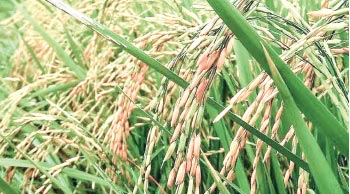 Since rice is the staple food of the Bangladeshi population, enriching rice with zinc offers a sustainable solution to combating zinc deficiency. Regular consumption of zinc-enriched rice can provide approximately 50�"70% of the recommended daily zinc requirement. Widespread cultivation and adoption of these varieties among farmers would significantly contribute to reducing zinc deficiency and improving nutritional security in Bangladesh. Zinc is an essential micronutrient that plays numerous critical roles in the human body. It functions as an antioxidant, strengthens the immune system, supports carbohydrate metabolism, promotes cell growth and protein synthesis, and contributes to the production of gastrin, a hormone involved in taste perception and appetite regulation. Zinc is also indispensable for bone development through carotenoid metabolism, insulin synthesis, wound healing, skin maintenance, and many other physiological processes.
Scientists have also estimated the contribution of zinc-enriched rice to meeting daily zinc requirements based on the average per capita rice consumption of 367 grams per day. The recommended daily zinc intake is 11 mg for adult men and 8 mg for adult women. BRRI's zinc-enriched rice contains 24 mg of zinc per kilogram of rice or more. Therefore, 367 grams of rice contains approximately 8.81 mg of zinc. During cooking, about 11% of the zinc is lost, while the bioavailability of zinc is approximately 91%. Consequently, after cooking and digestion, the body absorbs about 7.14 mg of zinc from 367 grams of zinc-enriched rice. Considering variations in daily rice consumption, regular intake of zinc-enriched rice can supply approximately 50�"70% of the daily zinc requirement.
To increase the availability of zinc-enriched rice in the market, these varieties should be rapidly disseminated at the field level, and government procurement and marketing of zinc-enriched paddy should be strengthened. In collaboration with the Department of Agricultural Extension (DAE), BRRI Headquarters and its 17 Regional Stations should establish demonstration plots to promote farmer awareness and facilitate seed availability. Adequate quantities of Truthfully Labeled Seed (TLS) should be produced and distributed directly to farmers. BRRI should continue producing breeder seed and supplying it to the Bangladesh Agricultural Development Corporation (BADC) and private seed companies so that sufficient quantities of certified seed can be produced and made available nationwide. Seed multiplication and free distribution through the HarvestPlus Project, funded by the International Food Policy Research Institute (IFPRI), along with community-based seed production supported by the Department of Agricultural Extension, would further accelerate the adoption of zinc-enriched rice.
In conclusion, ensuring food and nutritional security requires greater public awareness of healthy food choices. Consumers should be encouraged to include zinc-enriched and other nutrient-rich rice varieties in their daily diets. Alongside government agencies, educational institutions, civil society, and development organizations should actively promote the nutritional benefits of biofortified rice. Furthermore, distributing zinc-enriched rice through government social safety-net programmes�"such as OMS (Open Market Sale), VGF (Vulnerable Group Feeding), VGD (Vulnerable Group Development), Food-Friendly Programme, EGPP (Employment Generation Programme for the Poorest), and other social protection initiatives�"could significantly reduce both food insecurity and zinc deficiency among vulnerable populations. Such initiatives would contribute to improving national nutritional status and strengthening public health, in line with Bangladesh's vision of ensuring a healthier and more productive population.
The writer is a Senior Communication Officer, Bangladesh Rice Research Institute (BRRI)
Loading...
Loading...
Also read



Editor : Iqbal Sobhan Chowdhury
Published by the Editor on behalf of the Observer Ltd. from Globe Printers, 24/A, New Eskaton Road, Ramna, Dhaka.
Editorial, News and Commercial Offices : Aziz Bhaban (2nd floor), 93, Motijheel C/A, Dhaka-1000.
Phone: PABX- 41053001-06; Advertisement: 41053012; 01793317829, 01550707291, E-mail: [email protected], [email protected] Online: email: [email protected] 41053014; 01550707297 Advertisement: 01550707296
Published by the Editor on behalf of the Observer Ltd. from Globe Printers, 24/A, New Eskaton Road, Ramna, Dhaka.
Editorial, News and Commercial Offices : Aziz Bhaban (2nd floor), 93, Motijheel C/A, Dhaka-1000.
Phone: PABX- 41053001-06; Advertisement: 41053012; 01793317829, 01550707291, E-mail: [email protected], [email protected] Online: email: [email protected] 41053014; 01550707297 Advertisement: 01550707296


