BARISHAL, Apr 7: A double blow of scant rainfall and an ongoing fuel crisis has gripped the Barishal agricultural region, leaving farmers in deep anxiety over irrigation for nearly 400,000 hectares (ha) of Boro paddy.
While drought threatens the rice, experts warn that any sudden heavy downpour could simultaneously devastate 1.5 million tonnes of watermelons still in the fields.
In this food-surplus region, farmers are currently toiling to meet a production target of 1.8 million tonnes of Boro rice. The crops are at a sensitive flowering and 'booting' stage, requiring consistent water. However, the lack of natural rain has made farmers entirely dependent on diesel-powered irrigation, just as fuel supply concerns have begun to keep them awake at night.
Despite administrative assurances, reports of diesel shortages and price gouging are surfacing. In remote rural areas, diesel is allegedly being sold at Tk 10-12 higher than the set price per litre. In response, the divisional and district administrations have appointed first-class officials as 'Tag Officers' at filling stations and dealership to monitor distribution.
After a staggering 127-day dry spell, Barishal saw its first rain on March 9. However, the total rainfall for March remained 49 per cent below normal levels. This deficit has forced farmers to run irrigation pumps longer, significantly driving up production costs.
Divisional Commissioner Md. Mahfuzur Rahman and Deputy Commissioner (DC) Md. Khairul Alam Suman are reportedly in constant contact with Upazila Nirbahi Officers (UNOs) to ensure the fuel supply chain remains uninterrupted. Mobile courts and police patrols have also been deployed at fuel depots and pumps.
Of the nearly 87,000 power pumps currently operating in the Barishal region, 74,000 are diesel-powered. These pumps require over 500,000 litres of diesel daily. With over 90% of the region's irrigation still reliant on diesel, the Department of Agricultural Extension (DAE) emphasises that an uninterrupted fuel supply is mandatory until May 15 to secure the harvest.
While rice needs water, the region's record-breaking watermelon crop-spread across 71,000 hectares-is at risk from the opposite threat. While half the produce has been marketed, roughly 1.5 million tonnes remain in the fields. Agriculturalists fear that heavy rain or hailstorms, similar to the 2024 Nor'westers that destroyed 10,000 hectares of fruit, could trigger a massive disaster.
Dr. Nazrul Islam Sikdar, Additional Director of DAE (Barishal Region), confirmed that while planting targets were met, the rain deficit makes the economy vulnerable.
"Every effort is being made to keep irrigation active. While the forecasted rain for April would be a blessing for Boro crops by lowering costs, we must stay vigilant regarding the watermelon situation," he said.
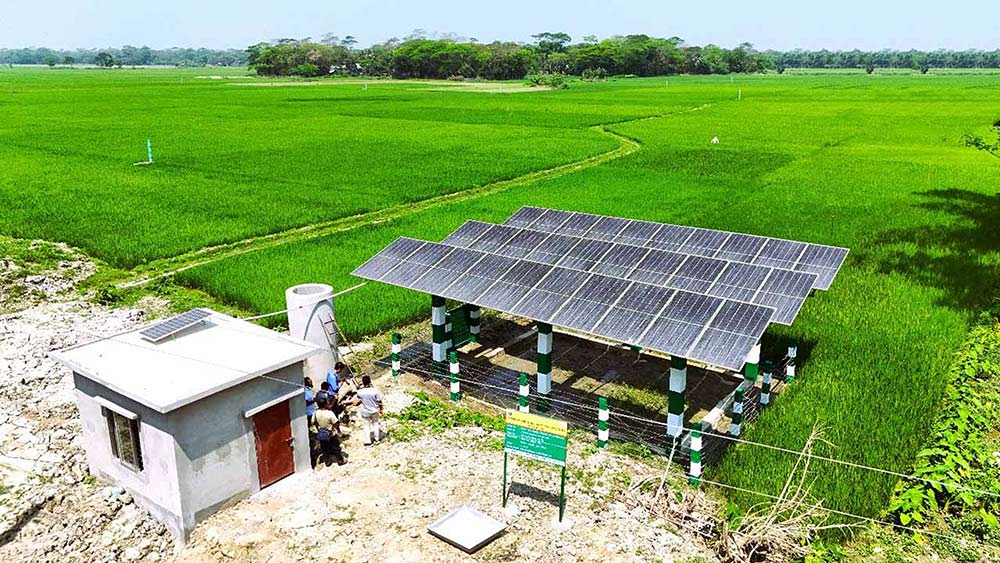
Local experts are also calling for a shift toward solar and electric irrigation. Currently, Barishal remains one of the most diesel-dependent regions in the country, with only 40 solar-powered pumps covering a mere 1,500 hectares.
The Meteorological Department has forecasted 120-140 mm of rain for April and 230-240 mm for May. However, as of April 6, no rain has been recorded. The forecast also warns of potential low-pressure systems in the Bay of Bengal that could develop into cyclones, alongside severe Nor'wester storms.





