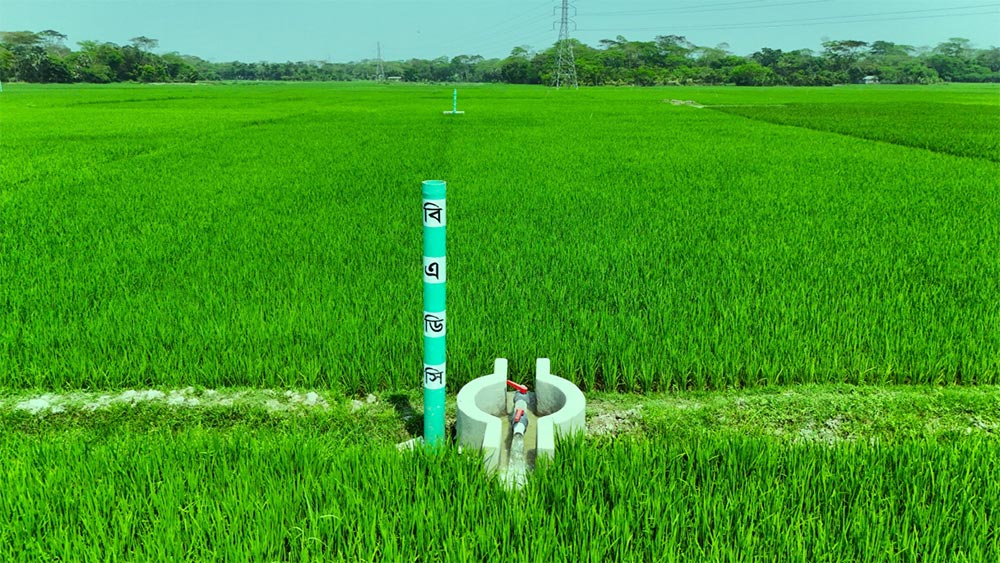
BARISHAL, Apr 23: A 15 per cent hike in fuel prices amid an ongoing diesel supply shortage has placed additional pressure on Boro farmers in the Barishal agricultural region, raising concerns over rising production costs and potential impact on paddy prices.
The price adjustment, which came into effect from midnight on Sunday along with other fuel price changes, is expected to push production costs of Boro paddy beyond Tk 1,200 per maund, according to farmers and agricultural experts.
Although irrigation in most parts of the country is nearing completion, the situation in the southern "haor-adjacent" Barishal region is different, where Boro cultivation was completed later-around mid-March. As a result, continuous irrigation is required throughout May.
Farmers say there is no alternative but to maintain uninterrupted irrigation during this period, especially as rainfall remains significantly below expectations. According to meteorological data, Barishal experienced a 49 per cent rainfall deficit in March, with only 31mm of rain recorded by April 19.
The region has also seen rising temperatures, with mercury levels approaching 37°C, increasing soil moisture loss and irrigation demand. Forecasts suggest possible low-pressure systems in the Bay of Bengal, but no significant rainfall has materialised so far.
Officials estimate that around 400,000 hectares of Boro paddy fields in the Barishal region require sustained irrigation to produce an estimated 1.8 million tonnes of rice. Around 87,000 irrigation pumps are currently in operation, of which about 74,000 run on diesel.
These pumps consume an estimated 500,000 litres of diesel daily, according to agricultural estimates. To ensure stable production, uninterrupted fuel supply for at least 35-40 more days is considered essential by farmers.
However, farmers say the recent fuel price hike has created uncertainty over irrigation costs and profitability. Many fear that any fall in rice prices could push them into financial losses.
"This will significantly increase production costs. If market prices fall, farmers will be severely affected," said agricultural observers familiar with the region.
Unlike electricity-run irrigation systems, diesel-powered pumps in the southern region do not receive government subsidies, making production costs comparatively higher.
Electricity-based irrigation receives a 20 percent subsidy, but similar support for diesel was discontinued years ago.
Agricultural experts say this has created an imbalance in production costs across the country, with Boro cultivation in the south becoming more expensive than in other regions.
They argue that introducing a subsidy or incentive for diesel used in irrigation could help reduce production costs and ensure farmers remain interested in Boro cultivation in the future.
Despite the challenges, the Department of Agriculture Extension (DAE) expects over 2.25 million tonnes of rice production from more than 5.1 million hectares nationwide this season. So far, only a small fraction of the crop has been harvested.
Officials say around 40,000 hectares have been harvested as of April 19, less than one per cent of total cultivation.





