



| HEADLINE |

|
April inflation hits 9.04pc, upping pressure on households
Published : Thursday, 7 May, 2026 at 12:00 AM
Mizanur Rahman


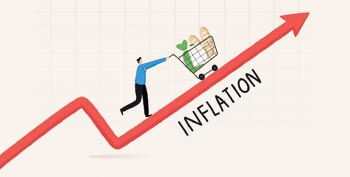 Inflation in the country has climbed back above the 9 per cent mark, reaching 9.04 per cent in April, after briefly easing below that level in March. The renewed rise underscores persistent economic pressure on consumers, particularly low- and middle-income groups.
Although inflation showed slight declines in September and October 2025, the downward trend proved short-lived, with prices beginning to rise again from November. The latest data indicates that inflationary pressures have now spread across both food and non-food sectors.
Economists warn that the continued increase in prices is eroding purchasing power, especially for households with fixed or limited incomes. Recent hikes in fuel prices have already had a cascading effect on essential commodities. Over the past two weeks, vegetable prices have surged by Tk 10 to Tk 15 per kilogram, while fish and meat have also become more expensive. Rice prices, however, have remained relatively stable.
Concerns are growing over external risks, as government ministers warn that Middle East tensions could disrupt fuel supplies and push energy and commodity prices higher in the coming months.
Meanwhile, wage growth continues to lag behind inflation. The national average wage rate rose by 8.16 percent in April�"below the inflation rate�"indicating declining real income and increasing financial strain on households. Analysts warn that unless inflation eases or wages rise at a similar pace, families may be forced to borrow or cut spending on essentials such as food, clothing, and transport. They also note that slower inflation does not mean prices are falling, only that the rate of increase has moderated.
Although inflation declined to single digits in the last fiscal year after remaining above double digits for years, it still remains burdensome for ordinary people. The inflation target for the current fiscal year was set at 6.5 percent, while the target for the next budget is yet to be announced.
Economist and Banker Akhtar Hossain told the Daily Observer, “In the current global situation and the prevailing state of the country’s economy, there is a danger of inflation becoming unbridled. The main goal of this year’s budget will be to rein in inflation. And that is why controlling inflation will be the main challenge in this year’s budget.”
However, despite the rise in commodity prices in the country, inflation fell to 8.71 per cent in March.
On Wednesday, the Bangladesh Bureau of Statistics (BBS) released inflation data for the month of April. It shows that inflation was 8.58 per cent in January, 9.13 per cent in February.
According to BBS data, inflation in the food sector increased to 8.39 per cent in April this year. Inflation in the non-food sector increased to 9.57 per cent.
In April 2025, the rate was 9.61 per cent. According to BBS’s latest data, inflation increased in both cities and villages in April. In April, inflation in villages was 9.05 per cent, which was 8.72 per cent in March. On the other hand, inflation in cities was 9.02 per cent, which was 8.68 per cent in March.
Dr Zahid Hossain, former chief economist at the World Bank’s Dhaka office, said higher fuel prices are a key driver of rising non-food inflation, while prices of import-dependent goods have also increased.
Explaining the overall inflation trend, he said the rise is linked not only to fuel costs but also to broader increases in international market prices. Although inflation had shown no clear signs of easing earlier, global price pressures have contributed to the recent uptick.
Dr Ijaz Hossain, professor of Chemical Engineering at Bangladesh University of Engineering and Technology (BUET), said the government should closely monitor the transport sector to avoid economic risks. He suggested aligning truck fare adjustments with recent bus fare hikes and placing greater emphasis on freight transport, as higher transport costs could further drive food prices and inflation.
He also noted that the energy crisis has pushed fuel import expenses up by more than 50 percent. Bangladesh typically imports fuel worth $12�"13 billion annually, but an international report warned that the ongoing crisis could require an additional $5�"6 billion in imports.
Former Director General of the Bangladesh Institute of Bank Management and economist Dr Moinul Islam said the key challenge now is balancing multiple economic goals. Controlling inflation, maintaining exchange rate stability, and sustaining growth are difficult to achieve simultaneously, as higher interest rates may curb inflation but slow investment, while increasing dollar supply can stabilize the market but reduce foreign reserves.
Loading...
Loading...
Also read



Editor : Iqbal Sobhan Chowdhury
Published by the Editor on behalf of the Observer Ltd. from Globe Printers, 24/A, New Eskaton Road, Ramna, Dhaka.
Editorial, News and Commercial Offices : Aziz Bhaban (2nd floor), 93, Motijheel C/A, Dhaka-1000.
Phone: PABX- 41053001-06; Advertisement: 41053012; 01793317829, 01550707291, E-mail: [email protected], [email protected] Online: email: [email protected] 41053014; 01550707297 Advertisement: 01550707296
Published by the Editor on behalf of the Observer Ltd. from Globe Printers, 24/A, New Eskaton Road, Ramna, Dhaka.
Editorial, News and Commercial Offices : Aziz Bhaban (2nd floor), 93, Motijheel C/A, Dhaka-1000.
Phone: PABX- 41053001-06; Advertisement: 41053012; 01793317829, 01550707291, E-mail: [email protected], [email protected] Online: email: [email protected] 41053014; 01550707297 Advertisement: 01550707296


