



| HEADLINE |

|
Vannamei farming faces scrutiny despite huge prospects


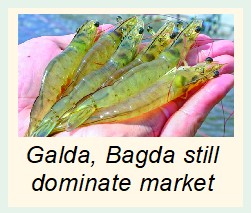 Despite strong global demand for shrimp-often called "white gold"-Bangladesh's shrimp industry remains divided over the commercial expansion of Vannamei shrimp farming. Experts say Vannamei shrimp, also known as white-leg shrimp, could transform the sector if proper policy support and regulatory clarity are ensured.
Although Vannamei shrimp has gained global popularity because of its lower production cost, higher yield, and faster growth cycle, Bangladesh's shrimp sector is still dominated by traditional galda (giant freshwater prawn) and bagda (black tiger shrimp). Industry stakeholders say policy uncertainty, limited government support, and strict regulations are slowing expansion.
Pilot projects in the country's south-western coastal belt have shown promising results. However, commercial-scale farming remains limited due to restrictions on investment, broodstock and feed imports, limited hatchery capacity, and strict biosecurity requirements. Currently, only a small number of farmers and companies in Cox's Bazar, Satkhira, and Khulna are engaged in Vannamei farming under controlled conditions. Acting Director General of the Department of Fisheries (DoF) Md. Zia Haidar Chowdhury told this correspondent that despite strong international demand, several regulatory barriers continue to limit expansion.
"Vannamei shrimp has huge global demand, but expansion is restricted due to existing policy limitations and regulations," he said. He added that 36 institutions have so far received permission for Vannamei shrimp farming, while seven hatcheries have been approved for establishment. However, commercial operations are yet to expand fully because of regulatory restrictions and pending approvals. He also said imports of broodstock and feed remain restricted under current regulations.
"So far, we have not found any major environmental or production-related problems. The results are encouraging. However, the Fisheries Research Institute is still assessing its environmental compatibility," he added. He expressed hope that necessary approvals would be granted once the research process is completed.
District Fisheries Officer of Cox's Bazar Md. Nazmul Huda said Vannamei farming must strictly follow government approval procedures and biosecurity guidelines. He noted that Bangladesh's first major commercial initiative was undertaken by Silmarch (BD) Ltd, which reported very high productivity. According to him, traditional bagda shrimp farming yields around 300-500 kg per hectare, while Vannamei shrimp can produce 7,000-8,000 kg per hectare under semi-intensive systems.
In intensive systems, production can rise significantly further. At a 12-acre farm in Ukhiya, Cox's Bazar, Silmarch (BD) Ltd has established 32 nursery ponds, 16 quarantine ponds, and biosecure facilities for broodstock and seed production. Nazmul Huda said no entity can legally produce Vannamei shrimp seed without government approval.
At present, Niribili Hatchery in Kolatoli, Cox's Bazar, is producing Vannamei post-larvae using broodstock imported from Thailand with government approval.
Hatchery manager Sujon Barua recently told this correspondent, "In 2024, we started operations with 300 brood shrimps imported from Thailand under continuous government monitoring."
He said the hatchery currently supplies between 6 million and 10 million larvae per month depending on demand. However, he added that limited market demand and policy uncertainty are discouraging fresh investment.
A visit to the hatchery found strict biosecurity measures in place. Vehicles are disinfected before entry, while visitors must undergo sanitation procedures. The facility is divided into separate controlled zones for water treatment, larval production, feed preparation, and broodstock management.
Nazmul Huda also highlighted Vannamei shrimp's shorter production cycle. Traditional shrimp farming takes around five to six months before harvest, while Vannamei shrimp can be harvested within 90-100 days, allowing two to three production cycles annually.
He added that Bangladesh has around 275,000 hectares of coastal shrimp farming land, but export earnings are declining because of the relatively low productivity of traditional shrimp species.
A pilot project in the Patuakhali region under a Department of Fisheries initiative reportedly produced around 9 tonnes per hectare within 100 days. Experts estimate that if Vannamei shrimp is cultivated on just 30% of Bangladesh's shrimp farming land, annual export earnings could exceed $2 billion (around Tk 24,000 crore), nearly four times the sector's current export revenue.
Globally, Vannamei shrimp accounts for around 80-85% of the shrimp trade, with major producers including India, Vietnam, Ecuador, and Thailand.
Experts also argue that Vannamei farming can be more environmentally sustainable because of its biosecure production system. Farms generally use plastic- or concrete-lined ponds to reduce soil degradation and disease contamination. Water recycling systems and lower wastage can also help reduce environmental impact.
Compared with traditional shrimp species, Vannamei shrimp is considered more feed-efficient and generates comparatively less water pollution. Former Director General of the Department of Fisheries Khandaker Mahbubul Haque stressed the need for stronger government support.
"Many countries have advanced in Vannamei farming. Without government patronage, Bangladesh cannot fully utilize this potential," he said. He suggested establishing dedicated Vannamei farming zones with modern infrastructure support, including hatcheries and export facilities, possibly involving foreign investment.
Stakeholders believe Vannamei shrimp could significantly reshape Bangladesh's aquaculture economy. However, they warn that without policy stability, expanded hatchery operations, and easier access to broodstock and feed imports, the sector may fail to realize its full potential.
If properly supported, Vannamei shrimp could emerge as a major source of export earnings and rural employment in Bangladesh's coastal regions.
Loading...
Loading...
Also read



Editor : Iqbal Sobhan Chowdhury
Published by the Editor on behalf of the Observer Ltd. from Globe Printers, 24/A, New Eskaton Road, Ramna, Dhaka.
Editorial, News and Commercial Offices : Aziz Bhaban (2nd floor), 93, Motijheel C/A, Dhaka-1000.
Phone: PABX- 41053001-06; Advertisement: 41053012; 01793317829, 01550707291, E-mail: [email protected], [email protected] Online: email: [email protected] 41053014; 01550707297 Advertisement: 01550707296
Published by the Editor on behalf of the Observer Ltd. from Globe Printers, 24/A, New Eskaton Road, Ramna, Dhaka.
Editorial, News and Commercial Offices : Aziz Bhaban (2nd floor), 93, Motijheel C/A, Dhaka-1000.
Phone: PABX- 41053001-06; Advertisement: 41053012; 01793317829, 01550707291, E-mail: [email protected], [email protected] Online: email: [email protected] 41053014; 01550707297 Advertisement: 01550707296


