



| HEADLINE |

|
Security along Bangladesh border India’s top priority: Randhir Jaiswal
Published : Tuesday, 12 May, 2026 at 10:53 PM
Observer Online Report


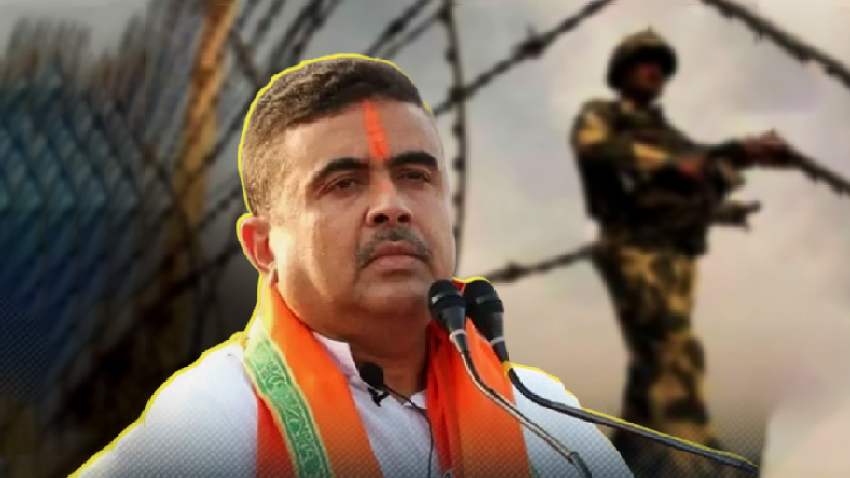
India has reaffirmed that securing its border with Bangladesh remains a top national priority, amid political developments in West Bengal and ongoing bilateral exchanges between the two countries.
Speaking at a media briefing in New Delhi on Tuesday, Ministry of External Affairs spokesperson Randhir Jaiswal said border security is central to India’s approach.
He made the remarks in response to questions about the newly elected BJP government in West Bengal reportedly allocating land to the Border Security Force for fencing sections of the frontier with Bangladesh.
Jaiswal highlighted continued high level engagement between the two neighbours, noting that Bangladesh Foreign Minister Khalilur Rahman recently visited New Delhi while India’s Lok Sabha Speaker Om Birla travelled to Dhaka. He described these exchanges as indicative of the current trajectory of bilateral relations.
The spokesperson was also asked about reports of protests in Bangladesh over imports of Indian goods and concerns related to the outcome of the West Bengal assembly elections. In response, he emphasised that India’s relationship with Bangladesh continues to move forward through diplomatic channels.
Addressing energy cooperation, Jaiswal said India has maintained fuel supplies to Bangladesh despite regional energy pressures. Diesel is being delivered through the India Bangladesh Friendship Pipeline, and additional requests from Dhaka have been accommodated.
He added that India is also supplying energy products to Bhutan and Nepal, extending assistance to Sri Lanka, and working on arrangements with Mauritius.
On migration issues, Jaiswal said discussions with Bangladesh are ongoing. He reiterated that India is awaiting verification from Dhaka regarding the nationality of more than 2,860 individuals whose details were previously shared. The matter, he said, remains part of bilateral dialogue.
Responding to a question about Bangladesh Foreign Minister Khalilur Rahman’s recent visit to China, the Indian spokesperson said New Delhi monitors regional developments closely but maintains that its ties with neighbouring countries are independent and stand on their own.
Speaking at a media briefing in New Delhi on Tuesday, Ministry of External Affairs spokesperson Randhir Jaiswal said border security is central to India’s approach.
He made the remarks in response to questions about the newly elected BJP government in West Bengal reportedly allocating land to the Border Security Force for fencing sections of the frontier with Bangladesh.
Jaiswal highlighted continued high level engagement between the two neighbours, noting that Bangladesh Foreign Minister Khalilur Rahman recently visited New Delhi while India’s Lok Sabha Speaker Om Birla travelled to Dhaka. He described these exchanges as indicative of the current trajectory of bilateral relations.
The spokesperson was also asked about reports of protests in Bangladesh over imports of Indian goods and concerns related to the outcome of the West Bengal assembly elections. In response, he emphasised that India’s relationship with Bangladesh continues to move forward through diplomatic channels.
Addressing energy cooperation, Jaiswal said India has maintained fuel supplies to Bangladesh despite regional energy pressures. Diesel is being delivered through the India Bangladesh Friendship Pipeline, and additional requests from Dhaka have been accommodated.
He added that India is also supplying energy products to Bhutan and Nepal, extending assistance to Sri Lanka, and working on arrangements with Mauritius.
On migration issues, Jaiswal said discussions with Bangladesh are ongoing. He reiterated that India is awaiting verification from Dhaka regarding the nationality of more than 2,860 individuals whose details were previously shared. The matter, he said, remains part of bilateral dialogue.
Responding to a question about Bangladesh Foreign Minister Khalilur Rahman’s recent visit to China, the Indian spokesperson said New Delhi monitors regional developments closely but maintains that its ties with neighbouring countries are independent and stand on their own.
Loading...
Loading...
Also read





Editor : Iqbal Sobhan Chowdhury
Published by the Editor on behalf of the Observer Ltd. from Globe Printers, 24/A, New Eskaton Road, Ramna, Dhaka.
Editorial, News and Commercial Offices : Aziz Bhaban (2nd floor), 93, Motijheel C/A, Dhaka-1000.
Phone: PABX- 41053001-06; Advertisement: 41053012; 01793317829, 01550707291, E-mail: [email protected], [email protected] Online: email: [email protected] 41053014; 01550707297 Advertisement: 01550707296
Published by the Editor on behalf of the Observer Ltd. from Globe Printers, 24/A, New Eskaton Road, Ramna, Dhaka.
Editorial, News and Commercial Offices : Aziz Bhaban (2nd floor), 93, Motijheel C/A, Dhaka-1000.
Phone: PABX- 41053001-06; Advertisement: 41053012; 01793317829, 01550707291, E-mail: [email protected], [email protected] Online: email: [email protected] 41053014; 01550707297 Advertisement: 01550707296


