



| HEADLINE |

|
Qurbani and the growing economy in Bangladesh
Published : Friday, 15 May, 2026 at 12:00 AM
Nusrat Sultana


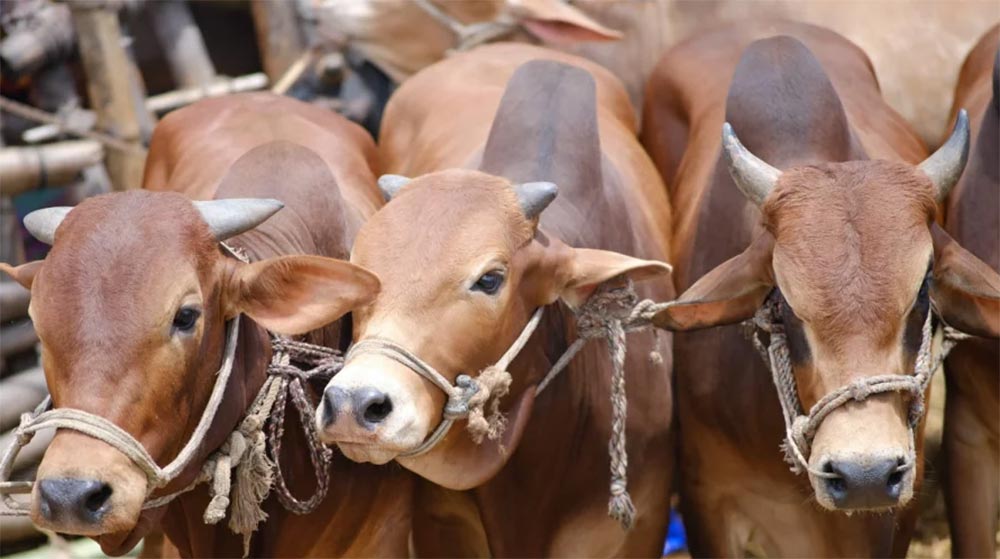 Eid-ul-Adha is one of the biggest religious festivals for Muslims. In obedience to Allah's command and in pursuit of His satisfaction, financially capable Muslims sacrifice animals during this occasion. As a Muslim-majority country, Bangladesh witnesses a high rate of animal sacrifice, and over time this practice has become closely connected with the national economy. Directly or indirectly, several hundred thousand people earn their livelihoods through activities related to Qurbani. Not only that, in terms of the number of sacrificial animals, market value, employment generated through livestock farming, and overall economic impact, Bangladesh has developed one of the world's largest Qurbani-centered economies.
A recently published study revealed that the size of Bangladesh's Qurbani-centered economy is approximately 5.7 billion US dollars. In Bangladeshi currency, this amounts to more than 70 thousand crore taka (calculated at 123 taka per dollar). The economic activities surrounding Qurbani are no longer limited to buyers and sellers of animals; rather, they now involve the livestock sector, transportation sector, online banking, online cattle trading, veterinary services and medicines, animal feed supply, temporary cattle markets, and the leather industry. These sectors have created employment opportunities for a large number of people. One of the major reasons behind the expansion of this Qurbani-based economy is Bangladesh's self-sufficiency in livestock supply, despite not being the world's largest Muslim-majority country by population.
Indonesia is the largest Muslim-majority country in Southeast Asia. The country has a population of around 350 million, of which 86 percent are Muslims. In 2025, around 1.856 million animals were sacrificed during Eid-ul-Adha there, including 627 thousand cows and buffaloes, and 1.229 million goats and sheep.
In Saudi Arabia, around 1 to 1.5 million animals are sacrificed every year during Hajj. However, the country largely depends on imports to meet this demand. Saudi Arabia imports sacrificial animals mainly from Sudan, Somalia, and Brazil. Among them, around 20 percent of the country's demand is fulfilled through imports from Brazil.
Turkey, another major Muslim-majority economy, also witnesses a large number of animal sacrifices every year. However, the number is nearly one-third of Bangladesh's total. According to the Department of Livestock Services, around 9.1 million animals were sacrificed in Bangladesh last year.
Once heavily dependent on imports, the livestock sector has now become one of the driving forces of Bangladesh's economy. It is not only strengthening the economy but also reducing unemployment. Many highly educated young people are now becoming interested in livestock farming. However, there are still several challenges in the Qurbani animal market. Illegal import of animals at the last moment before Eid, extortion in cattle markets, and the lack of veterinary centers in remote areas are among the major problems. As a result, many livestock sellers fail to make sufficient profit despite their hard work that forcing them to abandon livestock farming in the future.
Therefore, it is essential to increase border surveillance to protect local livestock farmers, stop extortion in cattle markets. There are around 3,600 registered cattle markets in the country; security should be strengthened there to prevent robbery, pickpocketing, and other unpleasant incidents. At the same time, market monitoring systems should be introduced to protect consumers from being harmed by illegally fattened animals. During the COVID-19 pandemic, online cattle trading became highly popular. To make animal purchasing easier and protect consumers from online fraud, stricter monitoring and supervision are also necessary.
In reality, with proper policies and effective management, the Qurbani-centered economy of Bangladesh has the potential to expand even further in the future.
The writer is a student, Department of Sociology, University of Chittagong
Loading...
Loading...
Also read



Editor : Iqbal Sobhan Chowdhury
Published by the Editor on behalf of the Observer Ltd. from Globe Printers, 24/A, New Eskaton Road, Ramna, Dhaka.
Editorial, News and Commercial Offices : Aziz Bhaban (2nd floor), 93, Motijheel C/A, Dhaka-1000.
Phone: PABX- 41053001-06; Advertisement: 41053012; 01793317829, 01550707291, E-mail: [email protected], [email protected] Online: email: [email protected] 41053014; 01550707297 Advertisement: 01550707296
Published by the Editor on behalf of the Observer Ltd. from Globe Printers, 24/A, New Eskaton Road, Ramna, Dhaka.
Editorial, News and Commercial Offices : Aziz Bhaban (2nd floor), 93, Motijheel C/A, Dhaka-1000.
Phone: PABX- 41053001-06; Advertisement: 41053012; 01793317829, 01550707291, E-mail: [email protected], [email protected] Online: email: [email protected] 41053014; 01550707297 Advertisement: 01550707296


