



| HEADLINE |

|
HRW declares Rakhine State remains unsafe for Rohingyas
Published : Tuesday, 19 May, 2026 at 8:20 PM
Observer Online Report


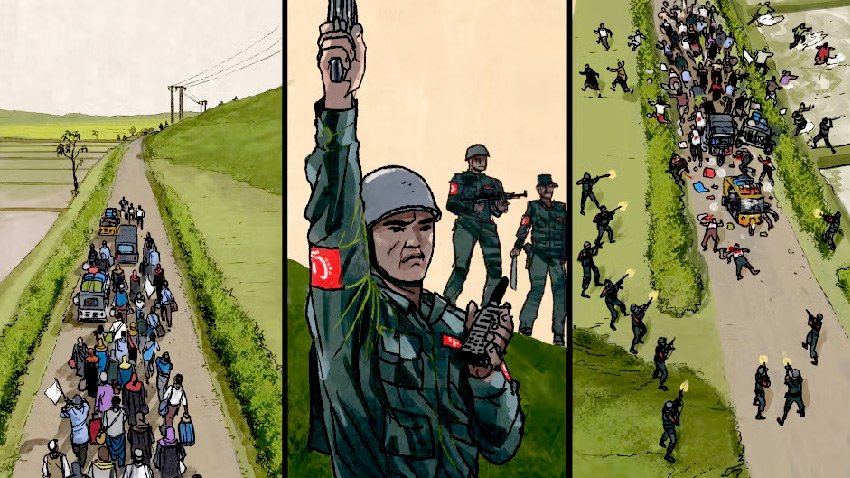
Human Rights Watch (HRW) has warned that conditions in Myanmar’s Rakhine State remain unsafe for Rohingya refugees, citing a 2024 massacre in Hoyyar Siri village as evidence that returns cannot proceed securely, even in areas now controlled by the Arakan Army.
In a report released from Bangkok on May 18, the rights group detailed what it described as grave violations of the laws of war during a May 2, 2024 attack in Buthidaung township.
In a report released from Bangkok on May 18, the rights group detailed what it described as grave violations of the laws of war during a May 2, 2024 attack in Buthidaung township.
According to the 56 page report titled "'Skeletons and Skulls Scattered Everywhere': Arakan Army Massacre of Rohingya Muslims in Hoyyar Siri, Myanmar," Arakan Army fighters opened fire on unarmed villagers who were seeking safety amid clashes near two Myanmar military bases.
Human Rights Watch said it compiled a list of more than 170 villagers killed or missing, including around 90 children, though the actual toll is believed to be higher.
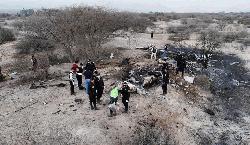
The organization also said it verified witness testimony with satellite imagery and analyzed photographs and videos showing human remains at multiple sites within the village. Imagery also indicated that the entire village was burned after the armed group took control.
The Arakan Army has denied responsibility, claiming its forces targeted only military personnel or members of Rohingya armed groups. However, HRW said its findings contradict those assertions.
Survivors interviewed by the organization described looting, torture including electric shocks, and the abduction of women and girls. Some detainees said they were beaten and unlawfully held.
In February 2025, the Arakan Army reportedly ordered surviving residents to relocate to a nearby camp. Rohingya who later fled to Bangladesh told Human Rights Watch they faced movement restrictions, forced labor, and shortages of food and medical care.
They also alleged that in August the group arranged a controlled media visit during which survivors were pressured to give false statements absolving the Arakan Army.
Meenakshi Ganguly, Deputy Asia Director at HRW, said the massacre marked a new level of brutality in the conflict between the Arakan Army and Myanmar’s military junta. She added that the junta has failed to address broader human rights concerns affecting the Rohingya population.
Over the past decade, Myanmar’s military has been accused of ethnic cleansing and genocidal acts in Rakhine State, forcing more than one million Rohingya to flee. Bangladesh currently hosts over 1.3 million Rohingya refugees in camps in Cox’s Bazar and on Bhasan Char island.
Human Rights Watch called on both the Myanmar military and the Arakan Army to halt attacks on civilians, release those unlawfully detained, and provide redress to victims and their families.
The organization also urged cooperation with independent investigations, including access for the United Nations special rapporteur on Myanmar and the Independent Investigative Mechanism for Myanmar.
The Arakan Army has stated in a letter to Human Rights Watch that it would facilitate inquiries by international groups considered credible and independent.
Loading...
Loading...
Also read





Editor : Iqbal Sobhan Chowdhury
Published by the Editor on behalf of the Observer Ltd. from Globe Printers, 24/A, New Eskaton Road, Ramna, Dhaka.
Editorial, News and Commercial Offices : Aziz Bhaban (2nd floor), 93, Motijheel C/A, Dhaka-1000.
Phone: PABX- 41053001-06; Advertisement: 41053012; 01793317829, 01550707291, E-mail: [email protected], [email protected] Online: email: [email protected] 41053014; 01550707297 Advertisement: 01550707296
Published by the Editor on behalf of the Observer Ltd. from Globe Printers, 24/A, New Eskaton Road, Ramna, Dhaka.
Editorial, News and Commercial Offices : Aziz Bhaban (2nd floor), 93, Motijheel C/A, Dhaka-1000.
Phone: PABX- 41053001-06; Advertisement: 41053012; 01793317829, 01550707291, E-mail: [email protected], [email protected] Online: email: [email protected] 41053014; 01550707297 Advertisement: 01550707296


