



| HEADLINE |

|

Is Prof Ali Riaz above accountability?



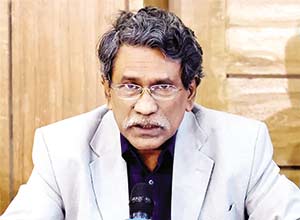 Dr Ali Riaz, political scientist, US citizen and longtime professor at Illinois State University, reached to the centre of Bangladesh's most consequential legal moment not through election or judicial appointment but through the discretion of an unelected interim government. After February 12 national polls that installed an elected government, he returned to America, facing allegations of billion taka misappropriation, sexual misconduct and constitutional manipulation, without the public explanation he had promised to deliver.
A Foreign Hand in the Heart of the State
When Chief Adviser of the Interim Government Dr. Muhammad Yunus formed six reform commissions on 11 September 2024, Dr Ali Riaz, Atlantic Council affiliate and holder of American citizenship, was appointed to head the Constitutional Reform Commission after senior lawyer Dr Shahdeen Malik declined the position. His tenure was marked by allegations of foreign interference, financial misappropriation, sexual misconduct and the systematic marginalisation of democratic stakeholders. The central question reverberating through Dhaka's political corridors remains simple. How did a foreign national come to wield such extraordinary power over the sovereign constitutional future of 170 million people?
Dubious Credentials, Disputed Mandate
Critics quickly questioned the legitimacy of the appointment. Eminent Political figure Mahmudur Rahman Manna dismissed the process as "ashmadimba (fruitless)" calling it a "picnic party" of the Yunus government. Journalist Najmus Shakib asked, "How can an American citizen have such power?" describing the arrangement as taxpayers' money squandered while politicians were ridiculed.
Ali Riaz is a political scientist, not a legal expert, yet he was entrusted with reconstructing a constitutional framework. Dr Salimullah Khan was blunt, stating "Most of those who took over in July in the consensus commission are foreign agents."
Riaz's funding trail deepened scepticism. His research carried support from the National Endowment for Democracy (NED), USAID and the International Republican Institute, organisations with documented records of involvement in political transitions across the Global South. His Atlantic Council association further entangled his work within networks critics allege are linked to Bangladesh Jamaat e Islami. Professor Akash Mazumder accused Riaz of "radical Islamic bias, historical distortion and political subversion," alleging he promoted pro Pakistan sentiment and undermined the legacy and history of the 1971 Liberation War.
Rewriting the Republic
From as early as 5 August 2024, Riaz made no secret of his ambitions. Between 29 and 31 August 2024 he declared the 1972 constitution "the ideal of a political party," insisting there was "no other way" but to rewrite it. The National Consensus Commission concluded with 84 recommendations, 48 constitutional in nature. Yet the process drew fierce condemnation. Senior lawyer Sara Hossain questioned the NCC's formation stating "It cannot be called a democratic process rather it is a selective process." She asked "Where was democracy here?" noting the public remained largely unaware of the referendum's proposals.
Established parties such as the Jatiya Party were excluded entirely while unregistered parties described as government collaborators received prominent representation. Women, religious minorities, hill communities and dissident intellectuals were largely absent from deliberations.
The BNP Revolt and the Referee Who Scored
The Bangladesh Nationalist Party (BNP) proved the most vocal critic. On 9 November 2025, BNP Vice Chairman Zainul Abedin stated, "There is no provision for referendum in the constitution," adding that "an American citizen has left the country, with whatever money he took." Secretary General Mirza Fakhrul Islam Alamgir alleged the published July Charter was "not the same" as what the party had signed.
Salahuddin Ahmed said he had "never seen the referee score a goal," alleging systematic bias after notes of dissent were reportedly dropped from the final report of the Charter under pressure from Jamaat and the National Citizen Party (NCP). BNP formally declared the National Consensus Commission (NCC) a "farce" and a "fraud." Similarly some other parties including the left ones, who joined the NCC dialogue initially, boycotted the
The Money Trail
Ali Riaz stands accused of misappropriating approximately 2,300 crore taka in state funds. The interim government claimed total expenditure amounted to only 17.13 crore taka.
Former student leader Mosharraf Ahmed Thakur asked "Why did Ali Riaz flee after spending 83 crore taka in nine months?" noting social media calculations placed daily expenditure at 4.5 lakh taka. "We live in the era of demons," he remarked. But Riaz denies all allegations of financial corruption.
Allegations of Personal Misconduct
The controversies did not remain institutional. A woman poet Atandra Noori alleged that she entered a physical relationship with Riaz on the promise of marriage, that he subsequently severed all contact following her pregnancy, and that she was subjected to a forced abortion amid political intimidation. Most ominously, she alleged, "police are threatening to make me disappear." Following the allegation, the interim government arrested the complainant before any investigation was conducted a sequence of events that prompted human rights activists to ask whether the law functions differently when the accused is powerful.
Expatriate journalist Nazmus Shakib alleged that in London, Riaz pressured one Shaheen Zaman into a relationship on the promise of marriage, and then abandoned her after obtaining a US visa. Zaman subsequently died of illness and grief. A separate allegation concerns a student at an institution in Bangladesh whom Riaz allegedly proposed.
During July Charter work, he had an affair with Awami League activist Dilruba and they were seen at resorts. Samiha Tutli, meanwhile, stated that on 19 December 2018 Riaz invited her to a house in Rajshahi and attempted to assault her.
A Quiet Departure, A Constitutional Wound
In one of his final public statements before leaving Bangladesh, Riaz declared that since a majority had voted for the 14 July 2026 Charter, elected Members of Parliament would be required to take "two oaths" one as MP, one as member of a Constitution Reform Council. Twelve days before the 13th parliamentary election, he had announced that MPs would function as a member of "Constituent Assembly for 180 days," provoking sharp criticism that this was a strategy to delay the transfer of power.
Critics asked how he could plan for 180 days without knowing the result of a Referendum that had not yet been held. "There is mischief in this," one commentator observed. He left Bangladesh as quietly without any public explanation he had himself promised to deliver.

Loading...
Loading...
Also read



Editor : Iqbal Sobhan Chowdhury
Published by the Editor on behalf of the Observer Ltd. from Globe Printers, 24/A, New Eskaton Road, Ramna, Dhaka.
Editorial, News and Commercial Offices : Aziz Bhaban (2nd floor), 93, Motijheel C/A, Dhaka-1000.
Phone: PABX- 41053001-06; Advertisement: 41053012; 01793317829, 01550707291, E-mail: [email protected], [email protected] Online: email: [email protected] 41053014; 01550707297 Advertisement: 01550707296
Published by the Editor on behalf of the Observer Ltd. from Globe Printers, 24/A, New Eskaton Road, Ramna, Dhaka.
Editorial, News and Commercial Offices : Aziz Bhaban (2nd floor), 93, Motijheel C/A, Dhaka-1000.
Phone: PABX- 41053001-06; Advertisement: 41053012; 01793317829, 01550707291, E-mail: [email protected], [email protected] Online: email: [email protected] 41053014; 01550707297 Advertisement: 01550707296


