



| HEADLINE |

|

Iran targets US bases across ME after new American strikes
US, Iran hit each other again as hopes for quick peace deal fade
Published : Friday, 12 June, 2026 at 12:00 AM


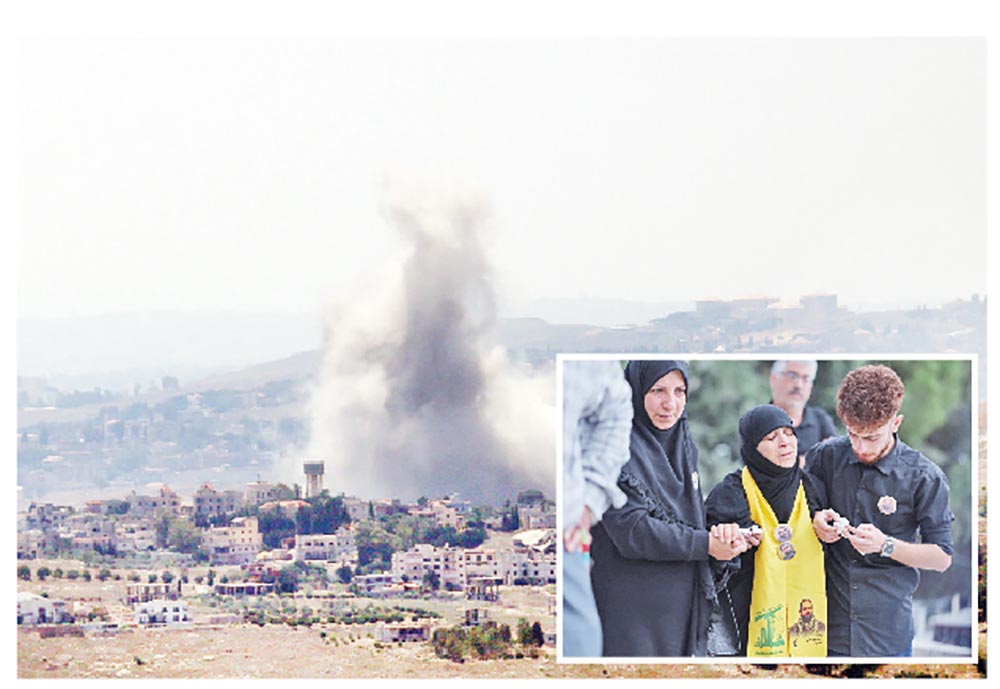 TEHRAN, Jun 11: The United States launched fresh strikes against Iran on Thursday, prompting Tehran to retaliate with missile and drone attacks on American military facilities across the Gulf and Jordan, in a sharp escalation of the three-month conflict that has rattled global energy markets and raised fears of a wider regional war.
The second consecutive day of tit-for-tat attacks came after US President Donald Trump accused Iran of dragging out negotiations aimed at ending the war, saying Tehran had been "playing us for suckers" and would now "have to pay the price."
US Central Command (CENTCOM) said American forces began "additional self-defense strikes" at 5:15 pm Wednesday Washington time, targeting Iranian military surveillance capabilities, communication systems and air defence sites.
American forces "fired precision munitions on Iranian targets that posed a threat to U.S. forces and international commercial ships transiting regional waters," CENTCOM said, later adding that the operation had been completed.
Iranian media reported explosions across the country's south near the Strait of Hormuz, including in Bandar Abbas, Qeshm and Minab, with reports of strikes in Kargan and Sirik.
Trump said US forces had fired 49 Tomahawk missiles during the operation, with some targets located as close as 60 kilometres (40 miles) from Tehran. According to Fox News, the president warned that if Iran failed to accept US terms for ending the war, "We'll bomb the S out of them tomorrow night."
Defense Secretary Pete Hegseth indicated the campaign could continue, declaring that if Trump required it, "we'll negotiate with bombs, and we're very good at it."
Iran responded by launching attacks against US military facilities in Bahrain, Kuwait and Jordan. The Islamic Revolutionary Guard Corps (IRGC) said it had struck American targets at Ali Al Salem and Ahmad Al Jaber air bases in Kuwait and had "hit and destroyed" facilities at Sheikh Isa Air Base in Bahrain.
Iranian state media also reported drone strikes targeting communications antennas and radar facilities associated with the US Fifth Fleet in Bahrain.
The Bahraini interior ministry issued an air raid alert and urged residents to seek shelter, while Kuwait temporarily closed its airspace as military air defence systems moved to intercept what authorities described as hostile aerial targets.
The IRGC later announced that it had launched 12 ballistic missiles at the Al-Azraq Air Base in Jordan, describing the strike as a "punitive operation against the aggressor" and claiming to have destroyed facilities and numerous fighter aircraft. Jordan's military, however, said its air defence systems intercepted 20 missiles launched from Iran toward the Azraq area east of Amman.
"The interception resulted in the fall of a number of fragments, without any human casualties or material damage," a military statement said. The fighting also intensified around the Strait of Hormuz, the strategic waterway through which roughly a fifth of the world's oil supply passes.
Iran renewed threats against shipping in the area, with IRGC aerospace commander Majid Mousavi warning: "Are you making the sacred Strait of Hormuz unsafe?! We will make the region hell for you." Iranian state television and news agencies reported that naval forces had struck two vessels attempting to transit the strait and claimed the waterway was effectively closed to all traffic.�"AFP
Loading...
Loading...
Also read



Editor : Iqbal Sobhan Chowdhury
Published by the Editor on behalf of the Observer Ltd. from Globe Printers, 24/A, New Eskaton Road, Ramna, Dhaka.
Editorial, News and Commercial Offices : Aziz Bhaban (2nd floor), 93, Motijheel C/A, Dhaka-1000.
Phone: PABX- 41053001-06; Advertisement: 41053012; 01793317829, 01550707291, E-mail: [email protected], [email protected] Online: email: [email protected] 41053014; 01550707297 Advertisement: 01550707296
Published by the Editor on behalf of the Observer Ltd. from Globe Printers, 24/A, New Eskaton Road, Ramna, Dhaka.
Editorial, News and Commercial Offices : Aziz Bhaban (2nd floor), 93, Motijheel C/A, Dhaka-1000.
Phone: PABX- 41053001-06; Advertisement: 41053012; 01793317829, 01550707291, E-mail: [email protected], [email protected] Online: email: [email protected] 41053014; 01550707297 Advertisement: 01550707296


