The government has taken an initiative to establish 670 new secondary schools, colleges and cadet colleges across the country and is considering setting up a university in every parliamentary constituency.
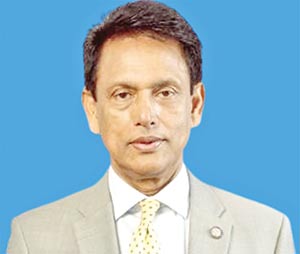
Education and Primary and Mass Education Minister Dr. ANM Ehsanul Haque Milon made the announcement on Sunday while addressing a workshop as the chief guest, describing the move as part of a major push to expand access to education. "The government has taken an initiative to establish 670 new secondary schools, colleges and cadet colleges across the country. Mapping activities are also underway to identify villages that lack primary schools so that no village remains without access to primary education," he said.
The remarks came at the "Validation Workshop on the Bangladesh Education Sector Analysis (ESA)," organised by UNICEF at a hotel in the capital.
The minister said the government is also considering establishing a university in every parliamentary constituency as part of its broader education development plans.
Highlighting the government's education agenda, Milon said education remained a top priority, with increased investment aimed at harnessing Bangladesh's demographic dividend by 2041. He said the allocation for education had risen from around 1.69 per cent of GDP to nearly 2 per cent, while the Prime Minister had pledged to increase it to 5 per cent within the next four years.
The minister said allocations for primary education had increased from Tk 12,000 crore to over Tk 18,000 crore, while funding for secondary and higher secondary education had risen from Tk 31,000 crore to Tk 46,000 crore. Allocations for higher education have increased from Tk 46,000 crore to Tk 57,000 crore, he added.
Addressing challenges in the education sector, Milon said about 87,000 teacher appointments and promotions in government primary schools remained stalled due to pending litigation and administrative complications. Of these, about 40,000 posts are currently vacant, while the recruitment process for 47,000 teachers and head teachers has been delayed, he pointed out.
“About 32,500 head teacher appointments have been stuck for more than three years because of court cases,” he said, adding, nearly 83,000 cases involving the ministry are pending before courts.
The minister also said the government is reviewing the recruitment of 14,384 assistant primary teachers made during the interim regime, citing concerns over the speed of the recruitment process. The teachers are being appointed gradually following training and a-two-year probation period.
On female education, Milon said participation of girls in rural areas remained strong, crediting stipend programmes introduced during former prime minister Begum Khaleda Zia's tenure. He said plans were underway to extend financial assistance programmes to both boys and girls.
The minister said the government had adopted a strict stance against child marriage and warned that those involved in marriages below the legal age of 18 would face punishment. He also said technical education was being integrated into madrasa education to make it more employment oriented.
Referring to student retention, Milon said a pilot project to provide school uniforms to around 450,000 students could begin in July or August to encourage school attendance. He added that action was being taken against those responsible for irregularities in the mid day meal programme.
State Minister for Primary and Mass Education Bobby Hajjaj attended the workshop as special guest, while educationists, UNICEF officials and Mass Literacy Campaign Executive Director Rasheda K Chowdhury also took part at the workshop.





