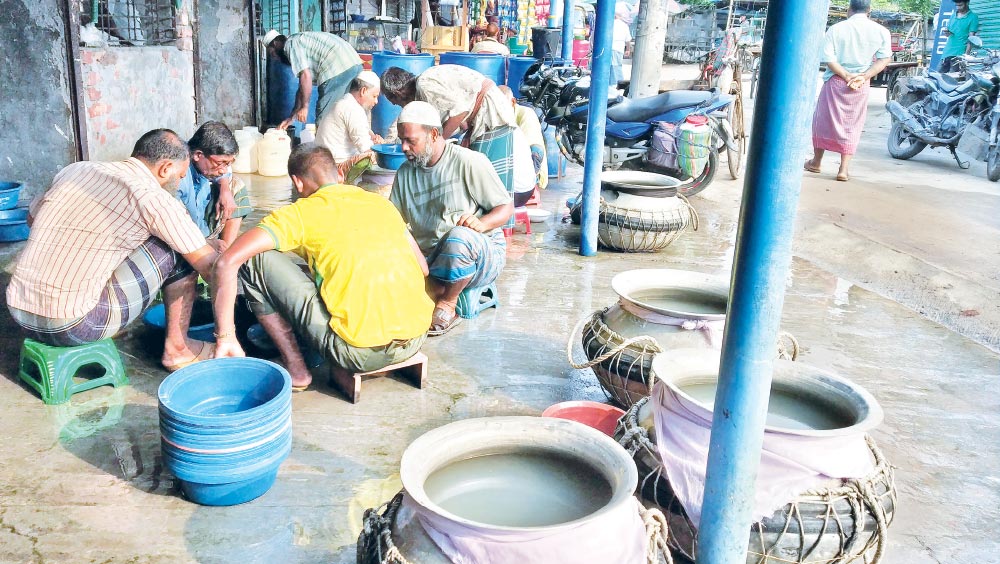
FAKIRHAT, BAGERHAT, June 18: The export-oriented shrimp industry in south-western Bangladesh is under severe strain due to an acute shortage of fry (post-larvae), leaving shrimp cultivation in Fakirhat Upazila and surrounding areas in crisis and putting the livelihood of over a hundred thousand people at risk.
Farmers, traders and wholesalers say that despite the peak farming season nearing its end, a large portion of shrimp ponds and enclosures remain unstocked due to a severe supply gap.
They attribute the crisis to restrictions on collection and trade of wild shrimp fry from natural sources, along with limited production in hatcheries.
According to the Upazila Fisheries Office, Fakirhat currently has 8,004 commercial shrimp ghers and 2,608 ponds. These require an estimated 426 million bagda and 746 million galda fry annually.
However, farmers and traders claim the real demand is significantly higher, with estimates reaching 4 to 4.5 billion fry this season alone.
Shrimp farmers say that April to June is the peak stocking season, but more than two months into the period, only around 10�"15 per cent of required fry have been collected.
Local farmers say the shortage is disrupting investment, production and employment across the sector, which supports thousands of workers in hatcheries, transport, feed supply and trading.
Farmers’ association leader Khan Shahidul Islam said shrimp farming is the main livelihood in the region, involving nearly every household directly or indirectly. He estimated annual transactions in the sector at Tk 1,000�"1,500 crore, warning that the current crisis could affect over a lakh people.
Field visits to Nalda, Tikripara and Mulghar areas showed many farmers waiting for fry for months after preparing their ghers, with the season almost over.
Farmer Daud Hossain Bablu said he invested about Tk 1.6 lakh to prepare one acre of gher but has managed to stock only 18,000 fry against a usual requirement of 120,000.
Another farmer, Ripon Mia, said repeated rains have already flooded his prepared ghers, while fry shortages have left him in financial distress.
Traders also report a sharp rise in prices, with fry rates nearly doubling compared to last year, reaching Tk 2,500�"3,000 per thousand.
Several stakeholders blamed enforcement actions and legal restrictions on wild fry collection for worsening the shortage, arguing that regulated collection could improve both supply and revenue.
Fisheries officials, however, maintain that the restrictions are necessary to protect biodiversity and encourage hatchery-based production. Fakirhat Senior Upazila Fisheries Officer Sheikh Asadullah said hatchery fry currently meet only about 8 per cent of demand.
Researchers from the Bagerhat Shrimp Research Centre noted that hatchery production has declined in recent years, while also warning that wild fry collection causes significant ecological damage by killing other fish species during extraction.
They stressed the need for environmentally sustainable alternatives and improved hatchery quality.





