



| HEADLINE |

|
July Uprising Cases
Inu sentenced to 30yrs jail
Published : Wednesday, 1 July, 2026 at 12:00 AM
Staff Correspondent


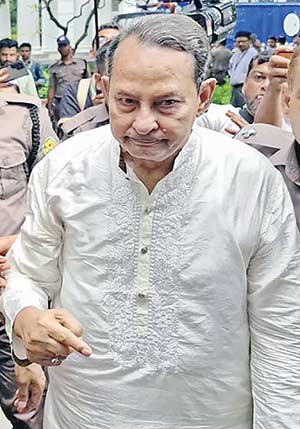 The International Crimes Tribunal-2 on Tuesday sentenced Jatiya Samajtantrik Dal president and former minister Hasanul Haq Inu to 30-year imprisonment in connection with crimes against humanity committed during the July-August 2024 Mass Uprising.
The tribunal awarded separate prison terms on in three charges and ordered that the sentences run concurrently, meaning Inu will serve 10 years in prison.
Inu, who is currently in jail custody, was the sole accused in the case linked to the killing of six people in Kushtia during the July 2024 uprising.
The three-member tribunal, headed by retired High Court judge Justice Nozrul Islam Chowdhury, convicted Inu on charges of conspiracy, torture, incitement and superior command responsibility for the violent crackdown on anti-government protesters.
"The prosecution is not satisfied with the judgment and we would appeal to the higher court seeking enhanced punishment for the three charges on which Inu was sentenced to 10 years' imprisonment each, as well as challenging his acquittal on the remaining charges," chief prosecutor Aminul Islam told newsmen at his office after the verdict.
The ICT-2 sentenced Inu to 10 years' rigorous imprisonment under charge No. three, 10-year jail and a fine of Taka one lakh under charge No. six, with the fine to be paid to the victims as compensation, and another 10 years' imprisonment and a fine of Taka one lakh under charge No. seven.
"The sentences, however, shall run concurrently, meaning the convict will have to serve a total of 10 years in prison," the verdict said.
The verdict was delivered after the tribunal had concluded hearings on May 14 and kept the case under consideration for judgement Inu smiled after hearing the verdict while standing in the dock.
The tribunal had framed eight charges against him on November 2, 2025.
The ICT's investigation agency submitted its probe report against Inu on September 11 last year, and the prosecution filed the formal charges two weeks later.
A total of 10 prosecution witnesses and two defence witnesses testified before the tribunal. After the prosecution and defence concluded their arguments, the case was kept pending for judgment.
Loading...
Loading...
Also read



Editor : Iqbal Sobhan Chowdhury
Published by the Editor on behalf of the Observer Ltd. from Globe Printers, 24/A, New Eskaton Road, Ramna, Dhaka.
Editorial, News and Commercial Offices : Aziz Bhaban (2nd floor), 93, Motijheel C/A, Dhaka-1000.
Phone: PABX- 41053001-06; Advertisement: 41053012; 01793317829, 01550707291, E-mail: [email protected], [email protected] Online: email: [email protected] 41053014; 01550707297 Advertisement: 01550707296
Published by the Editor on behalf of the Observer Ltd. from Globe Printers, 24/A, New Eskaton Road, Ramna, Dhaka.
Editorial, News and Commercial Offices : Aziz Bhaban (2nd floor), 93, Motijheel C/A, Dhaka-1000.
Phone: PABX- 41053001-06; Advertisement: 41053012; 01793317829, 01550707291, E-mail: [email protected], [email protected] Online: email: [email protected] 41053014; 01550707297 Advertisement: 01550707296


