



| HEADLINE |

|
Why is Dhaka becoming unlivable?


Dhaka, the capital of Bangladesh, has grown largely without proper urban planning. As a result, millions of people are compelled to live in a city struggling with overcrowding, inadequate infrastructure, environmental degradation, and severe traffic congestion. Despite these challenges, Dhaka continues to attract people from every corner of the country seeking employment, education, healthcare, business opportunities, and better living conditions.
Against this backdrop, the Economist Intelligence Unit (EIU) has once again ranked Dhaka among the world's least livable cities. According to the 2026 Global Liveability Index, which assessed 173 cities worldwide, Dhaka ranked 171st, making it the third least livable city globally�"the same position it held in 2025.
Responding to the ranking, Environment Minister Abdul Awal Mintoo acknowledged that Dhaka's problems were not created overnight and therefore cannot be solved instantly. He stated that the government is implementing long-term, well-planned initiatives to improve urban living conditions, although visible results will take time. He also emphasized the government's commitment to creating a more livable Dhaka and a more sustainable Bangladesh for future generations.
On the other hand, the EIU's annual report identified Copenhagen, Denmark, as the world's most livable city for the second consecutive year, earning 98 out of 100 points. Vienna, Austria, followed with 97 points, while Melbourne, Sydney, Adelaide, Osaka, Tokyo, and several Swiss and Canadian cities also ranked among the global top ten.
Dhaka, however, received an overall score of only 42 out of 100, placing it ahead of only Tripoli, Libya, and Damascus, Syria. The city's scores across major indicators reveal its persistent weaknesses: 45 for stability, 42 for healthcare, 41 for culture and environment, 67 for education, and only 27 for infrastructure.
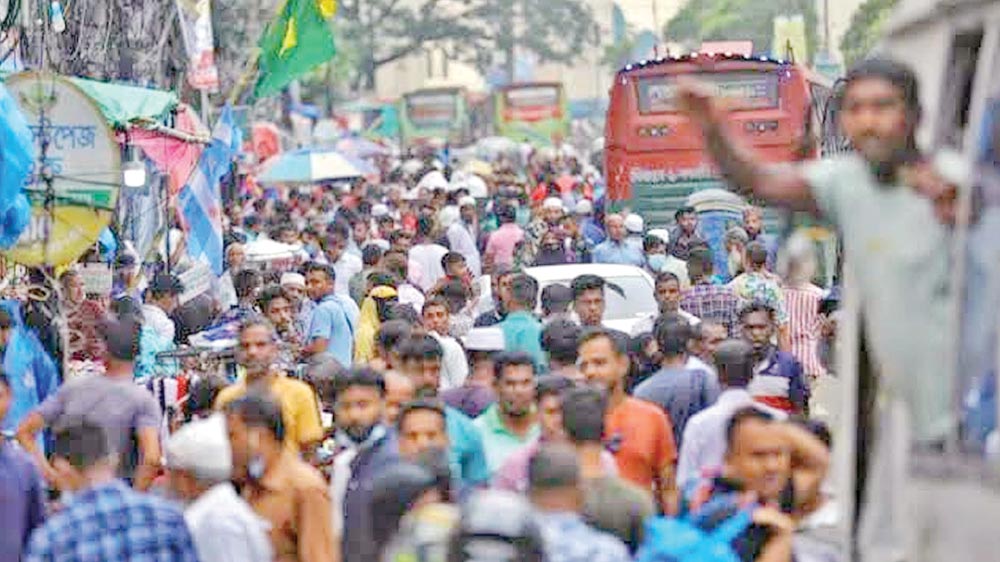 The report notes that although education performs comparatively better, Dhaka's poor infrastructure, inadequate healthcare system, environmental degradation, and long-standing urban management failures continue to drag down its overall livability.
Dhaka's decline has been gradual but consistent. The city ranked 166th in 2023, dropped to 168th in 2024, and slipped further to 171st in both 2025 and 2026. Meanwhile, Karachi ranked just one position above Dhaka at 170th. Damascus remained the least livable city in the world, while conflict has also pushed Tehran and Kyiv further down the rankings.
Recognizing these challenges, the Government of Bangladesh has launched several environmental and urban development initiatives. The Forest Department is planting 15 million native tree saplings across roadsides, canals, embankments, coastal areas, and other deforested regions. New forests are also being established on approximately 4,800 hectares of recovered forest land. More than 8.3 million saplings have already been planted.
The government is also introducing "Smart Forestry" by maintaining a digital database of planted trees and using drone technology to monitor forests, coastal zones, and remote island areas.To combat environmental pollution, authorities took legal action against 1,525 establishments between January and June this year for violating environmental laws. Utility connections to 112 illegal factories were disconnected, while 220 mobile courts conducted 486 enforcement operations. Authorities demolished the chimneys of 73 illegal brick kilns and disconnected electricity to another 49 unauthorized kilns.
In addition, the government has launched an ambitious nationwide program to plant 250 million trees over the next five years, officially inaugurated by the Prime Minister on June 9. If these environmental restoration and urban development initiatives are implemented effectively and consistently, they could significantly improve Dhaka's environmental quality and enhance the country's long-term livability.
Transforming Dhaka into a truly livable city will not happen overnight. It requires sustained political commitment, integrated urban planning, investment in public transport, affordable housing, healthcare, environmental protection, and stronger governance. While international rankings highlight the city's shortcomings, they should also serve as a call to action. With coordinated policies and long-term vision, Dhaka can gradually overcome its urban challenges and build a healthier, greener, and more livable future for generations to come.
The writer is Editor, Climate Journal24.com and General Secretary, Bangladesh Climate Change Journalist Forum
Loading...
Loading...
Also read



Editor : Iqbal Sobhan Chowdhury
Published by the Editor on behalf of the Observer Ltd. from Globe Printers, 24/A, New Eskaton Road, Ramna, Dhaka.
Editorial, News and Commercial Offices : Aziz Bhaban (2nd floor), 93, Motijheel C/A, Dhaka-1000.
Phone: PABX- 41053001-06; Advertisement: 41053012; 01793317829, 01550707291, E-mail: [email protected], [email protected] Online: email: [email protected] 41053014; 01550707297 Advertisement: 01550707296
Published by the Editor on behalf of the Observer Ltd. from Globe Printers, 24/A, New Eskaton Road, Ramna, Dhaka.
Editorial, News and Commercial Offices : Aziz Bhaban (2nd floor), 93, Motijheel C/A, Dhaka-1000.
Phone: PABX- 41053001-06; Advertisement: 41053012; 01793317829, 01550707291, E-mail: [email protected], [email protected] Online: email: [email protected] 41053014; 01550707297 Advertisement: 01550707296


