



| HEADLINE |

|
Why Britain is getting new PM without holding general election


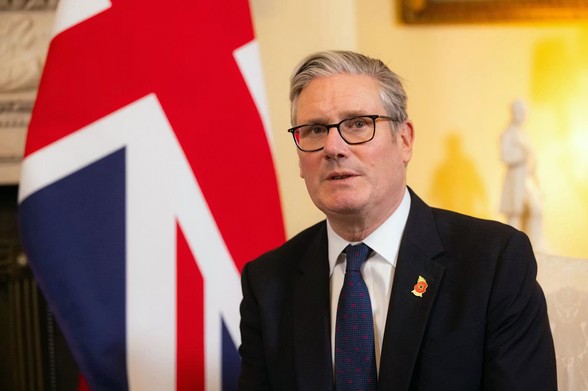
Britain is set to have a new prime minister on Monday without holding a general election, as veteran Labour politician and former Greater Manchester mayor Andy Burnham prepares to replace Keir Starmer.
Burnham was elected leader of the governing Labour Party after securing the support of 349 of the party's 401 lawmakers. Since Labour has a majority in Parliament, its leader automatically becomes the country's prime minister.
Although Burnham was confirmed as Labour leader at a special party conference on Friday, he will officially take office on Monday after meeting King Charles III at Buckingham Palace. Until then, Starmer will remain caretaker prime minister.
Why no general election?
Under Britain's parliamentary system, a governing party can change its leader during its term in office without calling a general election. If the ruling party has a majority in Parliament, its new leader automatically becomes prime minister.
The next UK general election is not due until 2029, five years after the last national vote in 2024.
Starmer announced his resignation as Labour leader on June 22 after serving for less than two years as prime minister.
His leadership came under increasing pressure following a series of political controversies, including his appointment of a man with close ties to convicted sex offender Jeffrey Epstein as Britain's ambassador to the United States.
Labour's poor performance in local elections in May also triggered growing calls from party lawmakers for him to step down. Pressure increased further after Burnham won a parliamentary by-election, strengthening support for him to take over the party leadership.
Under Labour Party rules, a leadership contest is triggered when a challenger secures the backing of at least one-fifth of Labour lawmakers. Burnham was the only candidate to meet that requirement.
Seventh prime minister in 10 years
Burnham will become Britain's seventh prime minister in the past decade.
Leadership changes without a general election are common under the UK's parliamentary system. Former Conservative prime ministers Theresa May, Boris Johnson, Liz Truss and Rishi Sunak all took office after winning internal party leadership contests rather than national elections.
The frequent changes in leadership have marked a turbulent period in British politics following the country's departure from the European Union.
Formal transfer of power
The change of leadership will follow Britain's long-established constitutional process.
On Monday, Starmer will deliver a farewell statement before travelling to Buckingham Palace, where he will formally resign during a meeting with King Charles III.
Burnham will then meet the King, who will invite him to form a new government. The ceremony, traditionally known as the "Kissing of Hands," no longer involves kissing hands and usually consists of a formal handshake.
After the meeting, Burnham will travel to 10 Downing Street, the official residence of the British prime minister, where he is expected to deliver his first speech as the country's new leader.
The entire transition is expected to be completed within a few hours and will be broadcast live across the UK.
Burnham was elected leader of the governing Labour Party after securing the support of 349 of the party's 401 lawmakers. Since Labour has a majority in Parliament, its leader automatically becomes the country's prime minister.
Although Burnham was confirmed as Labour leader at a special party conference on Friday, he will officially take office on Monday after meeting King Charles III at Buckingham Palace. Until then, Starmer will remain caretaker prime minister.
Why no general election?
Under Britain's parliamentary system, a governing party can change its leader during its term in office without calling a general election. If the ruling party has a majority in Parliament, its new leader automatically becomes prime minister.
The next UK general election is not due until 2029, five years after the last national vote in 2024.
Starmer announced his resignation as Labour leader on June 22 after serving for less than two years as prime minister.
His leadership came under increasing pressure following a series of political controversies, including his appointment of a man with close ties to convicted sex offender Jeffrey Epstein as Britain's ambassador to the United States.
Labour's poor performance in local elections in May also triggered growing calls from party lawmakers for him to step down. Pressure increased further after Burnham won a parliamentary by-election, strengthening support for him to take over the party leadership.
Under Labour Party rules, a leadership contest is triggered when a challenger secures the backing of at least one-fifth of Labour lawmakers. Burnham was the only candidate to meet that requirement.
Seventh prime minister in 10 years
Burnham will become Britain's seventh prime minister in the past decade.
Leadership changes without a general election are common under the UK's parliamentary system. Former Conservative prime ministers Theresa May, Boris Johnson, Liz Truss and Rishi Sunak all took office after winning internal party leadership contests rather than national elections.
The frequent changes in leadership have marked a turbulent period in British politics following the country's departure from the European Union.
Formal transfer of power
The change of leadership will follow Britain's long-established constitutional process.
On Monday, Starmer will deliver a farewell statement before travelling to Buckingham Palace, where he will formally resign during a meeting with King Charles III.
Burnham will then meet the King, who will invite him to form a new government. The ceremony, traditionally known as the "Kissing of Hands," no longer involves kissing hands and usually consists of a formal handshake.
After the meeting, Burnham will travel to 10 Downing Street, the official residence of the British prime minister, where he is expected to deliver his first speech as the country's new leader.
The entire transition is expected to be completed within a few hours and will be broadcast live across the UK.
Loading...
Loading...
Also read


Editor : Iqbal Sobhan Chowdhury
Published by the Editor on behalf of the Observer Ltd. from Globe Printers, 24/A, New Eskaton Road, Ramna, Dhaka.
Editorial, News and Commercial Offices : Aziz Bhaban (2nd floor), 93, Motijheel C/A, Dhaka-1000.
Phone: PABX- 41053001-06; Advertisement: 41053012; 01793317829, 01550707291, E-mail: [email protected], [email protected] Online: email: [email protected] 41053014; 01550707297 Advertisement: 01550707296
Published by the Editor on behalf of the Observer Ltd. from Globe Printers, 24/A, New Eskaton Road, Ramna, Dhaka.
Editorial, News and Commercial Offices : Aziz Bhaban (2nd floor), 93, Motijheel C/A, Dhaka-1000.
Phone: PABX- 41053001-06; Advertisement: 41053012; 01793317829, 01550707291, E-mail: [email protected], [email protected] Online: email: [email protected] 41053014; 01550707297 Advertisement: 01550707296


