



| HEADLINE |

|
Alleged discrimination, vetting lapses cloud civil service promotion exercise


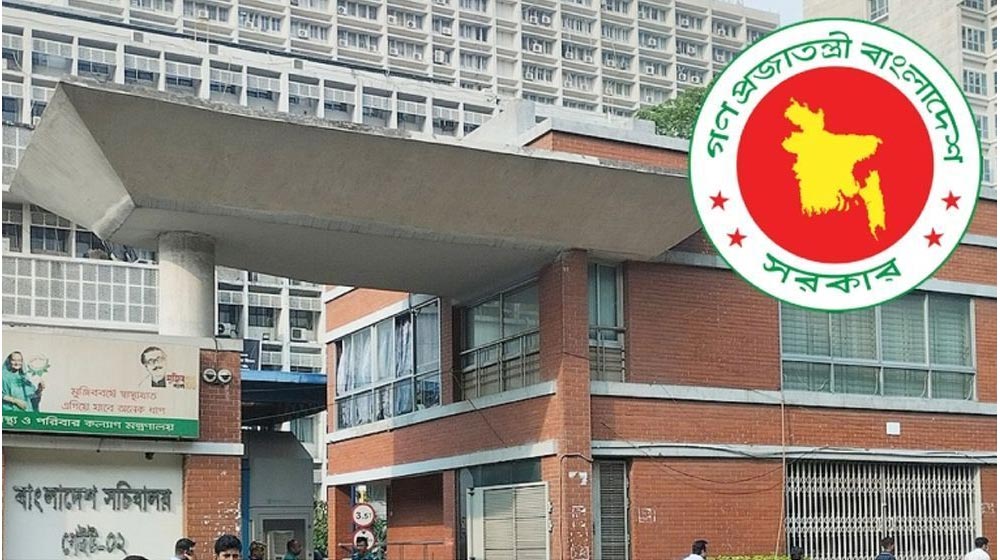 Bangladesh's recent civil service promotion exercises have triggered widespread controversy, with allegations of discrimination in promotions to additional secretary during the interim government's tenure and fresh questions over the government's latest decision to promote 179 deputy secretaries to joint secretary.
A group of officers from the 20th Bangladesh Civil Service (Administration) cadre alleged that the interim government's promotion to additional secretary was marked by political favoritism, irregularities and discrimination. According to a statement issued by the officers, more than 200 officials from the batch were deprived of promotion despite meeting the established standards of merit, competence and satisfactory service records.
The officers said that 85 officials from a batch of 259 were promoted ahead of the 13th parliamentary election, while many eligible officers were overlooked. They also claimed that none of the 45 Hindu officers in the batch received promotion.
The statement accused a group of senior officials, allegedly led by then-Cabinet Secretary Dr. Sheikh Abdur Rashid, of influencing the process in favour of officers perceived to have particular political affiliations, especially Jamaat-e-Islami followers. It further alleged that intelligence reports were manipulated to assign adverse political labels to qualified officers, leading to their exclusion from the promotion list.
According to the complainants, the long-established principles of promotion-merit, competence and satisfactory performance-were replaced by unofficial considerations, including participation in commemorative publications, creative writing and even social media activity. They alleged these standards were applied inconsistently, allowing some officers to receive promotion despite not meeting the same criteria.
The officers further alleged that seniority was ignored, enabling junior officials to supersede their seniors. They also claimed that two joint secretaries previously linked in media reports to alleged irregularities involving district commissioner appointments were promoted instead of facing disciplinary action.
Describing the exercise as one of the most controversial promotion decisions in Bangladesh's civil service history, the officers said it had severely damaged the careers of many deserving officials. They urged the government to review the process before promotions for the 21st BCS Administration cadre, reconsider eligible officers from the 20th batch, and ensure a transparent, merit-based reassessment. They also called for officials they alleged to have political affiliations to be reassigned from the Ministry of Public Administration, Cabinet Division and Ministry of Home Affairs, replacing them with neutral and professional officers.
The allegations could not be independently verified, and no immediate response was available from the Cabinet Division or the Ministry of Public Administration.
The debate has intensified following the government's promotion of 179 deputy secretaries to the rank of joint secretary-one of the largest promotion exercises undertaken since the current government assumed office. While intended to clear long-standing promotion backlogs affecting officers of the 24th and 25th BCS Administration cadres, the list has raised questions about the government's vetting process and the functioning of the Superior Selection Board (SSB).
The most discussed case involves Mainul Haque Bhuiyan, who retired from the Information and Communication Technology Division on June 30 after reaching the mandatory retirement age of 59 under Section 43(1)(a) of the Government Service Act. Despite his retirement, his name appeared on the promotion list.
Bhuiyan confirmed receiving the promotion and said the ministry had knowingly included his name rather than doing so by administrative error. He added that he expected a subsequent government notification to clarify his employment status. His promotion has raised legal questions, as public administration experts note that existing service rules do not ordinarily permit promotion after retirement.
The promotion list also includes several officials with previous disciplinary records. Mohammad Nazrul Islam of the Ministry of Defence was punished with a three-year suspension of annual salary increments for misconduct while serving as Assistant Commissioner (Land) in Demra. Md Shahinur Islam of the Road Transport and Highways Division was penalized over irregularities in leasing sand quarries during his tenure in Nilphamari, receiving a one-year demotion to the lowest stage of his salary scale.
Muhammad Maqbul Hossain of the Health Education and Family Welfare Division, who previously faced disciplinary proceedings over alleged corruption involving construction work at the Rangpur Cantonment Board before the Administrative Tribunal overturned the punishment, was also promoted. Another promoted official, Sadekur Rahman, had earlier been suspended and attached to the Ministry of Public Administration following allegations of negligence in managing sacrificial animal waste during Eid-ul-Azha, while reports indicate departmental proceedings against him remain unresolved.
Officials familiar with the process said the promotions were intended to address long-standing career stagnation. However, reports that the first and second-ranked officers of one cadre batch were excluded have further fueled concerns over the consistent application of merit.
Promotions to joint secretary are recommended by the SSB, chaired by the Cabinet Secretary and comprising the Principal Secretary to the Prime Minister, the Comptroller and Auditor General, and the secretaries of the Ministries of Public Administration, Home Affairs, Finance and Legislative Affairs. The Ministry of Public Administration prepares proposals after reviewing service records, annual confidential reports, disciplinary history and seniority before the SSB forwards recommendations to the Prime Minister's Office for final approval.
Administrative experts say the controversy raises important questions about whether retirement status, disciplinary records and pending departmental proceedings were adequately reflected during the evaluation process. They argue that if such information was omitted during file preparation, responsibility rests with the officials preparing the records; if the information was available but overlooked, accountability extends to the decision-making authorities.
Public administration expert Firoz Mia criticized the promotion of a retired officer, saying existing law does not permit post-retirement promotion and warning that such decisions undermine confidence in the integrity of the civil service promotion system.
Loading...
Loading...
Also read



Editor : Iqbal Sobhan Chowdhury
Published by the Editor on behalf of the Observer Ltd. from Globe Printers, 24/A, New Eskaton Road, Ramna, Dhaka.
Editorial, News and Commercial Offices : Aziz Bhaban (2nd floor), 93, Motijheel C/A, Dhaka-1000.
Phone: PABX- 41053001-06; Advertisement: 41053012; 01793317829, 01550707291, E-mail: [email protected], [email protected] Online: email: [email protected] 41053014; 01550707297 Advertisement: 01550707296
Published by the Editor on behalf of the Observer Ltd. from Globe Printers, 24/A, New Eskaton Road, Ramna, Dhaka.
Editorial, News and Commercial Offices : Aziz Bhaban (2nd floor), 93, Motijheel C/A, Dhaka-1000.
Phone: PABX- 41053001-06; Advertisement: 41053012; 01793317829, 01550707291, E-mail: [email protected], [email protected] Online: email: [email protected] 41053014; 01550707297 Advertisement: 01550707296


