



| HEADLINE |

|
Factories face shutdowns as gas pressure drops
Published : Sunday, 26 July, 2026 at 8:58 PM
Observer Online Report


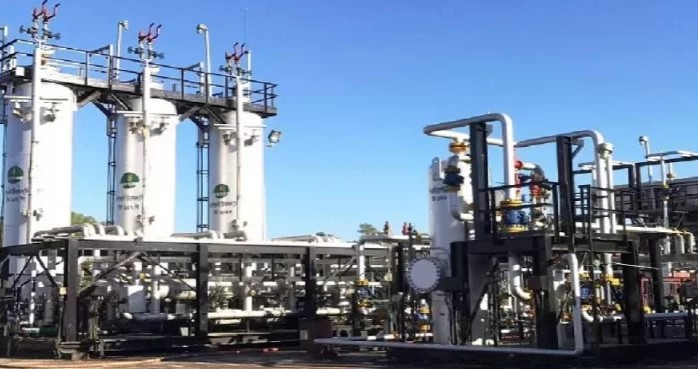
A severe gas shortage has disrupted industrial operations across Bangladesh, forcing factories to cut production, halt machinery and suffer financial losses. Many industries are receiving gas supplies far below their approved capacity, while some have been forced to operate at only a fraction of their normal output due to critically low pressure.
Over the past few days, the country’s gas crisis has intensified, creating major challenges for industries, especially manufacturing units. Factory owners said low gas pressure has made it impossible to run boilers and production equipment at full capacity, affecting output and product quality.
Many factories are keeping machines shut for long periods as gas supply remains unstable. As a result, production costs are rising while businesses are facing significant financial losses.
Industry operators said they have repeatedly informed the government, energy ministry and gas distribution companies about the crisis, but no permanent solution has been found yet.
Speaking to journalists at the Secretariat on Sunday, Commerce Minister Khandaker Abdul Muktadir said the country’s energy situation could not improve overnight.
“The gas available from domestic sources cannot be increased immediately. We are importing around 900 million cubic feet of LNG. There are currently two FSRUs, and it is not possible to import more LNG through these facilities,” he said.
He added that there was no immediate possibility of a major improvement in the fuel situation.
Factory owners said the crisis has already affected production schedules, with some industries reducing shifts and others shutting down production lines for extended periods.
Kamalul Hasan, general manager of the sugar plant of Meghna Sugar Refinery Limited in Narayanganj, said production had dropped sharply due to the gas shortage.
“We are producing only one-fourth of our capacity due to the lack of gas. Sometimes the factory has to shut down completely,” he said.
He said boilers require a certain gas pressure to operate, but the current supply is far below the required level.
“Today the situation has become worse. Our power plant informed us that it could shut down at any time. The head office has already written to the government several times to resolve the crisis,” he added.
Industrial experts warned that prolonged gas shortages could have a serious impact on investment, employment, exports and the overall economy.
Former industrial engineer Azadul Khaled said the crisis was affecting all sectors rather than individual factories.
“Gas shortage is a nationwide crisis. If this continues, it will have a severe negative impact on businesses,” he said.
Nasim Akter Moral, general manager of Creative Papers Mill Limited, said their factory could not operate all machines due to insufficient gas pressure.
“We have three machines, but because of low gas pressure, we can run only one or two at times. The rest remain shut, reducing production and causing financial losses,” he said.
Bangladesh-China Chamber of Commerce and Industry President Khorshed Alam said small and medium-sized factories in areas including Narayanganj and Narsingdi had faced situations where both gas and electricity supplies were unavailable.
“Factories have remained closed at times. The gas pressure is extremely low, and boilers cannot be started,” he said.
He warned that export activities could also face setbacks as many businesses were already struggling with delayed payments and reduced production.
“Local and export orders are not in a good situation. Many companies have not received payments from banks, and their financial condition has worsened,” he said.
Meanwhile, residential consumers have also been suffering due to the gas shortage. In many areas of Dhaka and other regions, low pressure has left households unable to cook, forcing families to rely on alternative fuels.
CNG stations have also been affected, with long queues forming as vehicles wait for gas amid supply shortages.
Regarding the crisis, Titas Gas Transmission and Distribution Company said it was receiving around 1,200 million cubic feet of gas daily against a demand of nearly 1,900 million cubic feet.
Titas Operation Division General Manager Engineer Kazi Mohammad Saidul Hasan said gas pressure depended on supply availability.
“When supply is lower than demand, pressure drops. The current shortage is mainly due to inadequate supply,” he said.
He added that even after the damaged FSRU resumes operations, the crisis may not disappear completely, as supply shortages existed before the technical problem.
The government said one of the country’s floating LNG terminals, known as an FSRU (Floating Storage Regasification Unit), has been temporarily unable to supply gas to the national grid due to technical problems, reducing daily gas availability by around 450 million cubic feet.
The government has announced plans to reduce dependence on imported gas and increase domestic exploration and production. As part of the initiative, authorities are planning to drill 100 new gas wells in phases and have already approved projects for drilling five wells in Begumganj and Sunamganj.
-HIS
Loading...
Loading...
Also read









Editor : Iqbal Sobhan Chowdhury
Published by the Editor on behalf of the Observer Ltd. from Globe Printers, 24/A, New Eskaton Road, Ramna, Dhaka.
Editorial, News and Commercial Offices : Aziz Bhaban (2nd floor), 93, Motijheel C/A, Dhaka-1000.
Phone: PABX- 41053001-06; Advertisement: 41053012; 01793317829, 01550707291, E-mail: [email protected], [email protected] Online: email: [email protected] 41053014; 01550707297 Advertisement: 01550707296
Published by the Editor on behalf of the Observer Ltd. from Globe Printers, 24/A, New Eskaton Road, Ramna, Dhaka.
Editorial, News and Commercial Offices : Aziz Bhaban (2nd floor), 93, Motijheel C/A, Dhaka-1000.
Phone: PABX- 41053001-06; Advertisement: 41053012; 01793317829, 01550707291, E-mail: [email protected], [email protected] Online: email: [email protected] 41053014; 01550707297 Advertisement: 01550707296


