



| HEADLINE |

|

Dollar climbs as forex market faces renewed pressure
Published : Sunday, 26 July, 2026 at 3:57 PM
Sakia Kawser Siddique


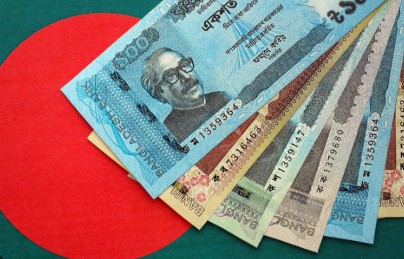
Strong import payments, weaker remittance inflows and softer exports renew pressure on the forex market as Bangladesh shifts towards a market-driven exchange rate
Bangladesh's foreign exchange market is once again under pressure as the US dollar resumes its upward climb after weeks of relative stability, driven by strong import payment obligations, slowing remittance inflows and weaker export earnings.
The latest movement reflects a widening imbalance between demand and supply in the country's foreign exchange market at a time when Bangladesh is gradually transitioning towards a more market-based exchange rate system under ongoing economic reforms.
On Sunday, the US dollar was quoted at Tk123.36, while several commercial banks purchased remittance dollars from exchange houses at around Tk123.75, slightly higher than the rates seen in early July. Bangladesh Bank data also showed the interbank exchange rate hovering around Tk123.60, indicating that the greenback has continued to gain strength in recent weeks.
Although the central bank had long maintained a benchmark interbank rate of Tk122.85 per dollar, treasury officials said actual transactions had increasingly been taking place at prevailing market rates rather than the earlier reference rate.
Import demand continues to drive the market
Bankers say the latest appreciation of the dollar is primarily being driven by sustained demand for foreign currency to settle import payments.
A significant number of letters of credit (LCs) opened earlier this year matured during June and July, requiring banks to make large dollar payments on behalf of importers. In addition, settlements of deferred-payment Usance Payable at Sight (UPAS) LCs have further increased the demand for foreign exchange.
Bangladesh Bank data show that LC settlements remained strong throughout FY2025-26 despite slower export growth, indicating that import demand has remained resilient even as foreign currency earnings have softened.
With banks needing additional dollars to honour these obligations, competition for available foreign currency has intensified across the banking sector.
Dollar inflows lose momentum
While demand has remained robust, the supply of foreign currency has weakened.
According to Bangladesh Bank, remittance inflows declined to $2.82 billion in June, the lowest monthly inflow in eight months. At the same time, export earnings also slowed during the last fiscal year, reducing the overall flow of foreign exchange into the banking system.
The combination of weaker remittance receipts and slower export earnings has tightened dollar liquidity at a time when import payments remain elevated.
Treasury officials also pointed to intense competition among commercial banks to attract remittance dollars. Several banks are reportedly offering higher exchange rates to exchange houses in an effort to secure foreign currency while continuing to meet import payment obligations.
A market adjusting to exchange-rate reforms
The latest movement in the dollar also comes as Bangladesh continues to reform its foreign exchange management framework.
Recent discussions between Bangladesh Bank and the International Monetary Fund (IMF) have reinforced expectations that exchange rates will increasingly reflect market demand and supply rather than administrative benchmarks.
Following those discussions, Bangladesh Bank began publishing the prevailing interbank exchange rate on its website instead of the previous benchmark rate, signalling a greater reliance on actual market transactions.
A senior Bangladesh Bank official said the central bank is avoiding informal intervention in exchange-rate determination while negotiations continue over a new IMF loan programme, allowing market forces to play a greater role in determining the value of the taka.
Economists say greater exchange-rate flexibility is intended to improve transparency, strengthen confidence in the foreign exchange market and reduce distortions created by multiple exchange rates. However, they note that the transition could result in periods of short-term volatility as the market adjusts to the new system.
Who gains and who faces pressure
A stronger dollar has different implications across the economy.
Importers face higher costs as more taka is required to purchase the same amount of foreign currency. Businesses importing fuel, edible oil, industrial raw materials, machinery, pharmaceuticals and consumer goods are likely to see increased costs, which could eventually be passed on to consumers.
Manufacturers that depend heavily on imported inputs may also experience higher production costs, adding pressure to profit margins.
For ordinary consumers, a stronger dollar can contribute to higher prices of imported products if the trend persists.
On the other hand, expatriate Bangladeshis sending money home receive slightly more taka for every dollar remitted, providing some benefit to remittance-receiving households.
Export-oriented industries, particularly the ready-made garment sector, may also receive more taka for their export earnings. However, economists caution that weaker global demand limits the overall advantage of a depreciating local currency.
What to watch in the coming months
The direction of Bangladesh's foreign exchange market will largely depend on whether foreign currency inflows recover in the months ahead.
A rebound in remittance earnings and stronger export receipts would help improve dollar supply and ease pressure on the exchange rate. Conversely, continued high import demand without a corresponding increase in foreign exchange inflows could keep the market under strain.
The pace of Bangladesh's ongoing exchange-rate reforms and negotiations with the IMF will also remain closely watched, as policymakers seek to strike a balance between allowing greater market flexibility and maintaining stability in the foreign exchange market.
For now, economists view the latest appreciation of the dollar not as an isolated development but as the result of persistent pressure from import settlements, softer foreign currency inflows and Bangladesh's gradual transition towards a more market-driven exchange-rate regime.
Exchange Rates Against the Bangladeshi Taka (July 26, 2026)

Exchange rates are indicative and may change during the day depending on market conditions.

Loading...
Loading...
Also read








Editor : Iqbal Sobhan Chowdhury
Published by the Editor on behalf of the Observer Ltd. from Globe Printers, 24/A, New Eskaton Road, Ramna, Dhaka.
Editorial, News and Commercial Offices : Aziz Bhaban (2nd floor), 93, Motijheel C/A, Dhaka-1000.
Phone: PABX- 41053001-06; Advertisement: 41053012; 01793317829, 01550707291, E-mail: [email protected], [email protected] Online: email: [email protected] 41053014; 01550707297 Advertisement: 01550707296
Published by the Editor on behalf of the Observer Ltd. from Globe Printers, 24/A, New Eskaton Road, Ramna, Dhaka.
Editorial, News and Commercial Offices : Aziz Bhaban (2nd floor), 93, Motijheel C/A, Dhaka-1000.
Phone: PABX- 41053001-06; Advertisement: 41053012; 01793317829, 01550707291, E-mail: [email protected], [email protected] Online: email: [email protected] 41053014; 01550707297 Advertisement: 01550707296


