



| HEADLINE |

|

High time to focus on climate diplomacy
Published : Thursday, 30 July, 2026 at 12:00 AM
Engr Shah Adnan Mahmood


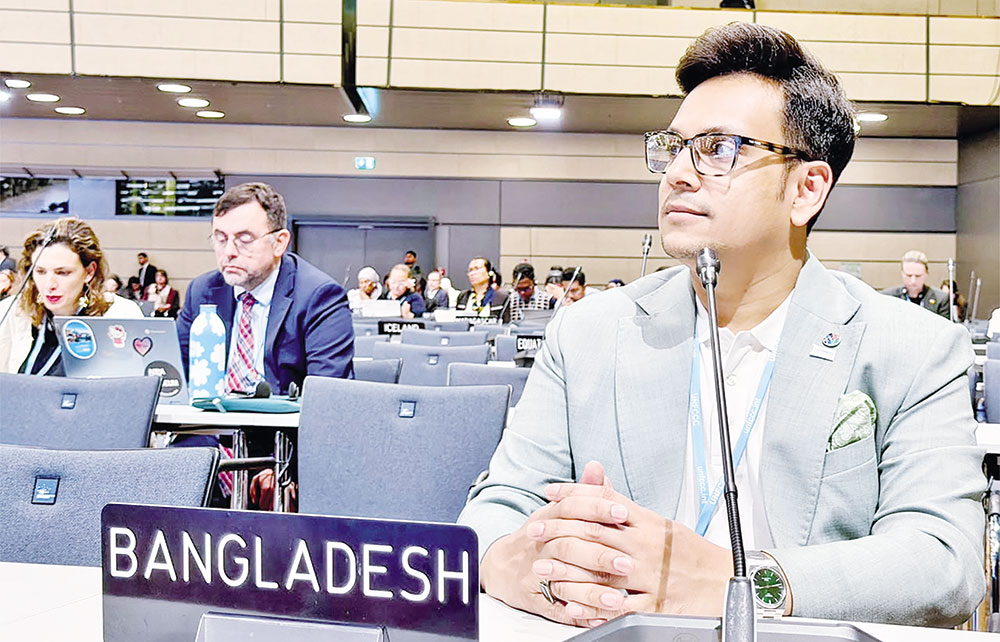 International climate conferences are often viewed through the lens of formal negotiations. Headlines typically focus on negotiating texts, political disagreements, and final decisions adopted by governments.
For Bangladesh, this dimension of climate diplomacy deserves greater attention. Climate change is no longer solely an environmental issue. It intersects with energy security, food production, infrastructure development, migration, public health, finance, and international trade. Addressing these interconnected challenges requires cooperation that extends beyond multilateral agreements.
Partnerships with governments, international organizations, development banks, research institutions, and the private sector provide access to expertise, technology, investment, and institutional learning that domestic resources alone cannot supply.
Bangladesh has demonstrated increasing engagement across these areas.
Cooperation on renewable energy can accelerate the country's transition toward cleaner electricity while strengthening energy security. Collaboration on early warning systems and disaster risk reduction can improve resilience to increasingly severe climate events. Partnerships on climate finance can strengthen institutional capacity to access international funding, while technical cooperation on transparency can improve national reporting systems.
Equally important is knowledge exchange. Many countries face similar challenges relating to coastal erosion, urban flooding, agricultural adaptation, and climate-induced displacement. Sharing practical experience allows governments to avoid repeating costly mistakes while identifying successful approaches that can be adapted to local circumstances.
The growing emphasis on implementation under the Paris Agreement makes these partnerships even more valuable.
As countries move from negotiating commitments toward delivering measurable outcomes, technical cooperation becomes increasingly important. International agreements establish common objectives, but implementation ultimately depends on national institutions supported by effective partnerships.
Bangladesh should therefore continue strengthening relationships across multiple levels. Government-to-government cooperation remains essential, but collaboration should also include universities, research centres, civil society organizations, financial institutions, and the private sector. Climate resilience is built through networks of expertise as much as through financial investment.
The country's experience over recent decades demonstrates that international cooperation has played an important role in improving disaster preparedness, strengthening adaptation planning, and expanding renewable energy initiatives.
Future partnerships should build upon these successes while addressing emerging challenges such as climate migration, sustainable urbanization, industrial decarbonization, and technological innovation.
The success of Bangladesh's climate strategy will depend not only on the agreements reached at future COP meetings but also on the strength of the relationships that support their implementation.
Climate diplomacy does not end when negotiations conclude. In many respects, that is precisely when the most important work begins.
CECRF Country Lead-Bangladesh, GEOCAL Inc.

Loading...
Loading...
Also read



Editor : Iqbal Sobhan Chowdhury
Published by the Editor on behalf of the Observer Ltd. from Globe Printers, 24/A, New Eskaton Road, Ramna, Dhaka.
Editorial, News and Commercial Offices : Aziz Bhaban (2nd floor), 93, Motijheel C/A, Dhaka-1000.
Phone: PABX- 41053001-06; Advertisement: 41053012; 01793317829, 01550707291, E-mail: [email protected], [email protected] Online: email: [email protected] 41053014; 01550707297 Advertisement: 01550707296
Published by the Editor on behalf of the Observer Ltd. from Globe Printers, 24/A, New Eskaton Road, Ramna, Dhaka.
Editorial, News and Commercial Offices : Aziz Bhaban (2nd floor), 93, Motijheel C/A, Dhaka-1000.
Phone: PABX- 41053001-06; Advertisement: 41053012; 01793317829, 01550707291, E-mail: [email protected], [email protected] Online: email: [email protected] 41053014; 01550707297 Advertisement: 01550707296


