



| HEADLINE |

|

Climate-finance projects should undergo a gender impact assessment
Published : Thursday, 8 October, 2026 at 12:00 AM
M Zakir Hossain Khan


 Bangladesh should prioritise nature-compatible vehicles, manufacturing systems and products in its industrialisation strategy. Toyota’s interest in establishing a vehicle manufacturing plant in Bangladesh is significant. A major foreign manufacturer can create jobs, transfer technology, build skills and reduce import dependence. But Bangladesh can no longer welcome investment simply because it brings capital and employment.
 The first question should be: What will this investment do to Bangladesh’s nature, water, agricultural land, food security, public health, women and local communities?
Bangladesh already faces severe environmental stress. Air pollution, unsafe water, inadequate sanitation and lead exposure are associated with more than 272,000 premature deaths and around 5.2 billion days of illness annually. The economic cost of these environmental damages was estimated at about 17.6 percent of GDP in 2019. Air pollution alone is associated with around 159,000 premature deaths a year and health costs equivalent to about 8.3 percent of GDP.
So the central question in industrial policy should no longer be, “How many billions of dollars will be invested?” Bangladesh has reached a point where the quality of investment matters more than its volume. Whether domestic or foreign, public incentives should support industries that reduce pollution, use water and energy efficiently, protect farmland and ecosystems, recycle waste, respect women’s rights and operate within nature’s regenerative limits.
The goal should therefore not simply be industrialization, but nature-compatible, people-centred and justice-based industrialization.
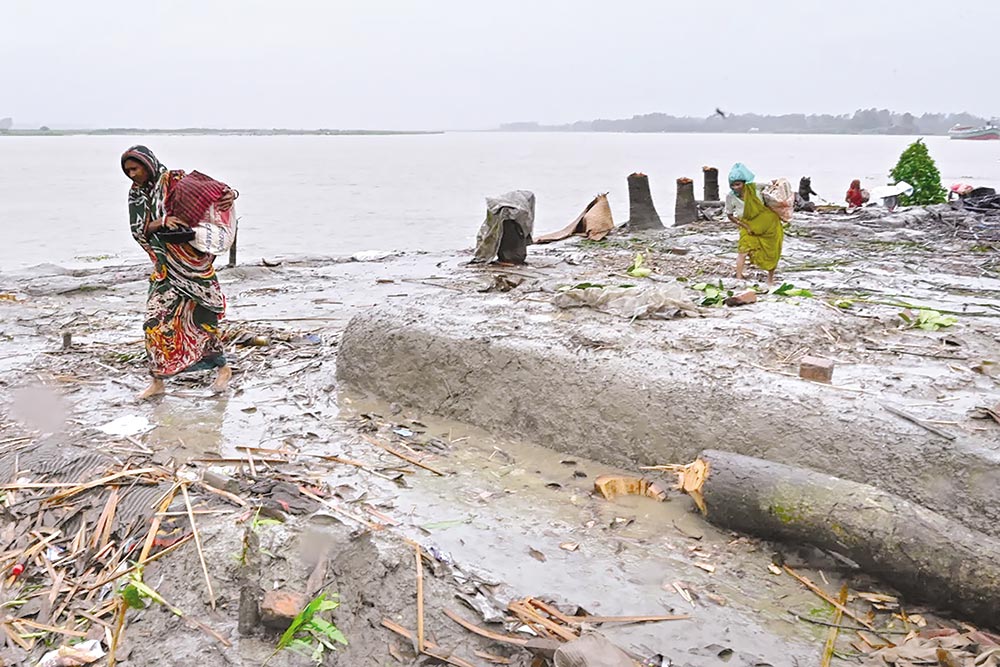
 The rivers and canals surrounding Dhaka have long carried the burden of industrial effluent, sewage and chemical pollution. At the same time, groundwater extraction is increasing in major industrial zones. If a factory produces private profit while society pays through polluted water, toxic air, healthcare costs, declining agricultural productivity and biodiversity loss, then that investment cannot be considered genuinely beneficial.
Investment returns may be private, but environmental losses are often social. Therefore, investment approval should not focus only on how many products a factory will produce. It should also ask how much water it will consume, how much waste it will generate, how much land it will occupy, what pollution it will create and whether its total pressure on nature will increase or decrease.
Industrial water or farmers’ water has been fundamental concern for all of us. Water may become one of the greatest constraints on Bangladesh’s future industrialization. A large share of irrigated agriculture depends on groundwater, while agriculture, cities and industry increasingly compete for the same reserves.
If this competition is not managed, Bangladesh will face a difficult question: Will we use the same water to grow food or to manufacture industrial products?
Textile dyeing, leather processing, chemicals, steel, food processing, vehicle manufacturing and many other industries require significant water. Intensive industrialization can lower groundwater levels, raise farmers’ irrigation costs, reduce crop productivity and threaten local drinking-water supplies.
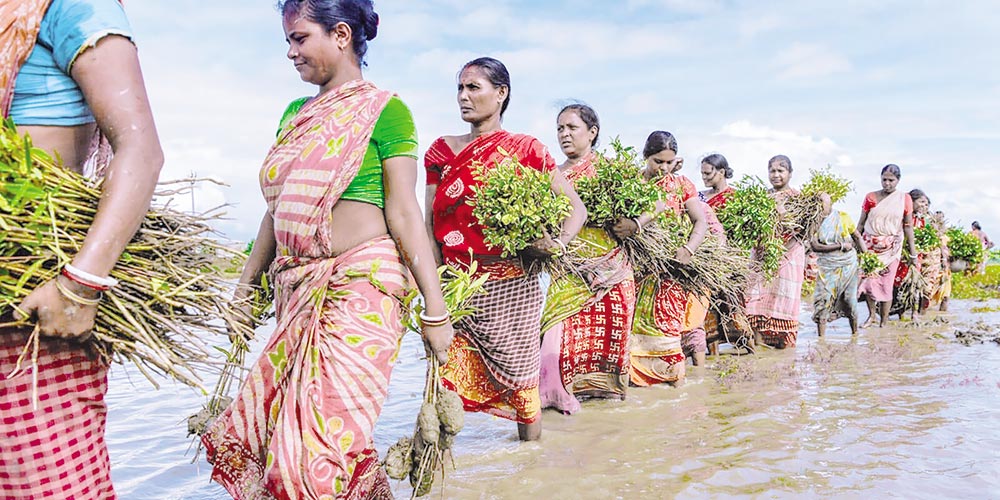
There is also a gender dimension. Women often carry a disproportionate burden of securing household water, sanitation, healthcare and caregiving. When local water sources decline, the additional cost is often paid through women’s time, labour, health and safety.
For this reason, a ‘Water Balance Test’ should be mandatory for major industrial and infrastructure projects. Investors should demonstrate where water will come from, how much is naturally replenished, how much can safely be used after meeting human and agricultural needs, how much will be recycled and what alternatives exist to groundwater extraction.
Industrialization must not affect food security. Bangladesh’s land resources are extremely limited. Yet industrial development requires far more than the factory site itself. Roads, warehouses, worker housing, commercial facilities, parking, power systems and supporting industries expand the real land footprint.
Climate finance should therefore deliver more than carbon reduction. It should strengthen resilience, biodiversity, livelihoods, social justice and gender equality. Every investment must be gender-sensitive. Being women-friendly is not simply about hiring more women. The real questions are, do women participate in project decisions? Are their rights to land, water, employment and compensation protected? Are benefits and risks distributed fairly between women and men?
Every major domestic and foreign investment, climate-finance project and infrastructure project should therefore undergo a gender impact assessment. Women, particularly from rural, coastal, poor and vulnerable communities, should participate meaningfully in project design, implementation and monitoring. The question should not only be, “How much will women benefit?” It should also be, “How much can women’s knowledge, rights and decisions shape the project?”
Not every green vehicle is nature-friendly. Hybrid and electric vehicles can reduce direct emissions and fuel consumption, but a vehicle is not automatically sustainable because it is labelled “electric.”
Its entire life cycle matters: raw-material extraction, battery minerals, energy and water used in manufacturing, the electricity used to operate it, and what happens to batteries and components at the end of their life.
If Bangladesh continues to generate electricity largely from fossil fuels, part of the environmental benefit of electric vehicles will be lost. And if private vehicle ownership keeps expanding, congestion, road demand, parking and land pressure will remain.
Bangladesh should therefore prioritize not only private EVs, but also electric buses, women-friendly public transport, smaller energy-efficient vehicles, shared mobility and cleaner freight systems.
Investors should be welcomed on Bangladesh’s terms. Toyota and other global manufacturers should be welcome, but Bangladesh should aim beyond becoming an assembly base.
The country should seek to become a South Asian hub for nature-compatible and inclusive mobility and manufacturing, producing electric buses, smaller EVs and efficient transport systems; using renewable energy; recycling water; taking back used batteries; developing domestic recycling; and creating research centres involving local engineers, researchers and women professionals.
Future investment policy should apply eight basic conditions-
1. Zero net loss of productive farmland, natural forests, wetlands and critical water sources; and ecologically important areas should be off-limits to industrial development.
2. Water use within nature’s regenerative capacity. Water reuse, rainwater harvesting, and strict limits on groundwater extraction should become mandatory.
3. Progressive use of nature-compatible renewable and efficient energy in all types of industries.
4. Elimination of toxic discharge with public monitoring.
5. Producer responsibility for batteries, plastics and hazardous materials. Hazardous materials should be taken back, recovered, and recycled by producers.
6. Full life-cycle environmental assessment. Evaluation should cover not only factory emissions, but also raw materials, transport, production, use, disposal, and the combined ecological consequences.
7. Mandatory gender-sensitive design, participation, safety and equitable benefits.
8. State incentives tied to measurable environmental and social performance.
Bangladesh’s message should be clear. We want investment, but not pollution. We want technology, but not at the cost of farmland. We want industry, but not by taking irrigation water from farmers. We want infrastructure, but not by destroying rivers, forests and wetlands. We want climate finance, but not if it creates new inequalities. And we want development, but not by excluding women and local communities.
The old equation was-- Investment-Industry- Growth. But, Bangladesh now needs a new one-Nature security - Human and gender justice - Resource efficiency - Clean production - Employment and technology - Long-term prosperity.
The economy does not exist outside nature, and development cannot be sustainable if it leaves people behind. Investment that protects nature, strengthens women’s rights and improves human well-being will ultimately be Bangladesh’s safest, fairest and most economically sound development strategy.
The writer is an Architect and Proponent of Natural Rights Led Governance (NRLG); Chief Executive and Co-Founder of Change Initiative; Editor-in-Chief, Nature Insights

Loading...
Loading...
Also read



Editor : Iqbal Sobhan Chowdhury
Published by the Editor on behalf of the Observer Ltd. from Globe Printers, 24/A, New Eskaton Road, Ramna, Dhaka.
Editorial, News and Commercial Offices : Aziz Bhaban (2nd floor), 93, Motijheel C/A, Dhaka-1000.
Phone: PABX- 41053001-06; Advertisement: 41053012; 01793317829, 01550707291, E-mail: [email protected], [email protected] Online: email: [email protected] 41053014; 01550707297 Advertisement: 01550707296
Published by the Editor on behalf of the Observer Ltd. from Globe Printers, 24/A, New Eskaton Road, Ramna, Dhaka.
Editorial, News and Commercial Offices : Aziz Bhaban (2nd floor), 93, Motijheel C/A, Dhaka-1000.
Phone: PABX- 41053001-06; Advertisement: 41053012; 01793317829, 01550707291, E-mail: [email protected], [email protected] Online: email: [email protected] 41053014; 01550707297 Advertisement: 01550707296


