



| HEADLINE |

|

Philip Corr and Anke Plagnol
BEHAVIOURAL ECONOMICS:
THE BASICS
Published : Saturday, 1 August, 2026 at 12:00 AM


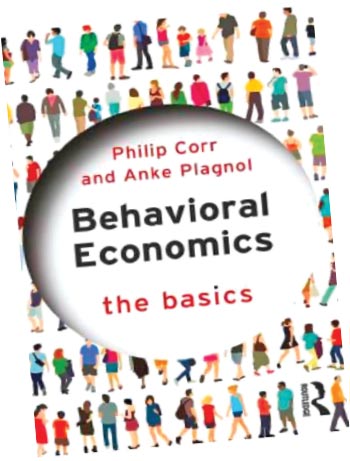 Compared
to other fields of economics, behavioural economics is a relatively
recent branch to have emerged, making a breakthrough in the late 1970s
and 1980s. A pretty decent book to introduce you to this new branch is
Behavioural Economics: The Basics by Philip Corr and Anke Plagnol. The
authors of this book have successfully described the psychological and
economic aspects of decision-making using simple language, allowing
readers to familiarise themselves with key concepts easily.
Compared
to other fields of economics, behavioural economics is a relatively
recent branch to have emerged, making a breakthrough in the late 1970s
and 1980s. A pretty decent book to introduce you to this new branch is
Behavioural Economics: The Basics by Philip Corr and Anke Plagnol. The
authors of this book have successfully described the psychological and
economic aspects of decision-making using simple language, allowing
readers to familiarise themselves with key concepts easily.As a newer branch of economics, behavioural economics is increasingly gaining attention, with more and more books being published regarding this study. Typically, these books either fall within two categories: those that are heavy on the usage of mathematics to support models and act as empirical evidence, and those that are extremely simplified to the point of being a rather unacademic book, as in, those you would read to gain an understanding of rudimentary concepts. Behavioural Economics: The Basics is a combination of both. It combines the usage of simple language whilst also using graphs and simpler models.
For
those who wish to gain an understanding of the psychological insights
used to comprehend economic decisions but don't have a lot of time to
sit and read through academic papers, this book would be a good starting
point. The authors Philip Corr and Anke Plagnol refer to the work of
neoclassical economists and psychologists multiple times throughout the
book to enhance their explanation. At the end of each chapter, there is a
heading called “Further Reading” where they refer to the works of other
economists and psychologists. For example, at the end of the
introductory chapter, they refer to Predictably Irrational: The Hidden
Forces that Shape our Decisions Ariely, D. (2008). This means that if
readers find any particular part of the chapter to be interesting, they
can further read into the topic to gain more in-depth knowledge by
knowing where they can seek out additional writings.
Reviewed by LUBABAH BINT MAHTAB
However, I do not agree with all aspects of this book. While this book certainly did put forward convincing arguments regarding the importance of including psychological factors in economics, it could be presumed that the authors have a slight disdain towards classical economics. Surely, the existing economic models and theories are self-sufficient, although not entirely accurate, they are still able to solve a great deal of problems and somewhat represent different arguments with clarity. Rather than focusing on their disapproval of standard economics, I think there should have been more supporting arguments for the book rather than collecting short stories or case studies, as anecdotal evidence isn't exactly concrete in results, as outcomes may vary over time or depending on the place and people involved. Therefore, the use of more empirical evidence could be appreciated.
Moreover, while the book's core focus is on behavioural economics, a major part of this field is mathematical models. The lack of mathematical models may not be a significant problem for those who are casual readers, but for those who want to get a deep dive into the topic, they may be left disappointed due to the lack of mathematical modelling or technical equations, which are of great importance. In the same line, there is a lack of elaboration in the methodology of the experiments carried out; some people may want to know more about how the experiments were carried out, or about the sample sizes, which unfortunately are not mentioned.
Overall, Behavioural Economics: The Basics by Philip Corr and Anke Plagnol is still a great book for those who want a starting point to get into the subject of behavioural economics without worrying about whether the content is purely rudimentary, as the book does a good job of providing information without making it overbearing or underwhelming, so the reader is actually able to learn about the importance of psychology in economics in a engrossing manner, causing the content to actually be memorable.
The reviewer is an A-level student

Loading...
Loading...





Editor : Iqbal Sobhan Chowdhury
Published by the Editor on behalf of the Observer Ltd. from Globe Printers, 24/A, New Eskaton Road, Ramna, Dhaka.
Editorial, News and Commercial Offices : Aziz Bhaban (2nd floor), 93, Motijheel C/A, Dhaka-1000.
Phone: PABX- 41053001-06; Advertisement: 41053012; 01793317829, 01550707291, E-mail: [email protected], [email protected] Online: email: [email protected] 41053014; 01550707297 Advertisement: 01550707296
Published by the Editor on behalf of the Observer Ltd. from Globe Printers, 24/A, New Eskaton Road, Ramna, Dhaka.
Editorial, News and Commercial Offices : Aziz Bhaban (2nd floor), 93, Motijheel C/A, Dhaka-1000.
Phone: PABX- 41053001-06; Advertisement: 41053012; 01793317829, 01550707291, E-mail: [email protected], [email protected] Online: email: [email protected] 41053014; 01550707297 Advertisement: 01550707296


