



| HEADLINE |

|
What Bangladesh Can Learn from Global Housing Policies
Published : Friday, 7 August, 2026 at 12:00 AM
Md Alamgir Hossain


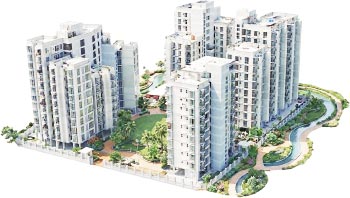 Owning a home is a dream for almost every family. But for many middle-class people in Bangladesh, that dream is becoming harder to achieve. High land prices, rising construction costs and expensive bank loans have pushed the price of flats beyond the reach of many buyers.
Many countries have faced similar challenges. To make housing more affordable, governments have introduced policies such as low-interest home loans, government subsidies, tax benefits, shared ownership and financial support for first-time home buyers.
Housing experts say many developed and developing countries now treat housing not only as a business but also as a social right. As a result, governments play an active role in helping people own their first home.
Hungary has introduced a special programme for first-time buyers, offering home loans at only 3 percent interest for up to 25 years. The United Kingdom provides support through Shared Ownership, Mortgage Guarantee and other government-backed schemes that allow buyers to own a home gradually.
Ireland's First Home Scheme helps buyers by providing equity support for part of the purchase price. Malta has an Equity Sharing Scheme, where the government initially pays for a large share of the home's value and buyers later purchase that share over time.
Finland offers government-guaranteed loans and lower down payment requirements for first-time buyers. In the United States, 30-year mortgage loans are common, while federal and state programmes provide down payment assistance and loan guarantees. Singapore has also achieved remarkable success by offering grants, affordable long-term loans and planned public housing, allowing most of its citizens to own their homes.
Housing experts believe Bangladesh can adopt similar policies. Planned condominium projects on government-owned land, low-interest home loans for 20 to 30 years, tax incentives and affordable financing could make home ownership possible for many middle-class families.
Planned urbanization and housing, as well as providing housing facilities for low-income people, is one of our government's primary election commitments. The Ministry of Housing and Public Works is working tirelessly toward that goal. Under the government's initial 180-day action plan, we have undertaken various steps. Master plans are being formulated for every district in the country through the implementation of the National Spatial Plan.
Additionally, initiatives have been taken to make the Dhaka metropolitan area more liveable through the implementation of the Detailed Area Plan (DAP 2022-"2035), execute the 'Old Dhaka Revitalization Project', and undertake block-based development in Old Dhaka. All development authorities across the country are working together to preserve environmental balance, prevent unplanned urbanization, ensure disaster-resilient urban management, develop the tourism industry, and foster an improved civic life.
People involved in the housing sector, including REHAB, say flat prices continue to rise because of expensive private land and the sharp increase in the prices of rods, cement, sand, bricks, tiles, electrical wires, elevators, generators and other construction materials. Higher labour costs, transport expenses and bank interest rates have also increased construction costs.
They believe private developers alone cannot provide affordable housing. Government support is essential. If the government develops housing projects on public land, provides policy support and introduces low-interest, long-term loans for first-time buyers, the cost of flats could be reduced significantly.
The experiences of many countries show that housing problems cannot be solved by market forces alone. With the right policies and financial support, Bangladesh can make quality housing more affordable and help thousands of middle-class families achieve the dream of owning a home.
Loading...
Loading...
Also read



Editor : Iqbal Sobhan Chowdhury
Published by the Editor on behalf of the Observer Ltd. from Globe Printers, 24/A, New Eskaton Road, Ramna, Dhaka.
Editorial, News and Commercial Offices : Aziz Bhaban (2nd floor), 93, Motijheel C/A, Dhaka-1000.
Phone: PABX- 41053001-06; Advertisement: 41053012; 01793317829, 01550707291, E-mail: [email protected], [email protected] Online: email: [email protected] 41053014; 01550707297 Advertisement: 01550707296
Published by the Editor on behalf of the Observer Ltd. from Globe Printers, 24/A, New Eskaton Road, Ramna, Dhaka.
Editorial, News and Commercial Offices : Aziz Bhaban (2nd floor), 93, Motijheel C/A, Dhaka-1000.
Phone: PABX- 41053001-06; Advertisement: 41053012; 01793317829, 01550707291, E-mail: [email protected], [email protected] Online: email: [email protected] 41053014; 01550707297 Advertisement: 01550707296


