



| HEADLINE |

|

THE MAN WHO BECAME CINEMA: Dilip Kumar
Published : Saturday, 8 August, 2026 at 12:00 AM
Ashok Chopra


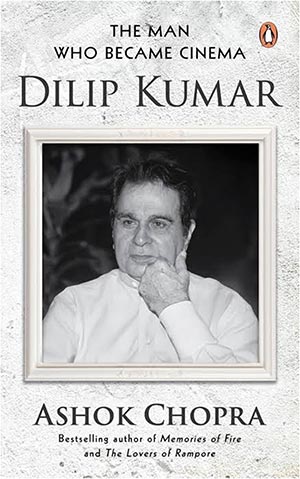 Unless you are a baby boomer, you probably haven’t tapped into the sensitivity and beauty of the classical era of Indian cinema. But for those who have loved and breathed classic and long-form cinema, and seen the creation of an industry named Bollywood, Dilip Kumar is a true legend. Hailed as the founding father of method acting and a precursor to the emotional depth seen in global cinema today, Kumar’s legacy lies in the heart of all film buffs.
In his 98-year-long life, which included a 57-year career and 54 films, Dilip Kumar is remembered as a tragedy king, comedy maestro, matinee idol, the ‘First Khan’, and an institution in himself-an artiste par excellence. Born in 1922 as Muhammad Yusuf Khan, part of the silent generation, Kumar’s achievements were no mean feat. The freedom movement was afoot, the country’s boundaries were getting redrawn, and cinema (an expensive pursuit) was barely a teenager, with the first full-length Indian feature film having been released in 1913.
There were no film schools, not many filmmakers, and the country was trying to recover from years of subjugation. Against this backdrop, a young handsome Kumar’s career was launched by the owner of Bombay Talkies in 1944. The beginning wasn’t favourable, with a hat trick of flops and some harsh criticism, particularly from a film journalist named Baburao Patel.
Reviewed by Ambica Gulati
But fate had other plans. Young Kumar found willing producers and directors, honing his art along the way. While skills can be replicated, emotions and expressions are unique to a person, especially an actor. Painstaking, arduous, and filled with a constant search for better craftsmanship, filmmaking was Kumar’s breath and life until he moved away from the silver screen in the 1990s.
The Man Who Became Cinema summarizes the movies Kumar acted in, traces the impactful scenes, and celebrates the music and songs that created a fairy world on the silver screen. It is a heartfelt narrative that brings to life an era when films were rare, actors were rarer, and the men who breathed magic into characters were the rarest. Kumar was that once in a millennium phenomenon, who was laid to rest with state honours in July 2021. His legacy, especially the peak of success during 1950s-60s, is unforgettable and still alive on YouTube, if not in cinema halls.
However, legends aren’t made on a single Friday. There are many curves, hits, and misses before an actor becomes a ‘matinee idol’-a term now old-world, as Bollywood biggies are called superstars. For the generation coming out of the British Raj, the handsome man with mesmerising eyes and a sweet smile symbolised a dream world where everything was good. A master in the art of underplay, histrionics, and lip-syncing, Kumar was a perfectionist. He rehearsed his role umpteen times until satisfied and expected the same from his co-stars. He would often go for retakes until all the artistes performed perfectly. He has been called an institution in the art of acting, and all aspects of filmmaking by many of his team members.
The book is interlaced with dialogues, lyrics, compositions, and singers. The mentions of the various classical ragas might take a while to understand if you are not a music aficionado. Chopra highlights the magic created in many movies by composer Naushad, lyricist Shakeel Badayuni, and singer Mohammad Rafi with Kumar. He also talks a little bit about Kumar’s lady loves and his treatment for depression after the tragic characters that he portrayed. Dilip Kumar always got under the skin of the character, turning a script into a real-life scene.
As you turn chapter after chapter, you realize how creativity is akin to “samudra manthan” (churning of the ocean as per Indian mythology). With each twist, the artiste finds another skill, a new tool, a new way, and the churning continues until the optimum potential is achieved. In his 98-year-old life, Kumar went through many twists, not that many downs, but always found ways to hone his craft and perfect it with changing eras and the growth and proliferation of cinema. In the current era of cheap AI and instant gratification, Dilip Kumar’s perfectionism and hardwork garner even more appreciation.
The book is a knowledge bank of Indian culture, the pluralism that defines India, the arts that India brings to the forefront, and the fame of Kumar that travelled far and wide. Unfortunately, he didn’t accept the offers that came his way from Hollywood, or we would have seen him on the global screens too. Chopra hails him as a pioneer of method acting, long before Marlon Brando attained that status.

Loading...
Loading...





Editor : Iqbal Sobhan Chowdhury
Published by the Editor on behalf of the Observer Ltd. from Globe Printers, 24/A, New Eskaton Road, Ramna, Dhaka.
Editorial, News and Commercial Offices : Aziz Bhaban (2nd floor), 93, Motijheel C/A, Dhaka-1000.
Phone: PABX- 41053001-06; Advertisement: 41053012; 01793317829, 01550707291, E-mail: [email protected], [email protected] Online: email: [email protected] 41053014; 01550707297 Advertisement: 01550707296
Published by the Editor on behalf of the Observer Ltd. from Globe Printers, 24/A, New Eskaton Road, Ramna, Dhaka.
Editorial, News and Commercial Offices : Aziz Bhaban (2nd floor), 93, Motijheel C/A, Dhaka-1000.
Phone: PABX- 41053001-06; Advertisement: 41053012; 01793317829, 01550707291, E-mail: [email protected], [email protected] Online: email: [email protected] 41053014; 01550707297 Advertisement: 01550707296


