



| HEADLINE |

|
CDA master plan to be finalised by Dec
Published : Sunday, 9 August, 2026 at 12:00 AM
Nurul Amin


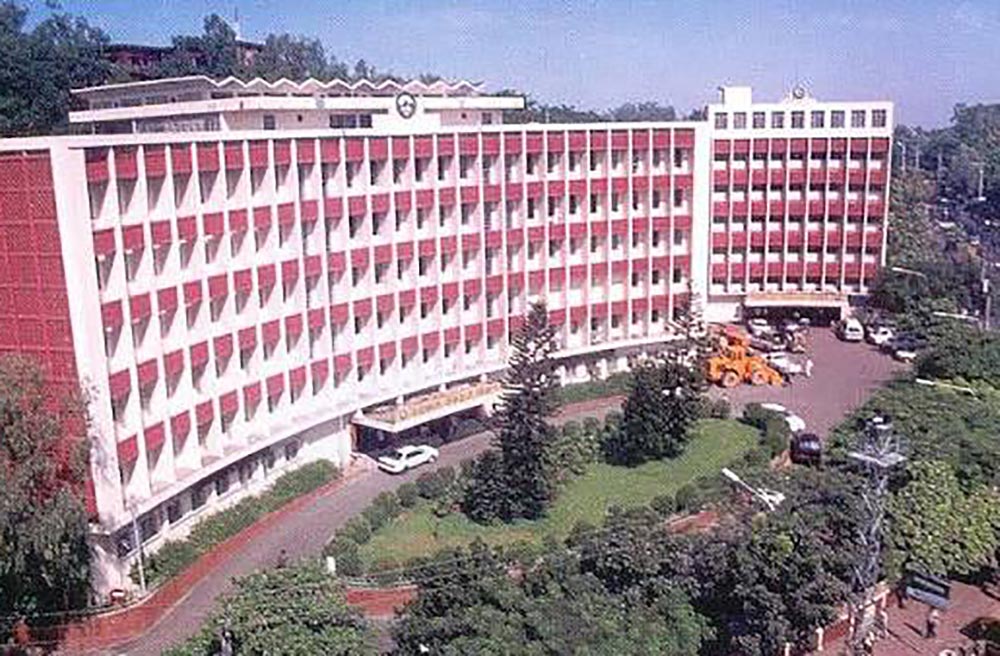 CHATTOGRAM, Aug 6: With the draft already completed, a new 25-year master plan for the port city is expected to be finalised by December this year, official sources said.
According to official sources, the Chattogram Development Authority (CDA) has prepared the draft master plan (2025-2050), aimed at transforming Chattogram into a well-planned, sustainable and modern city.
The final version will be prepared after incorporating public feedback during a 60-day consultation period from August 2 to September 30. Citizens can submit opinions, objections and amendments either online or directly to the CDA, which will review all submissions before finalising the plan.
CDA Chairman Engineer Belayet Hossain outlined the key features of the draft on August 1. The proposal includes separate Detailed Area Plans (DAPs) for Anwara, Bakalia and Agrabad, while the metropolitan area will be divided into six administrative zones to decentralise development and improve service delivery.
The draft also proposes two or three large parks modelled on national parks, land reserved for a national-cemetery-style graveyard and a central Eidgah.
The fully government-funded project, estimated to cost Tk35.87 crore, began in February 2022 and covers 1,255 sq km, including the entire Chattogram City Corporation (CCC) area, neighbouring municipalities, upazilas and areas likely to undergo future urbanisation.
The plan includes phased development priorities, coordination among government agencies, digital records of hills and waterbodies, a soil liquefaction risk map and 77 policy recommendations across 15 sectors.
Environmental conservation has been given priority. The draft proposes preserving open spaces, agricultural land, hills and waterbodies, including around 18 sq km of untouched hill areas within the city and 184 sq km across the wider planning area.
All hills within the city have been designated as ecologically sensitive zones, while areas with slopes exceeding 30 per cent are proposed to be declared 'no-development zones', where construction would be prohibited. The plan also adopts a zero-tolerance policy against hill cutting and recommends afforestation using native tree species in degraded hill areas.
To reduce congestion, the draft seeks to regulate the concentration of hospitals and educational institutions in densely populated areas such as GEC, Muradpur, the Medical College area and Katalganj.
The proposal also includes 11 satellite towns and six industrial zones in surrounding upazilas, including Anwara, Patiya and Hathazari, to ease pressure on the main city.
To strengthen transport and logistics, particularly for cargo from the southern bank of the Karnaphuli River, the plan proposes two new bridges in addition to the existing tunnel and the Kalurghat Bridge. One bridge would connect directly to the Port Link Road, while the other would link Airport Road to Sheikh Mujib Road.
These connections are expected to improve cargo movement from major industrial areas, including the Korean Export Processing Zone, the Chinese EPZ in Anwara and the proposed Matarbari deep-sea port.
An 'Anwara Action Area Plan' has also been prepared to guide industrial and urban development around the proposed commercial EPZ.
To improve governance, the CDA proposes dividing the metropolitan area into six strategic zones, each with its own administrative office, allowing residents to access services locally while improving monitoring and speeding up approvals.
According to Project Director M Abu Issa Ansari, the project was originally scheduled for completion in June this year, but the deadline has been extended to December.
CDA data show that the master plan project was approved on May 6, 2020, while consultancy work began in December 2021 following the appointment of Data Experts Limited, Tiller and EGS Joint Venture (datEx-Tiller-EGS JV).
"Public opinion will be given the highest priority in making the 2025-2050 fourth master plan practical," the CDA chairman said.
Chattogram's first master plan was prepared in 1961. A second plan, comprising a Structure Plan, Urban Development Plan and Detailed Area Plan, was approved in 1999 for a 1,152 sq km area after being formulated in the 1990s. The third 25-year master plan covered 1996-2020, and its planning guidelines expired in 2020.
Loading...
Loading...
Also read



Editor : Iqbal Sobhan Chowdhury
Published by the Editor on behalf of the Observer Ltd. from Globe Printers, 24/A, New Eskaton Road, Ramna, Dhaka.
Editorial, News and Commercial Offices : Aziz Bhaban (2nd floor), 93, Motijheel C/A, Dhaka-1000.
Phone: PABX- 41053001-06; Advertisement: 41053012; 01793317829, 01550707291, E-mail: [email protected], [email protected] Online: email: [email protected] 41053014; 01550707297 Advertisement: 01550707296
Published by the Editor on behalf of the Observer Ltd. from Globe Printers, 24/A, New Eskaton Road, Ramna, Dhaka.
Editorial, News and Commercial Offices : Aziz Bhaban (2nd floor), 93, Motijheel C/A, Dhaka-1000.
Phone: PABX- 41053001-06; Advertisement: 41053012; 01793317829, 01550707291, E-mail: [email protected], [email protected] Online: email: [email protected] 41053014; 01550707297 Advertisement: 01550707296


