



| HEADLINE |

|

The Challenge of Creating Livable Communities
Published : Friday, 14 August, 2026 at 12:00 AM
Staff Correspondent


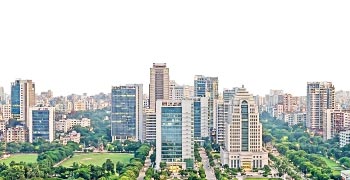 For many people, moving to a satellite city means escaping Dhaka’s congestion. But without jobs, transport and essential services, the dream of a better life can quickly become a daily struggle.
As Dhaka continues to expand, more people are moving toward newly developed residential areas in search of more space, quieter surroundings and better housing. But for many residents, the reality is more complicated.
The first challenge is often the daily commute. Many people living in satellite towns still work, study or conduct business in central Dhaka. As a result, they have to travel long distances every day.
Md Rasheduzzaman, a resident of Uttara, said, “We moved here hoping for a quieter life, but we still have to go to Dhaka for jobs and other daily needs.”
His experience reflects a larger problem. A residential development cannot become a successful satellite city simply by constructing houses and apartments. It also needs employment opportunities and essential services.
Residents need schools, hospitals, pharmacies, markets, playgrounds, parks and community facilities close to their homes. When these are inadequate, residents remain dependent on central Dhaka. A satellite town can then become little more than a bedroom community.
Poor infrastructure can make everyday life even harder. Road excavation, construction, inadequate drainage and poor maintenance can create dust, mud, congestion and waterlogging. For residents, these are not simply planning problems. A damaged road can mean a difficult journey to school, a longer commute to work or delays in reaching a hospital. Newer developments face another challenge: they may appear complete on a master plan long before they become fully functional communities.
Purbachal, for example, has attracted residents, landowners and investors because of its planned layout and future potential. But where basic services, commercial facilities and transport links are still developing, early residents may find themselves living in an unfinished urban environment.
Jhilmil and other emerging developments can face similar challenges, including low occupancy and inadequate waste management. Empty plots and limited neighbourhood activity can also make it difficult to build a vibrant community.
A city is not created simply by constructing houses. A successful city needs people, jobs, transport, schools, healthcare, markets, parks, public spaces and reliable services. Major developments such as Purbachal New Town, Uttara Phase III and Jhilmil/Keraniganj offer opportunities to accommodate Dhaka’s growing population. But their success will depend on whether infrastructure, employment and public services grow alongside housing. That is where the dream of a new city meets the reality of everyday life.

Loading...
Loading...
Also read



Editor : Iqbal Sobhan Chowdhury
Published by the Editor on behalf of the Observer Ltd. from Globe Printers, 24/A, New Eskaton Road, Ramna, Dhaka.
Editorial, News and Commercial Offices : Aziz Bhaban (2nd floor), 93, Motijheel C/A, Dhaka-1000.
Phone: PABX- 41053001-06; Advertisement: 41053012; 01793317829, 01550707291, E-mail: [email protected], [email protected] Online: email: [email protected] 41053014; 01550707297 Advertisement: 01550707296
Published by the Editor on behalf of the Observer Ltd. from Globe Printers, 24/A, New Eskaton Road, Ramna, Dhaka.
Editorial, News and Commercial Offices : Aziz Bhaban (2nd floor), 93, Motijheel C/A, Dhaka-1000.
Phone: PABX- 41053001-06; Advertisement: 41053012; 01793317829, 01550707291, E-mail: [email protected], [email protected] Online: email: [email protected] 41053014; 01550707297 Advertisement: 01550707296


